Semax is approved in Russia but not by major Western regulators. Nothing on this page is medical advice.
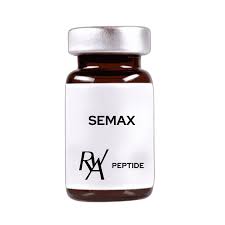
Overall Rating: 7.6 out of 10
One of the more credible nootropic peptides because the neurotrophic mechanism and Russian clinical history are real, but still limited by weak Western replication and regulatory non-approval outside Russia.
Every link in this article was verified as a real, accessible publication at the time of writing. We use PubMed, PMC, NEJM, JAMA, FDA.gov, and peer-reviewed journals only. No Wikipedia. No vendor blogs.
Semax is in a unique position. It is one of the few brain-boosting compounds that has official medical approval. In Russia, it has been used as a prescription drug since 1994. Doctors use it to help with recovering from strokes, thinking disorders, and eye nerve issues. It is considered a vital and essential medicine in that region.
Outside Russia? Research chemical. Not evaluated by the FDA, EMA, or anyone else in the West.
That split creates a strange reading experience when you look at the evidence. There's a real clinical track record, but it lives almost entirely in Russian-language journals. Western peer-reviewed replication is thin. So when someone tells you Semax is "well-studied," that's half true. It depends on which studies you're willing to count.
This review covers all of it. And it flags which evidence comes from where.
Key Takeaways
- Semax is a synthetic heptapeptide based on the ACTH(4-10) fragment, developed at the Institute of Molecular Genetics, Russian Academy of Sciences
- Approved and prescribed in Russia since 1994. Research chemical status in the US, EU, and UK
- Its best-characterized mechanism is BDNF upregulation in the hippocampus
- Strongest clinical data sits in stroke recovery, where it's part of standard Russian protocols
- Also studied for optic nerve diseases, cognitive enhancement, and mood
- Intranasal is the primary route of administration. Poor oral bioavailability
- Variants exist (N-Acetyl Semax, NA-Semax Amidate) with different stability profiles
- Requires refrigeration. Degrades without proper storage
- No Western clinical trials as of 2026. All human data comes from Russian and post-Soviet research
- Not approved for human use outside Russia. No WADA ban (unlike TB-500)
Table of Contents
- What is Semax?
- Why researchers find it interesting
- How it works
- How do you take it?
- Dosing
- What does the evidence show?
- Semax vs Selank
- The variants: N-Acetyl Semax and NA-Semax Amidate
- Beyond cognitive use
- Safety and side effects
- What happens when you stop?
- Legal status and the East-West split
- Unanswered questions
- Final take
- FAQ
What is Semax?

Semax is a synthetic peptide, seven amino acids long: Met-Glu-His-Phe-Pro-Gly-Pro. The name literally comes from the Russian abbreviation for "seven amino acids". It was developed in the late 1980s at the Institute of Molecular Genetics, Russian Academy of Sciences.
It is built from a small piece of a natural hormone with an added chain of amino acids. This addition is important because it makes the compound last longer in the body before being broken down by natural enzymes.
For practical use, Semax keeps the brain-protecting properties of its parent molecule but does not affect hormones like cortisol. This means it can influence the brain without causing the typical stress responses associated with hormone treatments.
Why Researchers Find Semax Interesting
Three things set Semax apart from the usual nootropic peptide conversation.
First, it has real clinical history. Not "studied in rats and extrapolated." Actual patients, actual prescriptions, for over two decades in Russia. That's unusual. Most compounds in this space are entirely preclinical.
Second, its impact on brain growth factors is well-documented. It raises levels of BDNF, a protein that acts like "fertilizer" for the brain, helping with learning and memory. Semax consistently boosts this protein in studies.
Third, it works across multiple systems at once. It touches BDNF, dopamine and serotonin signaling, inflammatory pathways, and possibly immune function. That breadth is what makes it interesting to researchers. And also what makes it hard to pin down to one clean mechanism.
How Semax Works

Boosting Brain Growth Factors
This is the main way it works. In animal studies, a small nasal dose significantly increased the levels of growth proteins in the part of the brain responsible for memory. It also helps the brain's sensors for these proteins work more effectively, which is key for long-term learning and brain health.
Semax also boosts other nerve growth factors in damaged brain tissue, which helps the brain repair itself after an injury.
Balancing Brain Chemicals
Semax affects mood-related chemicals like serotonin and dopamine. It increases the activity of serotonin, which helps with mood and stability. For dopamine, it doesn't just flood the system but instead makes the brain more sensitive to it, allowing for better focus without being overwhelming.
Reducing Swelling and Protecting Nerves
In cases of brain injury, Semax stops the genes that cause harmful swelling and turns on genes that help nerves communicate. It essentially shifts the brain from a "damage" mode to a "repair" mode.
Melanocortin Receptor Activity
There's evidence Semax interacts with melanocortin receptors MC4 and MC5, acting as an antagonist or partial agonist. This may connect to some of its stress-modulating and immune effects, but the clinical significance isn't fully worked out yet.
How Do You Take Semax?
Intranasal. That's the primary and most studied route.
Because Semax is a protein, it would be destroyed in the stomach if swallowed. The nose provides a direct path to the brain, allowing the compound to bypass the digestive system and reach the central nervous system more effectively.
In Russian clinical practice, Semax comes as a nasal drop solution, typically at 0.1% or 1% concentrations. You tilt your head back slightly and place drops in each nostril. A few drops per nostril, absorbed through the nasal lining.
Injectable Semax (subcutaneous) exists and is used in some research contexts, but intranasal is how the clinical data was generated and how the vast majority of users take it.
Semax Dosing
Like most peptides in this space, there's no FDA-approved dosing protocol. What exists comes from Russian clinical practice and research protocols.
Russian clinical dosing for stroke (1% Semax nasal drops):
- Moderate stroke: 6,000 to 12,000 mcg per day, split across 3 to 4 administrations, for 10 days
- Severe stroke: 12,000 to 20,000 mcg per day, split across 4 to 6 administrations, for up to 10 days
- Rehabilitation protocol: two 10-day courses of 6,000 mcg/day with a 20-day break between courses
Research and nootropic community dosing (0.1% Semax):
- Typical range: 200 to 600 mcg per day, intranasally
- Some protocols go up to 1,000 mcg per day
- Usually taken 1 to 3 times daily, often cycled (weeks on, weeks off)
For cognitive enhancement in healthy subjects: One study used 250 to 1,000 mcg/kg in healthy volunteers over the course of a work day.
These numbers come from clinical protocols, not Western regulatory trials. Talk to a clinician before using any of this. The dosing variability alone should tell you how early this all still is.
What Does the Evidence Show About Semax?
Stroke and Brain Injury Recovery
This is where Semax has its deepest data, and it's the reason the peptide has clinical approval in Russia.
In a study of 110 stroke patients, those who received Semax showed faster recovery in their movement and daily abilities. The treatment boosted brain-growth proteins, which led to better physical outcomes for the patients.
At the transcriptomic level, animal studies using middle cerebral artery occlusion models show Semax shifting gene expression patterns from inflammatory pathways toward neurotransmission and vascular repair. It suppressed proinflammatory cytokine genes and activated neurotrophin expression in ischemic brain tissue.
Earlier Russian clinical work (Gusev et al., 1997) reported that Semax improved neurological function in stroke patients when added to standard care, though this study is only available as a Russian-language abstract.
This is the strongest area for Semax. But it's important to note: all this human data comes from Russian research groups, and none of it has been replicated in Western clinical settings.
Cognitive Enhancement in Healthy Subjects
Two studies stand out here.
In a 1996 study with 11 healthy volunteers, Semax at 250 to 1,000 mcg/kg improved attention and short-term memory, with effects most pronounced when subjects were fatigued (after an 8-hour work shift). In a follow-up memory test the next morning, the Semax group scored 71% accuracy versus 41% for controls.
A 2018 fMRI study with 24 healthy volunteers found that intranasal 1% Semax increased the volume of the default mode network's rostral subcomponent (medial frontal cortex) relative to placebo, measured just 5 and 20 minutes after administration. The default mode network is involved in information processing and episodic memory.
Both studies are small. Both are from Russian research groups. They're interesting, not definitive.
Mood and Depression Research
Semax has been suggested as a potential antidepressant based on its effects on the serotonergic system and BDNF. Low BDNF is consistently associated with depression, and increasing it is part of how several existing antidepressants are thought to work.
Animal studies show Semax can produce antidepressant-like and anxiolytic-like effects and can normalize stress-induced behavioral changes. The dopamine and serotonin modulation supports this picture mechanistically.
No controlled human trials specifically testing Semax for depression have been published in English-language journals.
ADHD-Adjacent Research
A 2007 paper by Tsai proposed Semax as a potential ADHD treatment. The logic: ADHD involves dopamine dysfunction and potentially low BDNF. Semax modulates both. It enhances dopamine signaling, increases BDNF, and has been shown to improve selective attention.
This is a hypothesis paper, not a clinical trial. No controlled studies have tested Semax specifically for ADHD in humans. The rationale is sound on paper. The evidence to back it up doesn't exist yet.
A Note on the Russian Literature
This needs to be said plainly. The vast majority of Semax research comes from Russian institutions, often from groups with direct ties to the peptide's development. That doesn't make the research invalid. But it does mean the standard Western checks (independent replication, multicenter trials, peer review in high-impact English-language journals) largely haven't happened.
Some of these studies are only available as Russian-language abstracts. Some are in journals with limited international visibility. The quality varies.
If you're reading Semax research, calibrate accordingly. The mechanistic work (BDNF upregulation, transcriptomic data, neurotransmitter effects) has been published in indexed, peer-reviewed journals and is generally solid. The clinical outcome data is thinner and hasn't been independently verified.
Semax vs Selank
This is the comparison everyone in the nootropic space wants. Both were developed at the same Russian institute. Both are intranasal peptides. They get stacked constantly. But they do different things.
Semax is stimulating. It's the focus and plasticity side. It upregulates BDNF, modulates dopamine and serotonin, and leans toward cognitive activation. Think: sharpened attention, faster processing, learning under pressure.
Selank is calming. It's built from tuftsin (an immune peptide) and leans toward GABA modulation and anxiolysis. It reduces anxiety without sedation. Think: steady mood, reduced stress reactivity, emotional stability.
| Semax | Selank | |
|---|---|---|
| Derived from | ACTH(4-10) | Tuftsin |
| Primary effect | Stimulating, pro-cognitive | Calming, anxiolytic |
| Key mechanism | BDNF upregulation, dopamine/serotonin | GABA modulation, enkephalin stabilization |
| Best for | Focus, learning, neuroprotection | Anxiety, stress resilience, mood stabilization |
| Feel | Alert, sharp, activated | Calm, steady, clear |
| Route | Intranasal | Intranasal |
The stacking rationale: Semax provides the cognitive drive, Selank takes the edge off. One accelerates, the other stabilizes. Mechanistically, this combination covers both sides of the cognitive performance equation. No human study has tested the stack formally, but Russian clinicians reportedly use them together.
Semax Variants: N-Acetyl Semax and NA-Semax Amidate
If you go looking to source Semax, you'll run into three versions. They're not the same product, and the differences matter.
Regular Semax (Met-Glu-His-Phe-Pro-Gly-Pro): The original. This is what's used in all the Russian clinical research. Duration of effects in the range of 2 to 4 hours. This is the compound with actual clinical data behind it.
N-Acetyl Semax: A modified version designed to be harder for the body to break down. It lasts about 30 minutes longer in the blood than the standard version, making it slightly more effective over time.
N-Acetyl Semax Amidate (NASA): Both acetylated and amidated. Protected at both ends of the peptide chain. The most stable version, with reported effect duration of 6 to 12 hours versus 2 to 4 for standard. Due to enhanced potency, dosages are typically 30 to 40% lower than regular Semax. This is the most modified and least directly studied version.
Here's the catch: all the clinical data, every Russian trial, every published study with human subjects, used standard Semax. The modified variants are extrapolated. The core mechanisms likely overlap, but "likely" is doing real work in that sentence. If you want the compound closest to the evidence, that's regular Semax. If you want longer duration and higher stability, the variants offer that, but with less direct validation.
Semax Beyond Cognitive Use
Optic Nerve Disease
This is a niche area but it has actual clinical data behind it. A Russian study on patients with vascular, toxic-allergic, and inflammatory diseases of the optic nerve found that adding Semax to standard therapy improved visual acuity, expanded visual fields, and increased electrical sensitivity and conductivity of the optic nerve. The peptide was administered both intranasally and via endonasal electrophoresis.
A separate study in glaucoma patients with normalized intraocular pressure showed that Semax-based neuroprotective therapy outperformed traditional treatment on electrophysiological measures. The neurotrophic mechanism (particularly NGF upregulation in retinal tissue) makes sense here, as the optic nerve responds to the same growth factors Semax stimulates in the brain.
This is a genuinely interesting clinical application that most coverage of Semax completely skips. The data is Russian and limited in scale, but it's clinical data on actual patients with measurable endpoints.
Immune Modulation
Semax has been shown to affect immune-related gene expression, particularly in ischemic conditions. Transcriptomic analysis showed it enhanced antigen presentation signaling and affected immunoglobulin synthesis in rat brain tissue during focal ischemia. The researchers suggested the neuroprotective mechanism works partly through "neuroimmune crosstalk."
This area is early-stage and mechanistic. It's not something people are using Semax for directly. But it adds context to how the peptide works.
Semax Safety and Side Effects

The general picture: Semax appears well-tolerated based on available data, but that data is limited by Western standards.
Russian clinical use over 20+ years has reportedly shown an acceptable safety profile. Published studies have not reported serious adverse events or hormonal activity. Remember, Semax lacks the hormonal effects of full-length ACTH, so cortisol stimulation isn't a concern.
What users and researchers have reported:
- Mild nasal irritation (expected with intranasal delivery)
- Occasional headache
- Some users report increased stimulation or restlessness, consistent with its activating profile
- Rare reports of increased anxiety, particularly at higher doses
- One review noted a potential increase in blood glucose in diabetic patients (around 7.4% of patients in one review)
No tolerance, dependence, or withdrawal effects have been reported in any published study. That's notable and distinguishes Semax from most stimulant-class cognitive enhancers.
But let's be honest: "no reported serious events" in limited Russian trials is not the same as confirmed long-term safety across diverse populations. The data set is small by Western pharmacovigilance standards.
Storage matters. Semax degrades without refrigeration. Reconstituted solutions need to be stored at 2 to 8 degrees Celsius. Leaving it at room temperature will reduce potency. If your solution looks cloudy or has particles, discard it.
What Happens When You Stop Semax?
No published data on Semax discontinuation exists.
The mechanism doesn't suggest dependency. Semax works by modulating existing neurotrophic and neurotransmitter systems, not by replacing them. When you stop, the assumption is that BDNF levels, dopamine sensitivity, and serotonin turnover return to baseline over time rather than crashing below it.
Community reports generally align with this. No withdrawal. Some users report a gradual return to their cognitive baseline over days to weeks. A few mention a noticeable "flattening" after stopping, but this is subjective and could easily be contrast effect (noticing the absence of enhancement, not an actual deficit).
Reasonable inference from the mechanism. Not a finding from a study.
Semax Legal Status and the East-West Split
This is one of the more unusual legal situations in the peptide space.
Russia and CIS countries: Semax is an approved pharmaceutical on the Russian List of Vital & Essential Drugs since 2011. Available by prescription in various formulations (0.1% and 1% nasal drops). You can buy it in Russian pharmacies. It's prescribed by doctors for stroke, TIA, cognitive disorders, optic nerve disease, and immune support.
United States, EU, UK, Canada, Australia: Not approved for human use. Not evaluated by the FDA, EMA, MHRA, or TGA. Sold as a research chemical. Legal to purchase for laboratory research in most jurisdictions. Not cleared for human consumption.
No WADA ban. Unlike TB-500, Semax is not on the WADA prohibited list. This is relevant for competitive athletes comparing their peptide options.
The dual status creates confusion. A compound can be a legitimate prescription drug in one country and an unregulated research chemical everywhere else. That doesn't make the Russian approval meaningless, and it doesn't make the Western non-approval a guarantee of danger. It means different regulatory bodies have applied different standards, and Semax hasn't gone through the Western clinical trial pipeline.
Unanswered Questions About Semax
- Will Western clinical trials happen? As of 2026, there are no ClinicalTrials.gov-registered programs for Semax. All human evidence remains Russian. This is the single biggest gap.
- How do the variants compare clinically? N-Acetyl Semax and NA-Semax Amidate are popular in the nootropic community, but all the clinical data used standard Semax. Direct comparison data doesn't exist.
- What does long-term use look like? Russian clinical use spans decades, but published long-term safety data is sparse. The gap between anecdotal clinical history and documented long-term outcomes is real.
- Does the cognitive enhancement data hold up in rigorous, Western-standard trials? The healthy-subject studies are small and from a single research ecosystem. Replication in independent settings is needed.
- What's the optimal dosing for nootropic use vs. neuroprotective use? The Russian stroke protocols use doses far higher than what the nootropic community uses. Whether lower doses provide meaningful cognitive benefits in healthy people is an open question.
- How exactly does Semax interact with melanocortin receptors? The MC4/MC5 data is limited, and the clinical significance of this pathway for Semax's effects is unclear.
Final Take on Semax
Semax is one of the more credible peptides in the nootropic space, and the BDNF story is better supported than most mechanisms you'll see cited for cognitive enhancers. The Russian clinical history is real. People have used it, in clinical settings, for decades.
But the East-West evidence gap is also real. Almost everything we know about Semax in humans comes from one country's research ecosystem. That's not disqualifying, but it means the evidence hasn't been stress-tested the way a Western-approved drug's evidence would be.
The mechanistic work is solid and published in indexed journals. The clinical data is promising but limited in scale and independence. If you're considering Semax, that's the honest picture: interesting compound, real science behind it, waiting on broader validation.
If you're someone who wants Western-grade clinical trial evidence before touching a compound, Semax isn't there yet. If you're comfortable with the level of evidence that exists and the quality of the mechanistic research, it's one of the more well-supported options in this space.
Either way, talk to a clinician. And keep it refrigerated.
FAQ
What is Semax?
A synthetic heptapeptide based on the ACTH(4-10) fragment, developed at the Institute of Molecular Genetics, Russian Academy of Sciences. It has nootropic and neuroprotective properties and is approved in Russia for clinical use.
How do you take Semax?
Intranasally, as nasal drops. Poor oral bioavailability means pills won't work. Injectable forms exist but are less common.
Is Semax approved anywhere?
Yes. It's been approved in Russia since 1994 and is on the Russian List of Vital & Essential Drugs. Not approved in the US, EU, UK, or Canada.
What's the difference between Semax and Selank?
Semax is stimulating and pro-cognitive (BDNF, dopamine). Selank is calming and anxiolytic (GABA, enkephalin). They're often stacked because they cover opposite sides of the same performance equation.
What's the difference between Semax, N-Acetyl Semax, and NA-Semax Amidate?
Standard Semax is the clinically studied original. N-Acetyl Semax adds acetylation for stability. NA-Semax Amidate adds both acetylation and amidation for maximum stability and longer effects. All clinical data used standard Semax.
Does Semax raise cortisol?
No. Unlike full-length ACTH, Semax lacks hormonal activity and does not stimulate the adrenal glands.
Is Semax safe?
Russian clinical use over 20+ years suggests acceptable tolerability. No serious adverse events reported in published studies. Long-term safety data by Western standards is limited.
Does Semax need to be refrigerated?
Yes. It degrades at room temperature. Store reconstituted solution at 2 to 8 degrees Celsius.
Is Semax banned by WADA?
No. Unlike TB-500, Semax is not on the WADA prohibited list.
Can Semax help with ADHD?
It's been proposed as a potential ADHD treatment based on its dopamine and BDNF effects, but no human trials have tested this specifically.
About the author

Ahmed Khedri
Peptide research writer focused on evidence quality, clinical trial interpretation, and safety context.
Ahmed writes PeptideAWO reviews with an emphasis on separating clinical evidence from marketing claims. His work focuses on trial data, regulatory status, dosing context, and the practical safety questions readers should understand before researching a compound.
Peptides that pair well with Semax
Tirzepatide Review 2026: The Dual Agonist That Beat Semaglutide in a Head-to-Head Trial
A dual GIP/GLP-1 agonist review covering SURMOUNT-5, the GIP question, MASH data, compounding rules, side effects, and access.
Read reviewSemaglutide (Ozempic/Wegovy): The 2026 Guide to Weight Loss, Cardiovascular Data & In-Depth Analysis
An FDA-approved GLP-1 review covering STEP weight-loss data, SELECT cardiovascular outcomes, rebound after stopping, side effects, access, and compounding concerns.
Read reviewRetatrutide Review 2026
Extremely promising weight loss results in clinical trials. Up to ~24% body weight loss in trials, but not yet FDA approved.
Read reviewGet Personalized Supplier Recommendations
Enter your email and we'll send you the best suppliers to buy Semax from.
We only recommend suppliers we've vetted. No spam.