CJC-1295 is not approved as a drug and is prohibited in tested sport. Nothing on this page is medical advice.
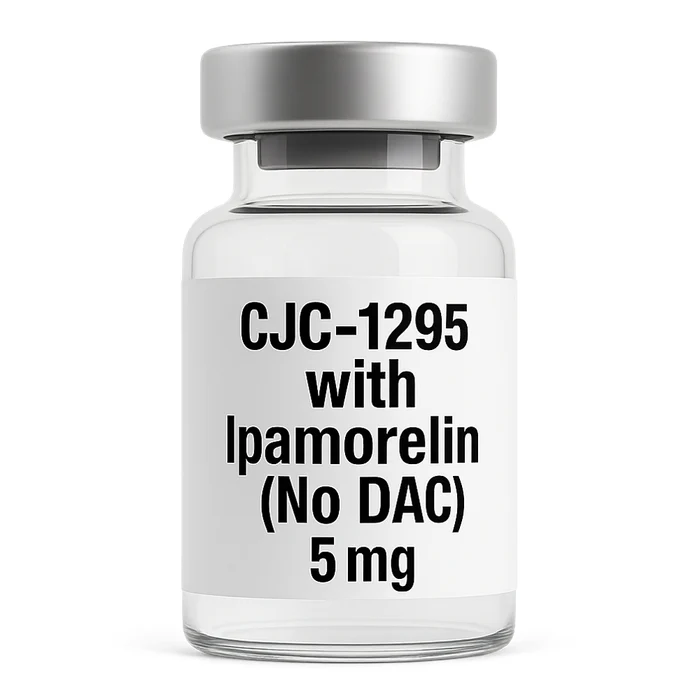
Overall Rating: 7.1 out of 10
Mechanistically real and supported by GH/IGF-1 trial data, but limited by DAC confusion, metabolic risks, no drug approval, and long-term safety gaps.
Every link in this article was verified as a real, accessible publication at the time of writing. We use PubMed, PMC, NEJM, JAMA, FDA.gov, and peer-reviewed journals only. No Wikipedia. No vendor blogs.
Before anything else: CJC-1295 is not one compound. It's two. And using the wrong one because you didn't know the difference is a real risk people take every day in this space.
CJC-1295 with DAC and CJC-1295 without DAC (also called Modified GRF 1-29 or Mod GRF) have different half-lives, different GH release profiles, different dosing schedules, and different physiological implications. The community uses the name interchangeably. That's a problem worth solving before we discuss anything else.
Both are GHRH analogs (synthetic hormones that mimic Growth Hormone Releasing Hormone). They tell your pituitary gland (a small gland at the base of the brain that controls growth and development) to release growth hormone. They don't contain GH themselves. That distinction matters for understanding the safety profile relative to injecting exogenous growth hormone (GH injected from an external source) directly.
Key Takeaways
- CJC-1295 is a synthetic GHRH analog developed by ConjuChem Technologies
- Two versions exist: with DAC (half-life 5.8 to 8.1 days) and without DAC (half-life \~30 minutes). These are not interchangeable
- ConjuChem trials showed dose-dependent GH increases of 2 to 10-fold lasting 6+ days and IGF-1 (Insulin-like Growth Factor 1) increases of 1.5 to 3-fold lasting 9 to 11 days (DAC version)
- GH pulsatility (the pattern of GH being released in bursts or pulses) was preserved even with sustained stimulation from the DAC version, though trough GH levels (the lowest concentration of GH in the blood between pulses) were markedly elevated
- Development was discontinued for business reasons, not safety concerns
- Almost always stacked with Ipamorelin in practice
- Banned by WADA. All GHRH analogs are prohibited in sport
- Sustained GH elevation raises real concerns about insulin resistance, IGF-1-related cancer risk, and thyroid metabolism
- Not approved as a drug anywhere. Research chemical
CJC-1295, In Simple Terms
- What GHRH is: Your hypothalamus (a part of the brain that controls hormone release) makes a hormone called GHRH (growth hormone releasing hormone) that signals your pituitary gland to release growth hormone. But natural GHRH has a half-life of under 10 minutes because an enzyme called DPP-IV (Dipeptidyl Peptidase-IV, an enzyme that degrades peptides) chews it up almost immediately. That's the problem CJC-1295 was built to solve.
- What CJC-1295 is: A modified version of GHRH (the first 29 amino acids) with four amino acid substitutions (changes in the molecular building blocks of the peptide) that make it resistant to DPP-IV degradation. It survives long enough to actually do something.
- The two versions: The "without DAC" version (Mod GRF 1-29) lasts about 30 minutes. It produces a natural-feeling GH pulse and then clears. The "with DAC" version attaches to albumin (a major protein in blood plasma) in your blood and sticks around for days, producing sustained GH elevation. Same concept, very different pharmacokinetics (the study of how a drug is absorbed, distributed, metabolized, and eliminated by the body).
- What it does downstream: More GH means more IGF-1. More IGF-1 means growth signals to tissues throughout the body. That's where the benefits (fat loss, recovery, tissue repair) and the risks (insulin resistance, potential cancer promotion) both come from.
Table of Contents
- What is CJC-1295?
- CJC-1295 with DAC vs without DAC
- How it works
- The bleed problem
- CJC-1295 and Ipamorelin: the stack
- How do you take it?
- Dosing
- Desensitization and cycling
- What does the evidence show?
- IGF-1 elevation: implications and concerns
- Insulin resistance and metabolic effects
- Why ConjuChem discontinued development
- WADA and competitive sport
- Safety and side effects
- What happens when you stop?
- Legal status
- Unanswered questions
- Final take
- FAQ
What is CJC-1295?

Natural GHRH is 44 amino acids; CJC-1295 uses the first 29 with four amino acid substitutions at positions 2, 8, 15, and 27 to resist enzymatic degradation. Those substitutions are the entire reason this compound exists. Without them, it would be destroyed in minutes like native GHRH.
The DAC version adds a Drug Affinity Complex; a reactive maleimide group (a chemical structure that readily binds to certain proteins) that covalently binds (forms a strong, permanent chemical link) to albumin in the blood after injection. Albumin has a half-life of about 20 days in humans. By hitching a ride, CJC-1295 with DAC extends its own half-life to 5.8 to 8.1 days. That's the technical innovation ConjuChem built their development program around.
CJC-1295 With DAC vs Without DAC: Not the Same Compound
This is the most important section in this article.
Without DAC (Mod GRF 1-29): Half-life of approximately 30 minutes. Produces a sharp, natural-feeling GH pulse when injected. GH rises, peaks, and falls within a couple of hours. This mimics (roughly) the body's own pulsatile GH secretion pattern. Needs to be injected 2 to 3 times daily for full effect. Usually dosed before bed, in the morning, and/or post-workout.
With DAC (true CJC-1295): Half-life of 5.8 to 8.1 days. Produces sustained, elevated GH and IGF-1 levels. A single injection keeps GH elevated for 6+ days and IGF-1 elevated for 9 to 11 days. Dosed once or twice weekly. More convenient but a fundamentally different physiological profile.
Why the community conflates them: Peptide vendors often sell both under "CJC-1295" with small print about the DAC distinction. Forums use the name interchangeably. Someone asking for "CJC-1295 dosing" could get a 30-minute-half-life protocol or a week-long-half-life protocol. If you buy this compound, confirm which version you're getting before you inject anything.
How CJC-1295 Works
CJC-1295 binds to GHRH receptors on pituitary somatotrope cells, stimulating them to synthesize and release growth hormone. GH then circulates through the body and triggers the liver (and other tissues) to produce IGF-1.
The GH-IGF-1 axis (the system where Growth Hormone triggers IGF-1 release) is the downstream cascade (a sequence of subsequent biological reactions). GH itself has direct effects (fat mobilization, insulin antagonism (opposing the action of insulin)). IGF-1 has its own effects (cell proliferation, anabolic signaling (signals that promote tissue building)). Both contribute to the body composition and recovery effects users are seeking.
GH pulse timing and sleep: GH is predominantly released in pulses during the first few hours of deep sleep. The entire logic of pre-sleep dosing for the no-DAC version rests on this; you inject before bed to amplify the natural nocturnal GH pulse. The DAC version doesn't need this timing because it's active continuously.
Gender differences: Women typically have higher baseline GH pulsatility than men. This means responses to GHRH analogs may differ between sexes, though the ConjuChem trials were conducted primarily in men.
The Bleed Problem
The DAC version's sustained GH elevation creates what the community calls a "GH bleed." Instead of sharp peaks and valleys like natural GH secretion, you get continuously elevated trough levels.
Here's the thing: a 2006 study in the Journal of Clinical Endocrinology & Metabolism specifically examined this concern. They found that GH pulsatility was actually preserved after CJC-1295 DAC administration. The peaks were still there. But trough GH levels were markedly elevated; 7.8-fold higher than baseline between pulses.
So it's not that the DAC version eliminates pulsatility. It's that it raises the floor. Whether continuously elevated trough GH is physiologically equivalent to natural pulsatile secretion is genuinely debated. The study authors noted the "marked enhancement of trough GH levels" as the primary driver of IGF-1 increases.
The no-DAC version avoids this issue entirely by clearing fast enough to allow GH to return to baseline between doses.
CJC-1295 and Ipamorelin: The Stack
CJC-1295 is almost never used alone in practice. The most common stack is with Ipamorelin, and the synergy is mechanistically real.
CJC-1295 acts on GHRH receptors (telling the pituitary to release GH). Ipamorelin acts on ghrelin/GHS receptors (a different signal that also triggers GH release).
They hit different nodes of the same GH release system. The result is amplified GH output beyond what either produces alone. Ipamorelin also has the advantage of not significantly raising cortisol or prolactin, which makes the combination cleaner than stacking CJC-1295 with other GH secretagogues (compounds that cause the secretion of Growth Hormone) like GHRP-6.
The stack is typically the no-DAC version (Mod GRF) with Ipamorelin, both injected together before bed.
How Do You Take CJC-1295?
Subcutaneous injection. Both versions.
No-DAC (Mod GRF): Injected 1 to 3 times daily. Common timing: before bed (to amplify natural sleep GH pulse), in the morning fasted, and/or post-workout. Must be taken on an empty stomach; insulin and blood sugar elevations blunt GH release.
With DAC: Injected once or twice weekly. Timing is less critical because the compound remains active for days.
CJC-1295 Dosing
ConjuChem trials (DAC version): Single subcutaneous doses of 30 to 60 mcg/kg produced dose-dependent GH increases with no serious adverse events. Multiple doses showed cumulative effects with IGF-1 remaining above baseline for up to 28 days.
Community protocols (no-DAC/Mod GRF): 100 mcg per injection, 1 to 3 times daily, typically stacked with 100 to 200 mcg Ipamorelin. Cycles of 8 to 12 weeks on, 4 weeks off.
Community protocols (DAC): 1 to 2 mg once or twice weekly. Less frequent dosing, longer cycles.
Talk to a clinician. This is a research chemical.
Desensitization and Cycling of CJC-1295
Chronic GHRH receptor stimulation can lead to receptor downregulation (a reduction in the number or sensitivity of receptors). Your pituitary becomes less responsive over time. This is the theoretical basis for cycling protocols; on/off periods designed to let receptor sensitivity recover.
The ConjuChem trials were short-duration (28 to 49 days), so long-term desensitization data in humans is limited. The concern is more established with the DAC version, where receptors are stimulated continuously for days, versus the no-DAC version, where stimulation is brief and intermittent.
Community practice: cycle 8 to 12 weeks on, 4 weeks off. Whether this protocol is optimal is unknown.
What Does the CJC-1295 Evidence Show?
GH and IGF-1 Elevation
The ConjuChem Phase 1/2 trials (two randomized, placebo-controlled, double-blind studies (a research standard where neither the subjects nor the researchers know who is receiving the drug or the inactive substance) in healthy adults aged 21 to 61) showed:
- Single injection: GH increased 2 to 10-fold for 6+ days
- IGF-1 increased 1.5 to 3-fold for 9 to 11 days
- Multiple doses: IGF-1 remained above baseline for up to 28 days
- Cumulative effect observed with repeated dosing
- No serious adverse events reported
This is real, placebo-controlled human data showing the mechanism works as claimed.
Body Composition
Fat mass reduction was measured as a secondary endpoint in the ConjuChem program. GH's lipolytic effects (effects that cause fat breakdown) are well-established; the question was whether GHRH analog-mediated GH elevation produces meaningful body composition changes. The short trial durations limit the strength of this data, but the direction was positive.
Recovery and Sleep Quality
GH is critical for tissue repair and is released predominantly during deep sleep. Users consistently report improved sleep quality and recovery on CJC-1295. However, direct clinical trial data specifically measuring sleep quality with CJC-1295 is thin. The mechanism is sound; the controlled evidence specifically for this compound is limited.
IGF-1 Elevation: Implications and Concerns
IGF-1 is a growth factor. It promotes cell proliferation, tissue growth, and anabolic signaling. That's the upside. The downside: IGF-1 doesn't discriminate between cell types.
Cancer concern: Elevated IGF-1 has been associated with increased risk of certain cancers in epidemiological studies. This is the same concern that applies to exogenous GH therapy and any GH-elevating intervention. It doesn't mean CJC-1295 causes cancer. It means sustained IGF-1 elevation is a growth signal that theoretically could promote existing malignancies (cancers or tumors).
Acromegaly risk: Prolonged, significantly elevated GH/IGF-1 can cause acromegalic features (enlarged hands, feet, jaw). At typical community doses this is unlikely, but with the DAC version's sustained elevation, the theoretical risk is higher than with pulsatile protocols.
Pituitary hyperplasia: Continuous stimulation of pituitary GHRH receptors (particularly with the DAC version) carries a theoretical risk of pituitary cell enlargement. This hasn't been reported at community doses but is a recognized concern with chronic GHRH receptor activation.
Anyone with a history of cancer, active malignancy, or pituitary conditions should not use CJC-1295.
Insulin Resistance and Metabolic Effects of CJC-1295
This is the most significant physiological concern that gets underreported in the community.
GH is an insulin antagonist. It raises blood glucose by opposing insulin's action on tissues. Sustained GH elevation, particularly from the DAC version's "bleed" effect, can produce clinically relevant insulin resistance. Elevated fasting blood glucose is a documented effect of sustained GH exposure.
If you're pre-diabetic, diabetic, or metabolically compromised, this matters. Anyone using CJC-1295 (especially the DAC version) should monitor fasting glucose and HbA1c (a blood test that measures average blood sugar levels over the past two to three months).
Thyroid metabolism: Exogenous GH elevation and continuous GHRH stimulation increase the peripheral conversion of T4 to T3 (the process of converting the inactive thyroid hormone, T4, into the active form, T3, outside of the thyroid gland). This can unmask subclinical hypothyroidism (a mild form of an underactive thyroid condition) or require dosage adjustments for individuals on thyroid medication. If you're on levothyroxine, your doctor needs to know you're using a GH secretagogue.
Why ConjuChem Discontinued Development
This gets misrepresented constantly.
ConjuChem discontinued CJC-1295 development due to business and financial decisions, not because of safety signals in the clinical trials. The trials showed no serious adverse events and supported "the potential utility of CJC-1295 as a therapeutic agent." The company faced financial difficulties and strategic pivots unrelated to the compound's safety profile.
This distinction matters. "Pulled from trials for safety" and "company went broke" are very different stories.
CJC-1295: WADA and Competitive Sport
GHRH analogs are prohibited by WADA at all times, in and out of competition. CJC-1295 is explicitly banned. Detection methods for GHRH analogs exist and are actively used in sport drug testing. If you compete in tested sport, this is a doping violation.
Safety and Side Effects of CJC-1295

From the ConjuChem trials: "safe and relatively well tolerated, particularly at doses of 30 or 60 mcg/kg."
Commonly reported: Injection site reactions (redness, swelling), water retention, headaches. The water retention has a mechanistic explanation: GH raises IGF-1, which has mild sodium-retaining effects at the kidney. That's why you hold water.
Metabolic concerns: Insulin resistance (see above), potential thyroid metabolism changes, fasting glucose elevation. These are dose-dependent and more pronounced with the DAC version.
Theoretical long-term risks: IGF-1-associated cancer promotion, acromegalic features with sustained elevation, pituitary hyperplasia with chronic GHRH receptor stimulation. None reported at typical community doses in short-term use, but long-term data simply doesn't exist.
What Happens When You Stop CJC-1295?
GH and IGF-1 return to baseline. No dependency. No withdrawal. GHRH receptor sensitivity recovers during off periods (this is why cycling exists). No rebound GH suppression has been reported.
Legal Status of CJC-1295
Not approved as a drug anywhere. Research chemical worldwide. WADA prohibited substance. Available from peptide suppliers and some compounding pharmacies.
Unanswered Questions
- DAC vs no-DAC: which is actually better for body composition and longevity? The pulsatile (no-DAC) profile seems more physiological. The sustained (DAC) profile is more convenient and produces higher IGF-1. No head-to-head comparison exists in humans.
- Does desensitization matter clinically at typical community doses? Unknown. The short ConjuChem trials can't answer this.
- What's the long-term insulin resistance impact? GH's insulin-antagonizing effects are well-documented, but long-term glucose data specifically on CJC-1295 users doesn't exist.
- Will any developer pick up where ConjuChem left off? The GLP-1 agonist (a class of drugs used to treat type 2 diabetes and obesity) boom has redirected pharma attention. Unlikely in the near term.
Final Take
The GH-elevating mechanism is real and the trial data shows it works. Dose-dependent GH and IGF-1 increases in placebo-controlled human trials. No serious adverse events in the clinical program. The compound was discontinued for business reasons, not safety.
But there are two things every reader needs to understand before using CJC-1295. First: the DAC confusion. Know which version you're buying, because they have fundamentally different pharmacokinetic profiles and risk implications. Second: the downstream metabolic effects. Sustained GH elevation isn't free. Insulin resistance, thyroid metabolism changes, and IGF-1-mediated growth promotion are real physiological consequences that deserve monitoring, not just hoping for the best.
If you're going to use it, use the right version for your goals, cycle appropriately, and monitor your bloodwork.
FAQ
What's the difference between CJC-1295 with DAC and without DAC? Half-life. The DAC version lasts 5.8 to 8.1 days; the no-DAC version (Mod GRF) lasts about 30 minutes. Different dosing, different GH release profiles.
Does CJC-1295 actually raise GH? Yes. Placebo-controlled trials showed 2 to 10-fold GH increases and 1.5 to 3-fold IGF-1 increases in healthy adults.
Why is it always stacked with Ipamorelin? They act on different receptors (GHRH vs ghrelin) that both trigger GH release. The combination amplifies GH output beyond either alone.
Was CJC-1295 pulled for safety reasons? No. ConjuChem discontinued development for business and financial reasons. The trials reported no serious adverse events.
Does the DAC version disrupt natural GH pulsatility? Partially. Pulsatility is preserved, but trough GH levels between pulses are markedly elevated. The floor goes up; the peaks remain.
Can CJC-1295 cause insulin resistance? Yes. GH antagonizes insulin. Sustained GH elevation, particularly from the DAC version, can raise fasting blood glucose and impair insulin sensitivity.
Is CJC-1295 banned in sport? Yes. All GHRH analogs are prohibited by WADA.
Is it FDA-approved? No. Research chemical only. Not approved as a drug anywhere.
Should I use DAC or no-DAC? No-DAC (Mod GRF) produces more physiological pulsatile GH release. DAC is more convenient (weekly dosing) but creates sustained elevation with additional metabolic concerns. Most clinicians in the peptide space prefer no-DAC for this reason.
About the author

Ahmed Khedri
Peptide research writer focused on evidence quality, clinical trial interpretation, and safety context.
Ahmed writes PeptideAWO reviews with an emphasis on separating clinical evidence from marketing claims. His work focuses on trial data, regulatory status, dosing context, and the practical safety questions readers should understand before researching a compound.
Peptides that pair well with CJC-1295
Tirzepatide Review 2026: The Dual Agonist That Beat Semaglutide in a Head-to-Head Trial
A dual GIP/GLP-1 agonist review covering SURMOUNT-5, the GIP question, MASH data, compounding rules, side effects, and access.
Read reviewSemaglutide (Ozempic/Wegovy): The 2026 Guide to Weight Loss, Cardiovascular Data & In-Depth Analysis
An FDA-approved GLP-1 review covering STEP weight-loss data, SELECT cardiovascular outcomes, rebound after stopping, side effects, access, and compounding concerns.
Read reviewRetatrutide Review 2026
Extremely promising weight loss results in clinical trials. Up to ~24% body weight loss in trials, but not yet FDA approved.
Read reviewGet Personalized Supplier Recommendations
Enter your email and we'll send you the best suppliers to buy CJC-1295 from.
We only recommend suppliers we've vetted. No spam.