Best Peptides
by goal
Pick a goal to see the peptides people ask about most. We rate the evidence, explain the potential benefits, and clearly show the risks.
Top All Peptides
Showing 6 of 25 peptides in this category
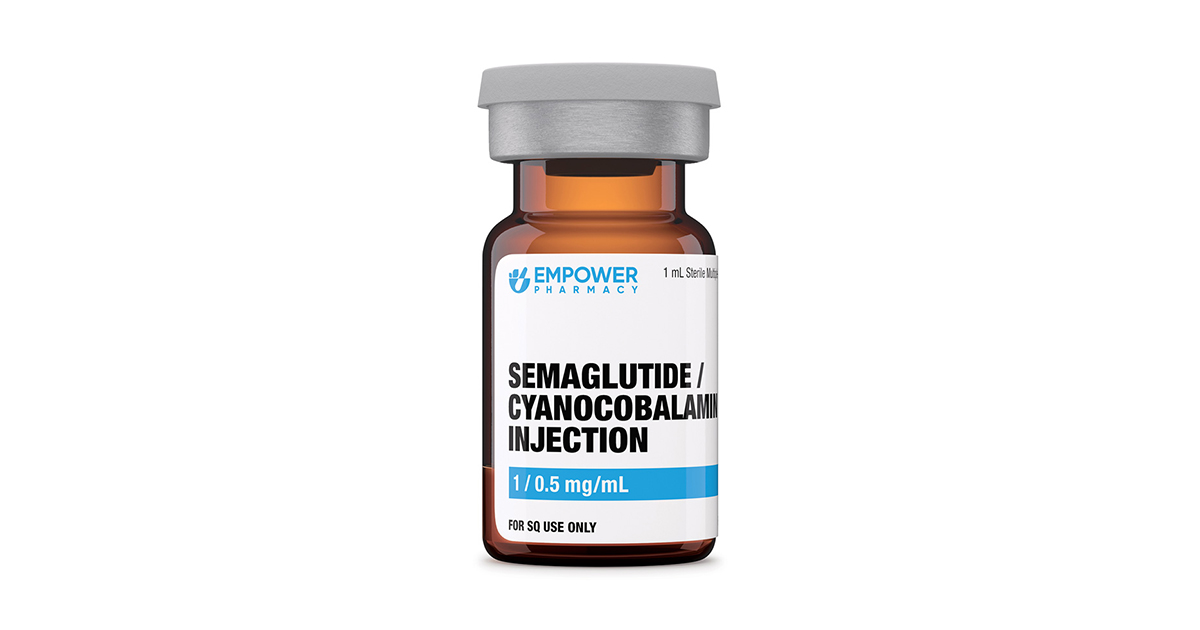
Semaglutide
GLP-1 receptor agonist for weight loss and type 2 diabetes
Exceptional
Tirzepatide
Dual GIP/GLP-1 receptor agonist for weight loss and type 2 diabetes
Exceptional
BPC-157
Body Protection Compound; gastric pentadecapeptide for tissue repair and wound healing
Promising, Preclinical
GHK-Cu
Copper tripeptide for skin regeneration, wound healing, and collagen synthesis
Strong for Topical
Retatrutide
Triple agonist (GIP/GLP-1/Glucagon) for obesity and metabolic disease
Outstanding Phase 2, Awaiting Approval
Showing 6 of 25 peptides
The 25 Most Researched Peptides and Compounds in 2026: Honest Reviews
The 25 most researched peptides and compounds in 2026, each reviewed independently based on its own evidence. From FDA-approved pharmaceuticals to research chemicals, rated honestly for what they actually deliver.
2026
Last Updated
Every link in this article was verified as a real, accessible publication at the time of writing. We use PubMed, PMC, NEJM, JAMA, FDA.gov, and peer-reviewed journals only. No Wikipedia. No vendor blogs.
These are the 25 peptides and compounds we have reviewed as of 2026. Each one is rated independently based on how well its evidence supports what it's supposed to do. A wound-healing peptide is judged on wound-healing data. A weight-loss compound is judged on weight-loss data. We don't compare peptides across categories because that doesn't make sense; rating a tanning peptide against a cognitive enhancer is like saying TVs are better than apples.
The order is random. Peptide number 1 isn't better than number 24. They just happen to be listed in that order.
How we rate: Each compound is scored on a 5-point scale based on evidence quality for its primary intended application. FDA approval with Phase III RCTs scores highest. Published animal data with no human trials scores lower. Honest ratings, not marketing.
Before you dive in, please take a moment to understand our rating system
| Rating | What It Means |
|---|---|
| 4.5 - 5.0 | FDA-approved with strong Phase III RCTs |
| 3.5 - 4.4 | Approved in some countries or strong clinical data |
| 2.5 - 3.4 | Preclinical evidence, limited or no human trials |
| Below 2.5 | Thin evidence or significant safety concerns |
1. Semaglutide
GLP-1 receptor agonist for weight loss and type 2 diabetes
You will love Semaglutide if you:
Want evidence spelled out: We connect Semaglutide to the research people actually cite for weight loss, and we flag animal-only or early-stage data.
Care about weight loss: This section summarizes how Semaglutide is discussed in that context without overstating what trials prove.
Need risks and unknowns upfront: We highlight regulatory status, common knowledge gaps, and why a licensed clinician should guide any decision.
You may be disappointed if you:
Want medical advice on this page: PeptideAWO is educational only. Nothing here replaces diagnosis, prescriptions, or supervision.
Expect a single "best" dose: Semaglutide protocols in studies and clinics vary widely. We do not standardize dosing for individuals.
Need guaranteed outcomes: Responses differ by health status, medications, and product quality. We do not promise results.
FDA-approved as Ozempic (diabetes) and Wegovy (weight loss) with one of the deepest evidence bases in modern pharmacology. The STEP trials showed approximately 15% body weight loss at the 2.4 mg dose over 68 weeks. The SELECT cardiovascular outcomes trial proved a 20% reduction in major cardiovascular events. The evidence standard here is pharmaceutical-grade, multi-thousand-patient, peer-reviewed, and replicated. GI side effects and weight regain after stopping are real limitations, but the data quality is among the best on this list.
Semaglutide overall experience
| Criteria | Editor's rating |
|---|---|
| Evidence quality | 5.0/5 (Excellent) Strength and breadth of published human data relevant to Semaglutide. |
| Safety and unknowns | 4.8/5 (Excellent) Side-effect signal, monitoring needs, and long-term gaps we watch for. |
| Regulatory clarity | 4.7/5 (Excellent) Approved versus research-only framing, and what that implies for access. |
| Practical use | 5.0/5 (Excellent) Complexity of use, adherence, and what real-world follow-through tends to look like. |
| Transparency | 5.0/5 (Excellent) How easy it is to verify identity, purity, and reputable sourcing for this class. |
| Access and cost | Varies Not a price quote. Costs depend on region, clinic, compounding rules, and coverage. Verify locally. |
| Final score | 4.9 out of 5 (Excellent) |
2. Tirzepatide
Dual GIP/GLP-1 receptor agonist for weight loss and type 2 diabetes
You will love Tirzepatide if you:
Want evidence spelled out: We connect Tirzepatide to the research people actually cite for weight loss, and we flag animal-only or early-stage data.
Care about weight loss: This section summarizes how Tirzepatide is discussed in that context without overstating what trials prove.
Need risks and unknowns upfront: We highlight regulatory status, common knowledge gaps, and why a licensed clinician should guide any decision.
You may be disappointed if you:
Want medical advice on this page: PeptideAWO is educational only. Nothing here replaces diagnosis, prescriptions, or supervision.
Expect a single "best" dose: Tirzepatide protocols in studies and clinics vary widely. We do not standardize dosing for individuals.
Need guaranteed outcomes: Responses differ by health status, medications, and product quality. We do not promise results.
FDA-approved as Mounjaro (diabetes) and Zepbound (obesity). Beat semaglutide head-to-head in the SURMOUNT-5 trial: 20.2% vs 13.7% weight loss at 72 weeks. The SURPASS-2 head-to-head in T2D confirmed superiority for both HbA1c and weight. Additional MASH liver data, sleep apnea data, and cardiovascular outcomes data make it broader than its weight-loss branding. The GIP mechanism question (why dual agonism outperforms single) is a genuine scientific contribution. The evidence base rivals semaglutide's.
Tirzepatide overall experience
| Criteria | Editor's rating |
|---|---|
| Evidence quality | 5.0/5 (Excellent) Strength and breadth of published human data relevant to Tirzepatide. |
| Safety and unknowns | 4.8/5 (Excellent) Side-effect signal, monitoring needs, and long-term gaps we watch for. |
| Regulatory clarity | 4.7/5 (Excellent) Approved versus research-only framing, and what that implies for access. |
| Practical use | 5.0/5 (Excellent) Complexity of use, adherence, and what real-world follow-through tends to look like. |
| Transparency | 5.0/5 (Excellent) How easy it is to verify identity, purity, and reputable sourcing for this class. |
| Access and cost | Varies Not a price quote. Costs depend on region, clinic, compounding rules, and coverage. Verify locally. |
| Final score | 4.9 out of 5 (Excellent) |
3. BPC-157
Body Protection Compound; gastric pentadecapeptide for tissue repair and wound healing
You will love BPC-157 if you:
Want evidence spelled out: We connect BPC-157 to the research people actually cite for tissue repair, and we flag animal-only or early-stage data.
Care about tissue repair: This section summarizes how BPC-157 is discussed in that context without overstating what trials prove.
Need risks and unknowns upfront: We highlight regulatory status, common knowledge gaps, and why a licensed clinician should guide any decision.
You may be disappointed if you:
Want medical advice on this page: PeptideAWO is educational only. Nothing here replaces diagnosis, prescriptions, or supervision.
Expect a single "best" dose: BPC-157 protocols in studies and clinics vary widely. We do not standardize dosing for individuals.
Need guaranteed outcomes: Responses differ by health status, medications, and product quality. We do not promise results.
One of the most widely used peptides in the community for tendon, ligament, and gut healing. The animal data is extensive and covers an impressive range of tissue types. But here's the problem: no published human randomized controlled trials exist as of 2026. The community experience is substantial, the mechanistic rationale is sound (angiogenesis, nitric oxide pathway, growth factor modulation), and the safety profile appears favorable, but the evidence standard is preclinical. Promising, not proven.
BPC-157 overall experience
| Criteria | Editor's rating |
|---|---|
| Evidence quality | 3.8/5 (Good) Strength and breadth of published human data relevant to BPC-157. |
| Safety and unknowns | 3.5/5 (Good) Side-effect signal, monitoring needs, and long-term gaps we watch for. |
| Regulatory clarity | 3.4/5 (Fair) Approved versus research-only framing, and what that implies for access. |
| Practical use | 3.7/5 (Good) Complexity of use, adherence, and what real-world follow-through tends to look like. |
| Transparency | 3.7/5 (Good) How easy it is to verify identity, purity, and reputable sourcing for this class. |
| Access and cost | Varies Not a price quote. Costs depend on region, clinic, compounding rules, and coverage. Verify locally. |
| Final score | 3.6 out of 5 (Good) |
4. GHK-Cu
Copper tripeptide for skin regeneration, wound healing, and collagen synthesis
You will love GHK-Cu if you:
Want evidence spelled out: We connect GHK-Cu to the research people actually cite for skin regeneration, and we flag animal-only or early-stage data.
Care about skin regeneration: This section summarizes how GHK-Cu is discussed in that context without overstating what trials prove.
Need risks and unknowns upfront: We highlight regulatory status, common knowledge gaps, and why a licensed clinician should guide any decision.
You may be disappointed if you:
Want medical advice on this page: PeptideAWO is educational only. Nothing here replaces diagnosis, prescriptions, or supervision.
Expect a single "best" dose: GHK-Cu protocols in studies and clinics vary widely. We do not standardize dosing for individuals.
Need guaranteed outcomes: Responses differ by health status, medications, and product quality. We do not promise results.
One of the best-characterized cosmetic and wound-healing peptides with published clinical studies showing collagen stimulation that outperformed both vitamin C and retinoic acid in some comparisons. The topical evidence base is solid. The injectable evidence is thinner. The copper-dependent mechanism (matrix metalloproteinase regulation, gene expression modulation) is well-documented in peer-reviewed Western journals. Safety profile for topical use is excellent. The gap between topical and systemic evidence is the main limitation.
GHK-Cu overall experience
| Criteria | Editor's rating |
|---|---|
| Evidence quality | 4.2/5 (Very Good) Strength and breadth of published human data relevant to GHK-Cu. |
| Safety and unknowns | 3.9/5 (Good) Side-effect signal, monitoring needs, and long-term gaps we watch for. |
| Regulatory clarity | 3.8/5 (Good) Approved versus research-only framing, and what that implies for access. |
| Practical use | 4.1/5 (Very Good) Complexity of use, adherence, and what real-world follow-through tends to look like. |
| Transparency | 4.1/5 (Very Good) How easy it is to verify identity, purity, and reputable sourcing for this class. |
| Access and cost | Varies Not a price quote. Costs depend on region, clinic, compounding rules, and coverage. Verify locally. |
| Final score | 4.0 out of 5 (Very Good) |
5. Retatrutide
Triple agonist (GIP/GLP-1/Glucagon) for obesity and metabolic disease
You will love Retatrutide if you:
Want evidence spelled out: We connect Retatrutide to the research people actually cite for weight loss, and we flag animal-only or early-stage data.
Care about weight loss: This section summarizes how Retatrutide is discussed in that context without overstating what trials prove.
Need risks and unknowns upfront: We highlight regulatory status, common knowledge gaps, and why a licensed clinician should guide any decision.
You may be disappointed if you:
Want medical advice on this page: PeptideAWO is educational only. Nothing here replaces diagnosis, prescriptions, or supervision.
Expect a single "best" dose: Retatrutide protocols in studies and clinics vary widely. We do not standardize dosing for individuals.
Need guaranteed outcomes: Responses differ by health status, medications, and product quality. We do not promise results.
Phase 2 data showed up to 24% body weight loss, exceeding both semaglutide and tirzepatide in cross-trial comparison. The glucagon receptor adds energy expenditure and hepatic fat oxidation on top of the dual agonism. But it's not yet FDA-approved, which caps the rating. Eli Lilly's Phase 3 program is ongoing. If it replicates the Phase 2 numbers, it will likely become the most effective approved weight-loss compound. The data is real and published, the approval isn't.
Retatrutide overall experience
| Criteria | Editor's rating |
|---|---|
| Evidence quality | 4.5/5 (Excellent) Strength and breadth of published human data relevant to Retatrutide. |
| Safety and unknowns | 4.2/5 (Very Good) Side-effect signal, monitoring needs, and long-term gaps we watch for. |
| Regulatory clarity | 4.1/5 (Very Good) Approved versus research-only framing, and what that implies for access. |
| Practical use | 4.4/5 (Very Good) Complexity of use, adherence, and what real-world follow-through tends to look like. |
| Transparency | 4.4/5 (Very Good) How easy it is to verify identity, purity, and reputable sourcing for this class. |
| Access and cost | Varies Not a price quote. Costs depend on region, clinic, compounding rules, and coverage. Verify locally. |
| Final score | 4.3 out of 5 (Very Good) |
6. Tesamorelin
GHRH analog for visceral fat reduction
You will love Tesamorelin if you:
Want evidence spelled out: We connect Tesamorelin to the research people actually cite for fat reduction, and we flag animal-only or early-stage data.
Care about fat reduction: This section summarizes how Tesamorelin is discussed in that context without overstating what trials prove.
Need risks and unknowns upfront: We highlight regulatory status, common knowledge gaps, and why a licensed clinician should guide any decision.
You may be disappointed if you:
Want medical advice on this page: PeptideAWO is educational only. Nothing here replaces diagnosis, prescriptions, or supervision.
Expect a single "best" dose: Tesamorelin protocols in studies and clinics vary widely. We do not standardize dosing for individuals.
Need guaranteed outcomes: Responses differ by health status, medications, and product quality. We do not promise results.
The only FDA-approved GHRH analog (Egrifta/Egrifta SV) for HIV-associated lipodystrophy, with Phase III RCT data showing 15-18% visceral fat reduction. The cognitive function RCT in non-HIV older adults showing executive function improvement is the most underreported finding in the GHRH space. Preserves pulsatile GH release, unlike CJC-1295 with DAC. The narrow approved indication vs. broad community use gap is real, but the evidence quality for visceral fat is among the best on this list.
Tesamorelin overall experience
| Criteria | Editor's rating |
|---|---|
| Evidence quality | 4.7/5 (Excellent) Strength and breadth of published human data relevant to Tesamorelin. |
| Safety and unknowns | 4.4/5 (Very Good) Side-effect signal, monitoring needs, and long-term gaps we watch for. |
| Regulatory clarity | 4.3/5 (Very Good) Approved versus research-only framing, and what that implies for access. |
| Practical use | 4.6/5 (Excellent) Complexity of use, adherence, and what real-world follow-through tends to look like. |
| Transparency | 4.6/5 (Excellent) How easy it is to verify identity, purity, and reputable sourcing for this class. |
| Access and cost | Varies Not a price quote. Costs depend on region, clinic, compounding rules, and coverage. Verify locally. |
| Final score | 4.5 out of 5 (Excellent) |
7. Thymosin Alpha-1
Thymic peptide for immune modulation
You will love Thymosin Alpha-1 if you:
Want evidence spelled out: We connect Thymosin Alpha-1 to the research people actually cite for immune support, and we flag animal-only or early-stage data.
Care about immune support: This section summarizes how Thymosin Alpha-1 is discussed in that context without overstating what trials prove.
Need risks and unknowns upfront: We highlight regulatory status, common knowledge gaps, and why a licensed clinician should guide any decision.
You may be disappointed if you:
Want medical advice on this page: PeptideAWO is educational only. Nothing here replaces diagnosis, prescriptions, or supervision.
Expect a single "best" dose: Thymosin Alpha-1 protocols in studies and clinics vary widely. We do not standardize dosing for individuals.
Need guaranteed outcomes: Responses differ by health status, medications, and product quality. We do not promise results.
Approved as Zadaxin in over 35 countries for hepatitis B and C, with human RCT data in viral infections and cancer immunotherapy. The COVID-19 retrospective data added to the evidence base. Mechanism: dendritic cell maturation and T cell activation through TLR9 and TLR2. Well-tolerated with decades of clinical use. Not FDA-approved, which limits Western accessibility, but the international approval footprint is substantial.
Thymosin Alpha-1 overall experience
| Criteria | Editor's rating |
|---|---|
| Evidence quality | 4.5/5 (Excellent) Strength and breadth of published human data relevant to Thymosin Alpha-1. |
| Safety and unknowns | 4.2/5 (Very Good) Side-effect signal, monitoring needs, and long-term gaps we watch for. |
| Regulatory clarity | 4.1/5 (Very Good) Approved versus research-only framing, and what that implies for access. |
| Practical use | 4.4/5 (Very Good) Complexity of use, adherence, and what real-world follow-through tends to look like. |
| Transparency | 4.4/5 (Very Good) How easy it is to verify identity, purity, and reputable sourcing for this class. |
| Access and cost | Varies Not a price quote. Costs depend on region, clinic, compounding rules, and coverage. Verify locally. |
| Final score | 4.3 out of 5 (Very Good) |
8. NAD+
Coenzyme for cellular energy and DNA repair
You will love NAD+ if you:
Want evidence spelled out: We connect NAD+ to the research people actually cite for longevity, and we flag animal-only or early-stage data.
Care about longevity: This section summarizes how NAD+ is discussed in that context without overstating what trials prove.
Need risks and unknowns upfront: We highlight regulatory status, common knowledge gaps, and why a licensed clinician should guide any decision.
You may be disappointed if you:
Want medical advice on this page: PeptideAWO is educational only. Nothing here replaces diagnosis, prescriptions, or supervision.
Expect a single "best" dose: NAD+ protocols in studies and clinics vary widely. We do not standardize dosing for individuals.
Need guaranteed outcomes: Responses differ by health status, medications, and product quality. We do not promise results.
NAD+ occupies a unique position: it's a naturally occurring coenzyme, not a synthetic peptide. The mechanistic data (sirtuin activation, PARP-mediated DNA repair, mitochondrial function) is deep and well-replicated. Human clinical trials with precursors (NMN, NR) are growing. The gap between raising NAD+ levels in blood and actually improving health outcomes in humans is the central unresolved question. The science is compelling; the clinical proof is still building.
NAD+ overall experience
| Criteria | Editor's rating |
|---|---|
| Evidence quality | 4.2/5 (Very Good) Strength and breadth of published human data relevant to NAD+. |
| Safety and unknowns | 3.9/5 (Good) Side-effect signal, monitoring needs, and long-term gaps we watch for. |
| Regulatory clarity | 3.8/5 (Good) Approved versus research-only framing, and what that implies for access. |
| Practical use | 4.1/5 (Very Good) Complexity of use, adherence, and what real-world follow-through tends to look like. |
| Transparency | 4.1/5 (Very Good) How easy it is to verify identity, purity, and reputable sourcing for this class. |
| Access and cost | Varies Not a price quote. Costs depend on region, clinic, compounding rules, and coverage. Verify locally. |
| Final score | 4.0 out of 5 (Very Good) |
9. Semax
ACTH(4-10) analog for neuroprotection and cognitive enhancement
You will love Semax if you:
Want evidence spelled out: We connect Semax to the research people actually cite for brain health, and we flag animal-only or early-stage data.
Care about brain health: This section summarizes how Semax is discussed in that context without overstating what trials prove.
Need risks and unknowns upfront: We highlight regulatory status, common knowledge gaps, and why a licensed clinician should guide any decision.
You may be disappointed if you:
Want medical advice on this page: PeptideAWO is educational only. Nothing here replaces diagnosis, prescriptions, or supervision.
Expect a single "best" dose: Semax protocols in studies and clinics vary widely. We do not standardize dosing for individuals.
Need guaranteed outcomes: Responses differ by health status, medications, and product quality. We do not promise results.
Approved in Russia for stroke recovery, cognitive disorders, and peptic ulcers. The BDNF upregulation mechanism is well-characterized. The nootropic community reports are extensive. The limitation is concentration of evidence in Russian literature with minimal independent Western replication. The mechanism is sound, the Russian clinical use is real, the Western validation gap is the main reason the rating isn't higher.
Semax overall experience
| Criteria | Editor's rating |
|---|---|
| Evidence quality | 4.0/5 (Very Good) Strength and breadth of published human data relevant to Semax. |
| Safety and unknowns | 3.7/5 (Good) Side-effect signal, monitoring needs, and long-term gaps we watch for. |
| Regulatory clarity | 3.6/5 (Good) Approved versus research-only framing, and what that implies for access. |
| Practical use | 3.9/5 (Good) Complexity of use, adherence, and what real-world follow-through tends to look like. |
| Transparency | 3.9/5 (Good) How easy it is to verify identity, purity, and reputable sourcing for this class. |
| Access and cost | Varies Not a price quote. Costs depend on region, clinic, compounding rules, and coverage. Verify locally. |
| Final score | 3.8 out of 5 (Good) |
10. Epitalon
Tetrapeptide bioregulator for telomerase activation and anti-aging
You will love Epitalon if you:
Want evidence spelled out: We connect Epitalon to the research people actually cite for anti-aging, and we flag animal-only or early-stage data.
Care about anti-aging: This section summarizes how Epitalon is discussed in that context without overstating what trials prove.
Need risks and unknowns upfront: We highlight regulatory status, common knowledge gaps, and why a licensed clinician should guide any decision.
You may be disappointed if you:
Want medical advice on this page: PeptideAWO is educational only. Nothing here replaces diagnosis, prescriptions, or supervision.
Expect a single "best" dose: Epitalon protocols in studies and clinics vary widely. We do not standardize dosing for individuals.
Need guaranteed outcomes: Responses differ by health status, medications, and product quality. We do not promise results.
Khavinson's signature compound. The telomerase activation data is published and the retinal degeneration research is the most specific application. But the evidence is concentrated in one research group, Western replication is minimal, and the anti-aging claims are mechanistically plausible but clinically unproven in any properly powered human trial. The concept is fascinating; the evidence ecosystem is narrow.
Epitalon overall experience
| Criteria | Editor's rating |
|---|---|
| Evidence quality | 3.2/5 (Fair) Strength and breadth of published human data relevant to Epitalon. |
| Safety and unknowns | 2.9/5 (Mixed) Side-effect signal, monitoring needs, and long-term gaps we watch for. |
| Regulatory clarity | 2.8/5 (Mixed) Approved versus research-only framing, and what that implies for access. |
| Practical use | 3.1/5 (Fair) Complexity of use, adherence, and what real-world follow-through tends to look like. |
| Transparency | 3.1/5 (Fair) How easy it is to verify identity, purity, and reputable sourcing for this class. |
| Access and cost | Varies Not a price quote. Costs depend on region, clinic, compounding rules, and coverage. Verify locally. |
| Final score | 3.0 out of 5 (Fair) |
11. Selank
Tuftsin analog for anxiety and immune modulation
You will love Selank if you:
Want evidence spelled out: We connect Selank to the research people actually cite for focus & calm, and we flag animal-only or early-stage data.
Care about focus & calm: This section summarizes how Selank is discussed in that context without overstating what trials prove.
Need risks and unknowns upfront: We highlight regulatory status, common knowledge gaps, and why a licensed clinician should guide any decision.
You may be disappointed if you:
Want medical advice on this page: PeptideAWO is educational only. Nothing here replaces diagnosis, prescriptions, or supervision.
Expect a single "best" dose: Selank protocols in studies and clinics vary widely. We do not standardize dosing for individuals.
Need guaranteed outcomes: Responses differ by health status, medications, and product quality. We do not promise results.
Approved in Russia as an anxiolytic (anti-anxiety) nasal spray. The mechanism (GABA modulation, enkephalin stabilization, BDNF effects) is distinct from benzodiazepines and doesn't produce dependence or sedation. The dual immune-anxiolytic profile is unique. Same Russian evidence concentration caveat as Semax, but the anxiolytic niche is well-defined and the safety profile is favorable.
Selank overall experience
| Criteria | Editor's rating |
|---|---|
| Evidence quality | 3.9/5 (Good) Strength and breadth of published human data relevant to Selank. |
| Safety and unknowns | 3.6/5 (Good) Side-effect signal, monitoring needs, and long-term gaps we watch for. |
| Regulatory clarity | 3.5/5 (Good) Approved versus research-only framing, and what that implies for access. |
| Practical use | 3.8/5 (Good) Complexity of use, adherence, and what real-world follow-through tends to look like. |
| Transparency | 3.8/5 (Good) How easy it is to verify identity, purity, and reputable sourcing for this class. |
| Access and cost | Varies Not a price quote. Costs depend on region, clinic, compounding rules, and coverage. Verify locally. |
| Final score | 3.7 out of 5 (Good) |
12. CJC-1295
GHRH analog for sustained GH elevation
You will love CJC-1295 if you:
Want evidence spelled out: We connect CJC-1295 to the research people actually cite for growth hormone, and we flag animal-only or early-stage data.
Care about growth hormone: This section summarizes how CJC-1295 is discussed in that context without overstating what trials prove.
Need risks and unknowns upfront: We highlight regulatory status, common knowledge gaps, and why a licensed clinician should guide any decision.
You may be disappointed if you:
Want medical advice on this page: PeptideAWO is educational only. Nothing here replaces diagnosis, prescriptions, or supervision.
Expect a single "best" dose: CJC-1295 protocols in studies and clinics vary widely. We do not standardize dosing for individuals.
Need guaranteed outcomes: Responses differ by health status, medications, and product quality. We do not promise results.
Modified GHRH(1-29) with DAC (Drug Affinity Complex) for albumin binding, producing a half-life of 6-8 days and sustained GH elevation. Phase 2 data showed significant GH and IGF-1 elevation. But development was discontinued (ConjuChem ceased operations), and the sustained GH "bleed" doesn't mimic natural pulsatile release. The evidence exists but the development pathway doesn't.
CJC-1295 overall experience
| Criteria | Editor's rating |
|---|---|
| Evidence quality | 3.5/5 (Good) Strength and breadth of published human data relevant to CJC-1295. |
| Safety and unknowns | 3.2/5 (Fair) Side-effect signal, monitoring needs, and long-term gaps we watch for. |
| Regulatory clarity | 3.1/5 (Fair) Approved versus research-only framing, and what that implies for access. |
| Practical use | 3.4/5 (Fair) Complexity of use, adherence, and what real-world follow-through tends to look like. |
| Transparency | 3.4/5 (Fair) How easy it is to verify identity, purity, and reputable sourcing for this class. |
| Access and cost | Varies Not a price quote. Costs depend on region, clinic, compounding rules, and coverage. Verify locally. |
| Final score | 3.3 out of 5 (Fair) |
13. Ipamorelin
Selective GHRP for clean GH release
You will love Ipamorelin if you:
Want evidence spelled out: We connect Ipamorelin to the research people actually cite for growth hormone, and we flag animal-only or early-stage data.
Care about growth hormone: This section summarizes how Ipamorelin is discussed in that context without overstating what trials prove.
Need risks and unknowns upfront: We highlight regulatory status, common knowledge gaps, and why a licensed clinician should guide any decision.
You may be disappointed if you:
Want medical advice on this page: PeptideAWO is educational only. Nothing here replaces diagnosis, prescriptions, or supervision.
Expect a single "best" dose: Ipamorelin protocols in studies and clinics vary widely. We do not standardize dosing for individuals.
Need guaranteed outcomes: Responses differ by health status, medications, and product quality. We do not promise results.
The cleanest GHRP in the class: doesn't raise cortisol, prolactin, or ACTH even at doses 200-fold above the GH ED50. Supports slow-wave sleep. The selectivity advantage over GHRP-6 and Hexarelin is well-documented. But no FDA approval, no completed Phase 3 program (Novo Nordisk/Helsinn abandoned development), and the evidence is primarily animal data and community use. The selectivity is proven; the clinical pathway isn't.
Ipamorelin overall experience
| Criteria | Editor's rating |
|---|---|
| Evidence quality | 3.7/5 (Good) Strength and breadth of published human data relevant to Ipamorelin. |
| Safety and unknowns | 3.4/5 (Fair) Side-effect signal, monitoring needs, and long-term gaps we watch for. |
| Regulatory clarity | 3.3/5 (Fair) Approved versus research-only framing, and what that implies for access. |
| Practical use | 3.6/5 (Good) Complexity of use, adherence, and what real-world follow-through tends to look like. |
| Transparency | 3.6/5 (Good) How easy it is to verify identity, purity, and reputable sourcing for this class. |
| Access and cost | Varies Not a price quote. Costs depend on region, clinic, compounding rules, and coverage. Verify locally. |
| Final score | 3.5 out of 5 (Good) |
14. TB-500
Thymosin Beta-4 fragment for tissue repair and recovery
You will love TB-500 if you:
Want evidence spelled out: We connect TB-500 to the research people actually cite for tissue repair, and we flag animal-only or early-stage data.
Care about tissue repair: This section summarizes how TB-500 is discussed in that context without overstating what trials prove.
Need risks and unknowns upfront: We highlight regulatory status, common knowledge gaps, and why a licensed clinician should guide any decision.
You may be disappointed if you:
Want medical advice on this page: PeptideAWO is educational only. Nothing here replaces diagnosis, prescriptions, or supervision.
Expect a single "best" dose: TB-500 protocols in studies and clinics vary widely. We do not standardize dosing for individuals.
Need guaranteed outcomes: Responses differ by health status, medications, and product quality. We do not promise results.
Synthetic fragment of Thymosin Beta-4, widely used in the community for injury recovery, inflammation reduction, and tissue repair. The parent compound (Tβ4) has substantial published research on wound healing, cardiac repair, and anti-fibrotic effects. TB-500 is the commercially available fragment. No human clinical trials. The animal and in vitro evidence is solid; the human validation gap is the limiting factor.
TB-500 overall experience
| Criteria | Editor's rating |
|---|---|
| Evidence quality | 3.6/5 (Good) Strength and breadth of published human data relevant to TB-500. |
| Safety and unknowns | 3.3/5 (Fair) Side-effect signal, monitoring needs, and long-term gaps we watch for. |
| Regulatory clarity | 3.2/5 (Fair) Approved versus research-only framing, and what that implies for access. |
| Practical use | 3.5/5 (Good) Complexity of use, adherence, and what real-world follow-through tends to look like. |
| Transparency | 3.5/5 (Good) How easy it is to verify identity, purity, and reputable sourcing for this class. |
| Access and cost | Varies Not a price quote. Costs depend on region, clinic, compounding rules, and coverage. Verify locally. |
| Final score | 3.4 out of 5 (Fair) |
15. DSIP
Delta sleep-inducing peptide for sleep regulation
You will love DSIP if you:
Want evidence spelled out: We connect DSIP to the research people actually cite for sleep quality, and we flag animal-only or early-stage data.
Care about sleep quality: This section summarizes how DSIP is discussed in that context without overstating what trials prove.
Need risks and unknowns upfront: We highlight regulatory status, common knowledge gaps, and why a licensed clinician should guide any decision.
You may be disappointed if you:
Want medical advice on this page: PeptideAWO is educational only. Nothing here replaces diagnosis, prescriptions, or supervision.
Expect a single "best" dose: DSIP protocols in studies and clinics vary widely. We do not standardize dosing for individuals.
Need guaranteed outcomes: Responses differ by health status, medications, and product quality. We do not promise results.
Discovered in 1977 from rabbit brain during slow-wave sleep. The concept is compelling: a naturally occurring peptide that induces deep sleep. But the human data is inconsistent, the mechanism isn't fully characterized, and the compound has a short half-life that complicates delivery. Some clinical studies show benefit; others don't. The sleep-inducing narrative is cleaner than the evidence.
DSIP overall experience
| Criteria | Editor's rating |
|---|---|
| Evidence quality | 2.9/5 (Mixed) Strength and breadth of published human data relevant to DSIP. |
| Safety and unknowns | 2.7/5 (Mixed) Side-effect signal, monitoring needs, and long-term gaps we watch for. |
| Regulatory clarity | 2.6/5 (Mixed) Approved versus research-only framing, and what that implies for access. |
| Practical use | 2.8/5 (Mixed) Complexity of use, adherence, and what real-world follow-through tends to look like. |
| Transparency | 2.9/5 (Mixed) How easy it is to verify identity, purity, and reputable sourcing for this class. |
| Access and cost | Varies Not a price quote. Costs depend on region, clinic, compounding rules, and coverage. Verify locally. |
| Final score | 2.8 out of 5 (Mixed) |
16. AOD-9604
Modified GH fragment for fat metabolism
You will love AOD-9604 if you:
Want evidence spelled out: We connect AOD-9604 to the research people actually cite for fat loss, and we flag animal-only or early-stage data.
Care about fat loss: This section summarizes how AOD-9604 is discussed in that context without overstating what trials prove.
Need risks and unknowns upfront: We highlight regulatory status, common knowledge gaps, and why a licensed clinician should guide any decision.
You may be disappointed if you:
Want medical advice on this page: PeptideAWO is educational only. Nothing here replaces diagnosis, prescriptions, or supervision.
Expect a single "best" dose: AOD-9604 protocols in studies and clinics vary widely. We do not standardize dosing for individuals.
Need guaranteed outcomes: Responses differ by health status, medications, and product quality. We do not promise results.
A modified fragment of human growth hormone (amino acids 177-191) designed to promote fat metabolism without the growth-promoting effects of full GH. The Phase 3 obesity trial failed to show significant weight loss versus placebo, which ended the systemic development pathway. TGA (Australia) approved it as a food supplement ingredient. The fat metabolism mechanism is real in preclinical data; the clinical translation for systemic weight loss failed.
AOD-9604 overall experience
| Criteria | Editor's rating |
|---|---|
| Evidence quality | 3.2/5 (Fair) Strength and breadth of published human data relevant to AOD-9604. |
| Safety and unknowns | 2.9/5 (Mixed) Side-effect signal, monitoring needs, and long-term gaps we watch for. |
| Regulatory clarity | 2.8/5 (Mixed) Approved versus research-only framing, and what that implies for access. |
| Practical use | 3.1/5 (Fair) Complexity of use, adherence, and what real-world follow-through tends to look like. |
| Transparency | 3.1/5 (Fair) How easy it is to verify identity, purity, and reputable sourcing for this class. |
| Access and cost | Varies Not a price quote. Costs depend on region, clinic, compounding rules, and coverage. Verify locally. |
| Final score | 3.0 out of 5 (Fair) |
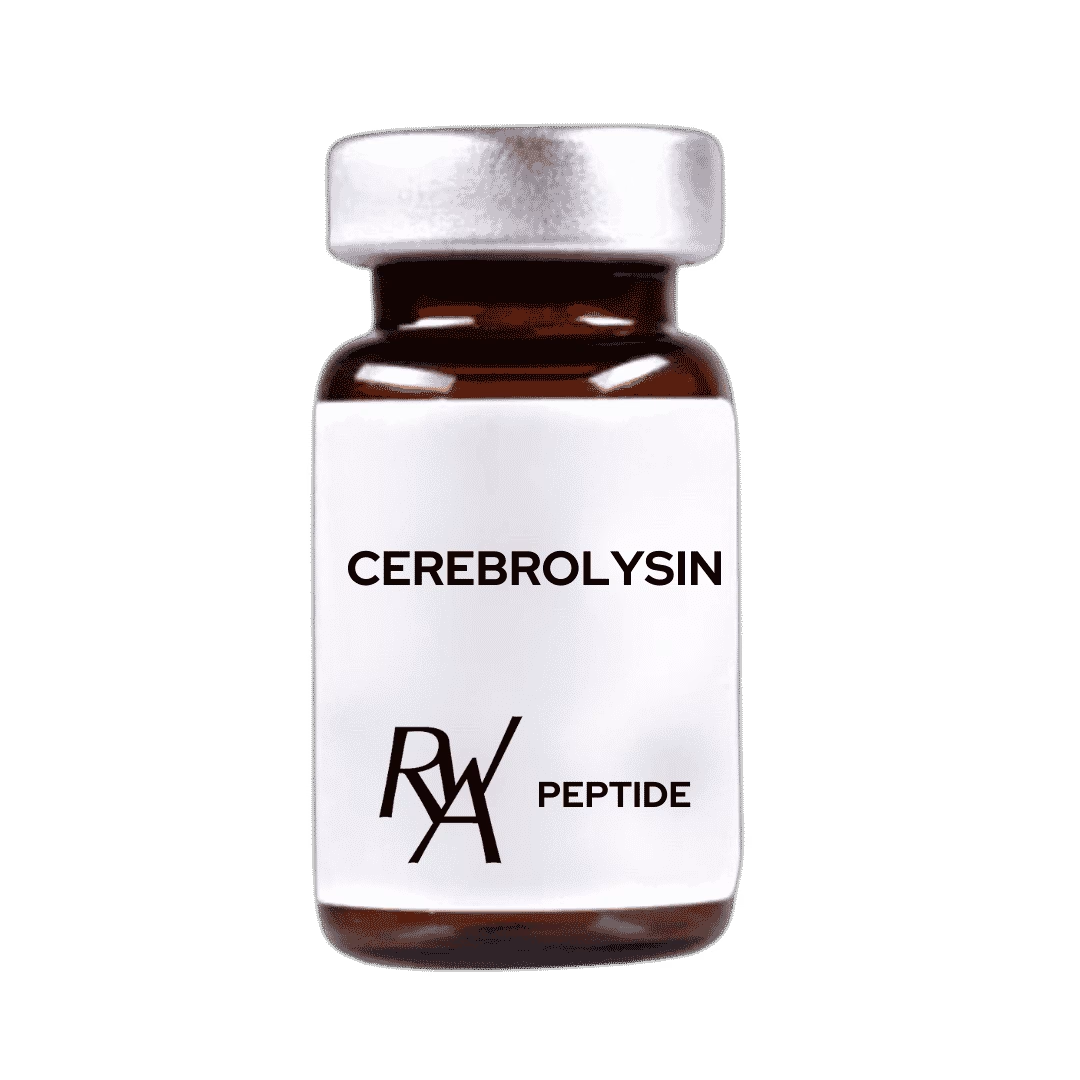
17. Cerebrolysin
Porcine brain-derived peptide mixture for neuroprotection
You will love Cerebrolysin if you:
Want evidence spelled out: We connect Cerebrolysin to the research people actually cite for brain health, and we flag animal-only or early-stage data.
Care about brain health: This section summarizes how Cerebrolysin is discussed in that context without overstating what trials prove.
Need risks and unknowns upfront: We highlight regulatory status, common knowledge gaps, and why a licensed clinician should guide any decision.
You may be disappointed if you:
Want medical advice on this page: PeptideAWO is educational only. Nothing here replaces diagnosis, prescriptions, or supervision.
Expect a single "best" dose: Cerebrolysin protocols in studies and clinics vary widely. We do not standardize dosing for individuals.
Need guaranteed outcomes: Responses differ by health status, medications, and product quality. We do not promise results.
A complex mixture of neuropeptides and amino acids derived from pig brain tissue. It has more human clinical trial data than most compounds on this list, particularly for stroke and traumatic brain injury. But the 2023 Cochrane review found insufficient evidence to support routine clinical use for stroke, and the evidence quality was rated low to very low. Widely used in Eastern European and Asian clinical practice. The data exists; its quality is debated.
Cerebrolysin overall experience
| Criteria | Editor's rating |
|---|---|
| Evidence quality | 3.4/5 (Fair) Strength and breadth of published human data relevant to Cerebrolysin. |
| Safety and unknowns | 3.1/5 (Fair) Side-effect signal, monitoring needs, and long-term gaps we watch for. |
| Regulatory clarity | 3.0/5 (Fair) Approved versus research-only framing, and what that implies for access. |
| Practical use | 3.3/5 (Fair) Complexity of use, adherence, and what real-world follow-through tends to look like. |
| Transparency | 3.3/5 (Fair) How easy it is to verify identity, purity, and reputable sourcing for this class. |
| Access and cost | Varies Not a price quote. Costs depend on region, clinic, compounding rules, and coverage. Verify locally. |
| Final score | 3.2 out of 5 (Fair) |
18. Dihexa
Angiotensin IV analog for cognitive enhancement
You will love Dihexa if you:
Want evidence spelled out: We connect Dihexa to the research people actually cite for memory, and we flag animal-only or early-stage data.
Care about memory: This section summarizes how Dihexa is discussed in that context without overstating what trials prove.
Need risks and unknowns upfront: We highlight regulatory status, common knowledge gaps, and why a licensed clinician should guide any decision.
You may be disappointed if you:
Want medical advice on this page: PeptideAWO is educational only. Nothing here replaces diagnosis, prescriptions, or supervision.
Expect a single "best" dose: Dihexa protocols in studies and clinics vary widely. We do not standardize dosing for individuals.
Need guaranteed outcomes: Responses differ by health status, medications, and product quality. We do not promise results.
Described as "seven orders of magnitude more potent than BDNF" for synaptogenesis in the original Washington State University research. The HGF/c-Met mechanism is well-characterized preclinically. But c-Met is a known oncogene, zero human trials exist, the compound is entirely preclinical, and the cancer concern from c-Met activation is a genuine safety flag that can't be dismissed. Intellectually fascinating; practically, one of the least proven and most concerning compounds on this list.
Dihexa overall experience
| Criteria | Editor's rating |
|---|---|
| Evidence quality | 2.7/5 (Mixed) Strength and breadth of published human data relevant to Dihexa. |
| Safety and unknowns | 2.4/5 (Mixed) Side-effect signal, monitoring needs, and long-term gaps we watch for. |
| Regulatory clarity | 2.3/5 (Mixed) Approved versus research-only framing, and what that implies for access. |
| Practical use | 2.6/5 (Mixed) Complexity of use, adherence, and what real-world follow-through tends to look like. |
| Transparency | 2.6/5 (Mixed) How easy it is to verify identity, purity, and reputable sourcing for this class. |
| Access and cost | Varies Not a price quote. Costs depend on region, clinic, compounding rules, and coverage. Verify locally. |
| Final score | 2.5 out of 5 (Mixed) |
19. Humanin
Mitochondrially-derived peptide for cytoprotection and longevity
You will love Humanin if you:
Want evidence spelled out: We connect Humanin to the research people actually cite for longevity, and we flag animal-only or early-stage data.
Care about longevity: This section summarizes how Humanin is discussed in that context without overstating what trials prove.
Need risks and unknowns upfront: We highlight regulatory status, common knowledge gaps, and why a licensed clinician should guide any decision.
You may be disappointed if you:
Want medical advice on this page: PeptideAWO is educational only. Nothing here replaces diagnosis, prescriptions, or supervision.
Expect a single "best" dose: Humanin protocols in studies and clinics vary widely. We do not standardize dosing for individuals.
Need guaranteed outcomes: Responses differ by health status, medications, and product quality. We do not promise results.
The mitochondrial origin is genuinely unusual: one of the first functional peptides discovered encoded in mitochondrial DNA rather than nuclear DNA. The centenarian data (children of centenarians have higher Humanin levels) is a striking observational finding. Multi-tissue cytoprotection is documented in animal models. But human interventional trials are essentially nonexistent, and the HNG analog potency difference makes community dosing genuinely uncertain.
Humanin overall experience
| Criteria | Editor's rating |
|---|---|
| Evidence quality | 2.9/5 (Mixed) Strength and breadth of published human data relevant to Humanin. |
| Safety and unknowns | 2.7/5 (Mixed) Side-effect signal, monitoring needs, and long-term gaps we watch for. |
| Regulatory clarity | 2.6/5 (Mixed) Approved versus research-only framing, and what that implies for access. |
| Practical use | 2.8/5 (Mixed) Complexity of use, adherence, and what real-world follow-through tends to look like. |
| Transparency | 2.9/5 (Mixed) How easy it is to verify identity, purity, and reputable sourcing for this class. |
| Access and cost | Varies Not a price quote. Costs depend on region, clinic, compounding rules, and coverage. Verify locally. |
| Final score | 2.8 out of 5 (Mixed) |
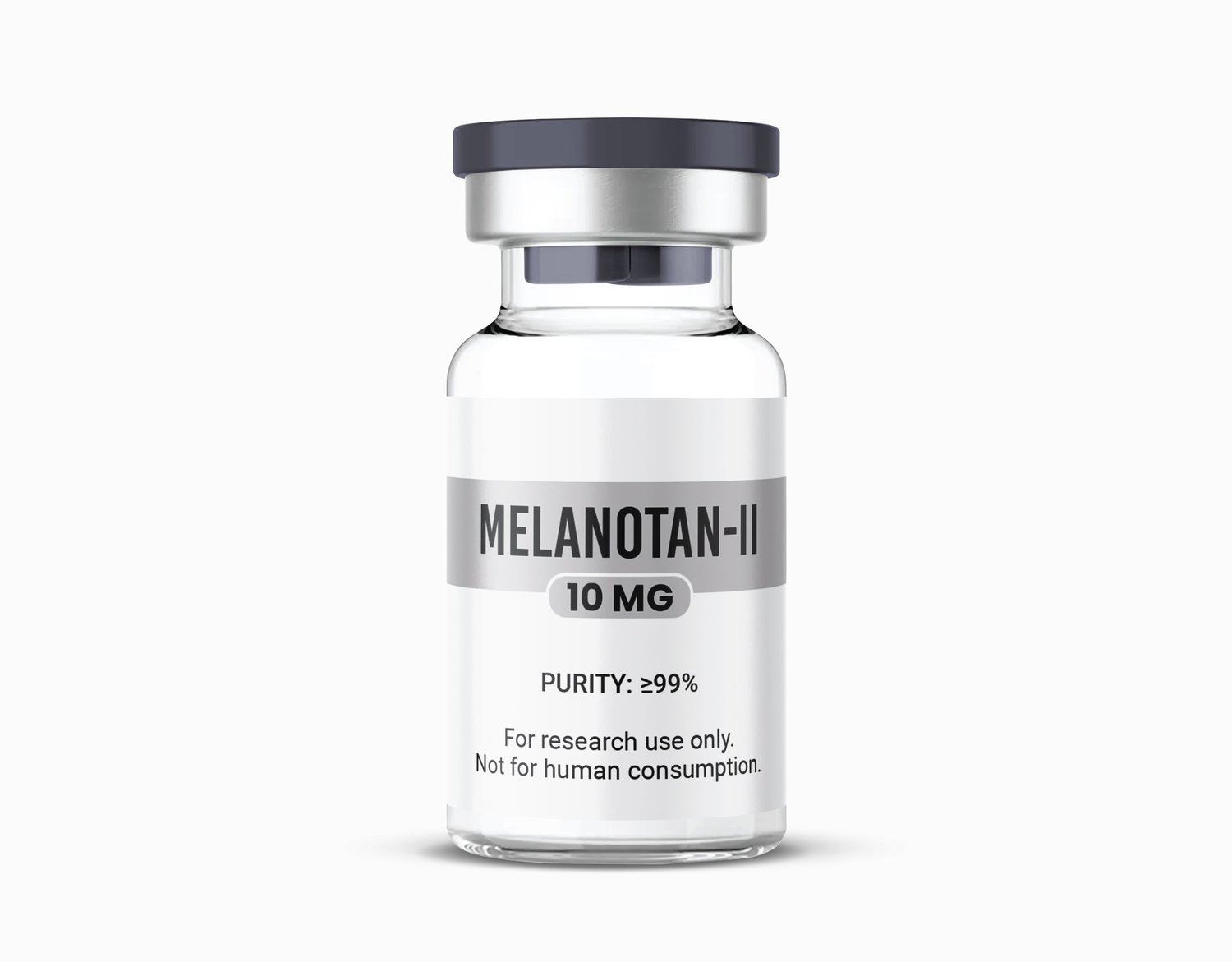
20. Melanotan II
Melanocortin agonist for tanning (and unavoidable sexual side effects)
You will love Melanotan II if you:
Want evidence spelled out: We connect Melanotan II to the research people actually cite for skin tanning, and we flag animal-only or early-stage data.
Care about skin tanning: This section summarizes how Melanotan II is discussed in that context without overstating what trials prove.
Need risks and unknowns upfront: We highlight regulatory status, common knowledge gaps, and why a licensed clinician should guide any decision.
You may be disappointed if you:
Want medical advice on this page: PeptideAWO is educational only. Nothing here replaces diagnosis, prescriptions, or supervision.
Expect a single "best" dose: Melanotan II protocols in studies and clinics vary widely. We do not standardize dosing for individuals.
Need guaranteed outcomes: Responses differ by health status, medications, and product quality. We do not promise results.
It does what it claims: stimulates melanin production and produces skin darkening. The tanning effect is real. But the safety profile is the most concerning on this entire list. Mole darkening that complicates melanoma surveillance, disproportionate pigmentation, severe nausea, ocular melanocyte stimulation, and zero long-term safety data in a compound that stimulates the cell type that becomes melanoma. Never approved anywhere. Illegal in the UK and Australia. The "Barbie drug" social media resurgence is a documented public health concern.
Melanotan II overall experience
| Criteria | Editor's rating |
|---|---|
| Evidence quality | 2.2/5 (Mixed) Strength and breadth of published human data relevant to Melanotan II. |
| Safety and unknowns | 2.0/5 (Mixed) Side-effect signal, monitoring needs, and long-term gaps we watch for. |
| Regulatory clarity | 2.0/5 (Mixed) Approved versus research-only framing, and what that implies for access. |
| Practical use | 2.1/5 (Mixed) Complexity of use, adherence, and what real-world follow-through tends to look like. |
| Transparency | 2.1/5 (Mixed) How easy it is to verify identity, purity, and reputable sourcing for this class. |
| Access and cost | Varies Not a price quote. Costs depend on region, clinic, compounding rules, and coverage. Verify locally. |
| Final score | 2.0 out of 5 (Mixed) |
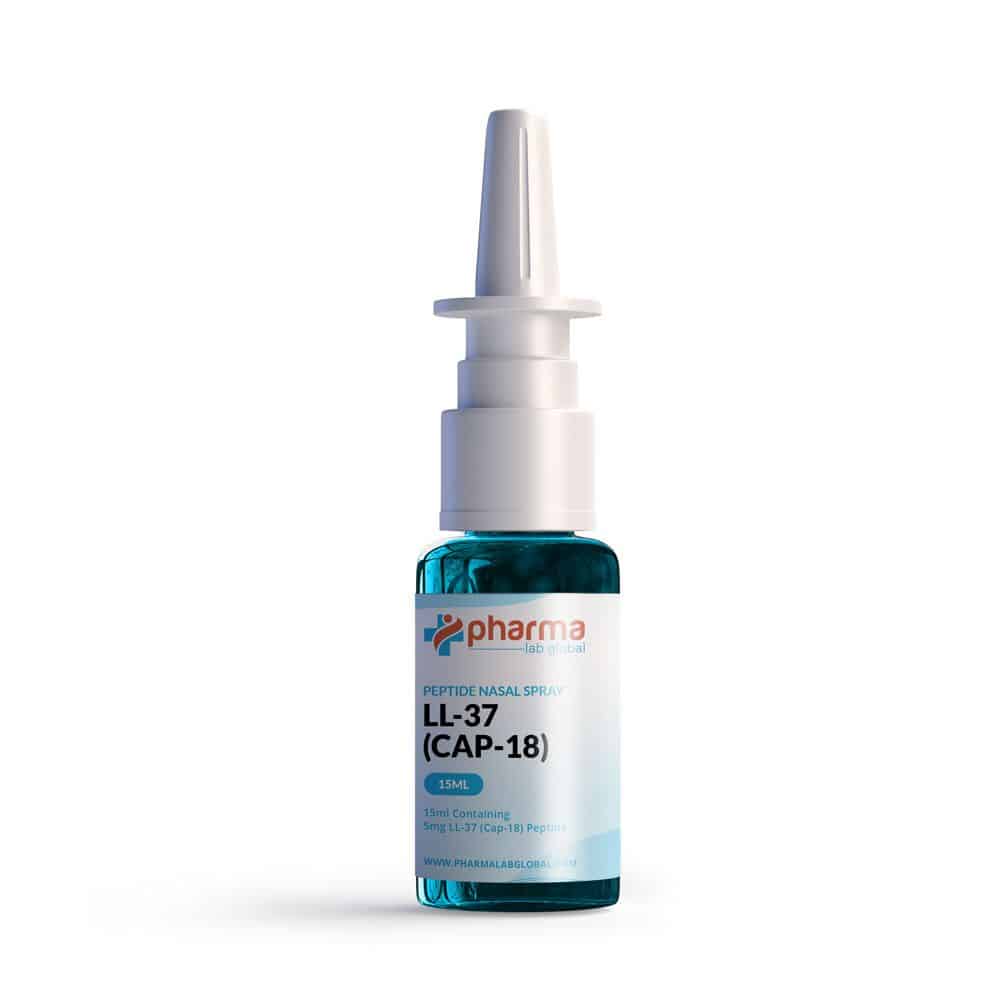
21. LL-37
The only human cathelicidin; antimicrobial and immunomodulatory peptide
You will love LL-37 if you:
Want evidence spelled out: We connect LL-37 to the research people actually cite for immune defense, and we flag animal-only or early-stage data.
Care about immune defense: This section summarizes how LL-37 is discussed in that context without overstating what trials prove.
Need risks and unknowns upfront: We highlight regulatory status, common knowledge gaps, and why a licensed clinician should guide any decision.
You may be disappointed if you:
Want medical advice on this page: PeptideAWO is educational only. Nothing here replaces diagnosis, prescriptions, or supervision.
Expect a single "best" dose: LL-37 protocols in studies and clinics vary widely. We do not standardize dosing for individuals.
Need guaranteed outcomes: Responses differ by health status, medications, and product quality. We do not promise results.
The antimicrobial mechanism (physical membrane disruption) is well-characterized, active against MRSA, and resistant to bacterial resistance development. Wound healing evidence is solid. The vitamin D connection is clinically actionable. But the cancer relationship is genuinely bidirectional (tumor-suppressive in some cancers, tumor-promoting in others), the psoriasis and autoimmune pathogenic role is documented, and the stability problem limits systemic delivery. Topical is well-supported; systemic is a fundamentally more uncertain proposition.
LL-37 overall experience
| Criteria | Editor's rating |
|---|---|
| Evidence quality | 3.5/5 (Good) Strength and breadth of published human data relevant to LL-37. |
| Safety and unknowns | 3.2/5 (Fair) Side-effect signal, monitoring needs, and long-term gaps we watch for. |
| Regulatory clarity | 3.1/5 (Fair) Approved versus research-only framing, and what that implies for access. |
| Practical use | 3.4/5 (Fair) Complexity of use, adherence, and what real-world follow-through tends to look like. |
| Transparency | 3.4/5 (Fair) How easy it is to verify identity, purity, and reputable sourcing for this class. |
| Access and cost | Varies Not a price quote. Costs depend on region, clinic, compounding rules, and coverage. Verify locally. |
| Final score | 3.3 out of 5 (Fair) |
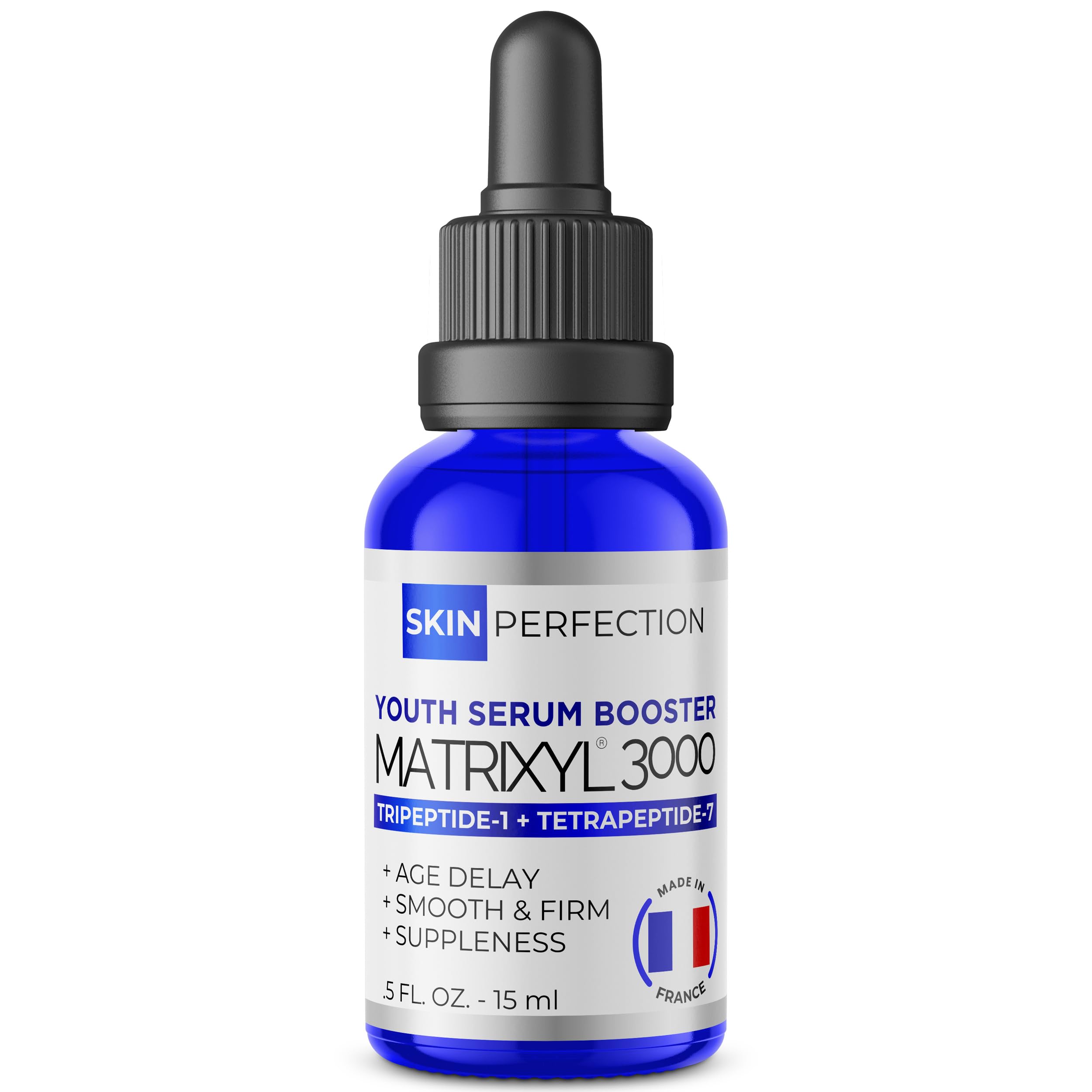
22. Matrixyl
Palmitoyl peptide family for anti-aging skincare (four formulations)
You will love Matrixyl if you:
Want evidence spelled out: We connect Matrixyl to the research people actually cite for wrinkle reduction, and we flag animal-only or early-stage data.
Care about wrinkle reduction: This section summarizes how Matrixyl is discussed in that context without overstating what trials prove.
Need risks and unknowns upfront: We highlight regulatory status, common knowledge gaps, and why a licensed clinician should guide any decision.
You may be disappointed if you:
Want medical advice on this page: PeptideAWO is educational only. Nothing here replaces diagnosis, prescriptions, or supervision.
Expect a single "best" dose: Matrixyl protocols in studies and clinics vary widely. We do not standardize dosing for individuals.
Need guaranteed outcomes: Responses differ by health status, medications, and product quality. We do not promise results.
The most commercially accessible compound on this list, with published clinical studies showing wrinkle improvement versus placebo. The matrikine signaling concept is mechanistically elegant. Safety profile is among the best here: no irritation, no photosensitivity, pregnancy-safe (unlike retinol). The evidence standard is cosmetic, not pharmaceutical, which caps the rating. And the brand name confusion across four different Matrixyl formulations means most consumers don't know which version they're actually using.
Matrixyl overall experience
| Criteria | Editor's rating |
|---|---|
| Evidence quality | 4.0/5 (Very Good) Strength and breadth of published human data relevant to Matrixyl. |
| Safety and unknowns | 3.7/5 (Good) Side-effect signal, monitoring needs, and long-term gaps we watch for. |
| Regulatory clarity | 3.6/5 (Good) Approved versus research-only framing, and what that implies for access. |
| Practical use | 3.9/5 (Good) Complexity of use, adherence, and what real-world follow-through tends to look like. |
| Transparency | 3.9/5 (Good) How easy it is to verify identity, purity, and reputable sourcing for this class. |
| Access and cost | Varies Not a price quote. Costs depend on region, clinic, compounding rules, and coverage. Verify locally. |
| Final score | 3.8 out of 5 (Good) |
23. Pinealon
Tripeptide bioregulator for neuroprotection
You will love Pinealon if you:
Want evidence spelled out: We connect Pinealon to the research people actually cite for neuroprotection, and we flag animal-only or early-stage data.
Care about neuroprotection: This section summarizes how Pinealon is discussed in that context without overstating what trials prove.
Need risks and unknowns upfront: We highlight regulatory status, common knowledge gaps, and why a licensed clinician should guide any decision.
You may be disappointed if you:
Want medical advice on this page: PeptideAWO is educational only. Nothing here replaces diagnosis, prescriptions, or supervision.
Expect a single "best" dose: Pinealon protocols in studies and clinics vary widely. We do not standardize dosing for individuals.
Need guaranteed outcomes: Responses differ by health status, medications, and product quality. We do not promise results.
EDR tripeptide from Khavinson's bioregulator program targeting neural tissue and the pineal gland. The gene expression modulation mechanism (nuclear penetration and DNA interaction) is a strong claim with limited independent validation. The Cortexin translation gap (foundational clinical data was on the whole-brain extract, not synthetic Pinealon) is a significant concern. Nearly all evidence comes from one Russian research group.
Pinealon overall experience
| Criteria | Editor's rating |
|---|---|
| Evidence quality | 2.7/5 (Mixed) Strength and breadth of published human data relevant to Pinealon. |
| Safety and unknowns | 2.4/5 (Mixed) Side-effect signal, monitoring needs, and long-term gaps we watch for. |
| Regulatory clarity | 2.3/5 (Mixed) Approved versus research-only framing, and what that implies for access. |
| Practical use | 2.6/5 (Mixed) Complexity of use, adherence, and what real-world follow-through tends to look like. |
| Transparency | 2.6/5 (Mixed) How easy it is to verify identity, purity, and reputable sourcing for this class. |
| Access and cost | Varies Not a price quote. Costs depend on region, clinic, compounding rules, and coverage. Verify locally. |
| Final score | 2.5 out of 5 (Mixed) |
24. Hexarelin
Most potent GHRP for GH release, with unique cardiac mechanism
You will love Hexarelin if you:
Want evidence spelled out: We connect Hexarelin to the research people actually cite for recovery, and we flag animal-only or early-stage data.
Care about recovery: This section summarizes how Hexarelin is discussed in that context without overstating what trials prove.
Need risks and unknowns upfront: We highlight regulatory status, common knowledge gaps, and why a licensed clinician should guide any decision.
You may be disappointed if you:
Want medical advice on this page: PeptideAWO is educational only. Nothing here replaces diagnosis, prescriptions, or supervision.
Expect a single "best" dose: Hexarelin protocols in studies and clinics vary widely. We do not standardize dosing for individuals.
Need guaranteed outcomes: Responses differ by health status, medications, and product quality. We do not promise results.
Highest GH pulse amplitude in the GHRP class, but the worst desensitization (measurable by week 4), the worst cortisol/prolactin co-elevation, and sleep architecture disruption with evening dosing. The CD36-mediated GH-independent cardioprotection is the most scientifically distinctive aspect and the one most likely to have a future development pathway. For general GH secretagogue use, Ipamorelin's selectivity makes it more practical. Hexarelin is a specific tool, not a superior general option.
Hexarelin overall experience
| Criteria | Editor's rating |
|---|---|
| Evidence quality | 3.3/5 (Fair) Strength and breadth of published human data relevant to Hexarelin. |
| Safety and unknowns | 3.0/5 (Fair) Side-effect signal, monitoring needs, and long-term gaps we watch for. |
| Regulatory clarity | 2.9/5 (Mixed) Approved versus research-only framing, and what that implies for access. |
| Practical use | 3.2/5 (Fair) Complexity of use, adherence, and what real-world follow-through tends to look like. |
| Transparency | 3.2/5 (Fair) How easy it is to verify identity, purity, and reputable sourcing for this class. |
| Access and cost | Varies Not a price quote. Costs depend on region, clinic, compounding rules, and coverage. Verify locally. |
| Final score | 3.1 out of 5 (Fair) |
25. Thymulin
Zinc-dependent thymic hormone for immune modulation and pain
You will love Thymulin if you:
Want evidence spelled out: We connect Thymulin to the research people actually cite for immune balance, and we flag animal-only or early-stage data.
Care about immune balance: This section summarizes how Thymulin is discussed in that context without overstating what trials prove.
Need risks and unknowns upfront: We highlight regulatory status, common knowledge gaps, and why a licensed clinician should guide any decision.
You may be disappointed if you:
Want medical advice on this page: PeptideAWO is educational only. Nothing here replaces diagnosis, prescriptions, or supervision.
Expect a single "best" dose: Thymulin protocols in studies and clinics vary widely. We do not standardize dosing for individuals.
Need guaranteed outcomes: Responses differ by health status, medications, and product quality. We do not promise results.
The zinc dependency is the defining feature: without zinc in a precise 1:1 ratio, thymulin is biologically inert; with too much zinc, it's also inhibited. The T cell maturation mechanism is fundamental to adaptive immunity. The pain modulation research (central opioid and anti-inflammatory pathways) is genuinely underappreciated. French and Western academic provenance gives it more credibility than Russian-dominated compounds, but the human trial gap is large. The zinc-immunity connection it reveals may be more practically actionable than thymulin supplementation itself.
Thymulin overall experience
| Criteria | Editor's rating |
|---|---|
| Evidence quality | 2.9/5 (Mixed) Strength and breadth of published human data relevant to Thymulin. |
| Safety and unknowns | 2.6/5 (Mixed) Side-effect signal, monitoring needs, and long-term gaps we watch for. |
| Regulatory clarity | 2.5/5 (Mixed) Approved versus research-only framing, and what that implies for access. |
| Practical use | 2.8/5 (Mixed) Complexity of use, adherence, and what real-world follow-through tends to look like. |
| Transparency | 2.8/5 (Mixed) How easy it is to verify identity, purity, and reputable sourcing for this class. |
| Access and cost | Varies Not a price quote. Costs depend on region, clinic, compounding rules, and coverage. Verify locally. |
| Final score | 2.7 out of 5 (Mixed) |
Summary table
| Rank | Peptide | Editor score | Jump |
|---|---|---|---|
| 1 | Semaglutide | 4.9/5 | Section |
| 2 | Tirzepatide | 4.9/5 | Section |
| 3 | BPC-157 | 3.6/5 | Section |
| 4 | GHK-Cu | 4.0/5 | Section |
| 5 | Retatrutide | 4.3/5 | Section |
| 6 | Tesamorelin | 4.5/5 | Section |
| 7 | Thymosin Alpha-1 | 4.3/5 | Section |
| 8 | NAD+ | 4.0/5 | Section |
| 9 | Semax | 3.8/5 | Section |
| 10 | Epitalon | 3.0/5 | Section |
| 11 | Selank | 3.7/5 | Section |
| 12 | CJC-1295 | 3.3/5 | Section |
| 13 | Ipamorelin | 3.5/5 | Section |
| 14 | TB-500 | 3.4/5 | Section |
| 15 | DSIP | 2.8/5 | Section |
| 16 | AOD-9604 | 3.0/5 | Section |
| 17 | Cerebrolysin | 3.2/5 | Section |
| 18 | Dihexa | 2.5/5 | Section |
| 19 | Humanin | 2.8/5 | Section |
| 20 | Melanotan II | 2.0/5 | Section |
| 21 | LL-37 | 3.3/5 | Section |
| 22 | Matrixyl | 3.8/5 | Section |
| 23 | Pinealon | 2.5/5 | Section |
| 24 | Hexarelin | 3.1/5 | Section |
| 25 | Thymulin | 2.7/5 | Section |
How to Read These Reviews
Every review on this site follows the same structure and the same editorial standards:
Honesty: We tell you what the evidence shows and what it doesn't. If a compound has no human trial data, we say that. If the evidence comes from one research group, we flag it. We don't sell peptides and we don't have financial relationships with vendors.
Jargon: We explain technical terms the first time they appear. You shouldn't need a biochemistry degree to understand what you're putting in your body.
The rating system: Each compound is rated on a 5-point scale for how well its evidence supports its primary intended application. A 5.0 would require robust Phase III RCTs with long-term safety data for an approved indication. Most research chemicals score between 2.5 and 3.5 because they have preclinical evidence without human validation. FDA-approved compounds with RCT data score higher. The rating reflects evidence quality, not how interesting the science is.
Frequently Asked Questions (FAQs) About Peptides
What are peptides?
Peptides are short chains of amino acids (the building blocks of proteins). They typically contain between 2 and 50 amino acids linked together by peptide bonds.
How do peptides work in the body?
Peptides act as signaling molecules (messengers), instructing the body's systems to perform specific tasks, such as regulating metabolism, stimulating collagen production, or releasing growth hormones. They work by mimicking the body's own natural signaling pathways.
Are peptides the same as proteins?
No. Both are made of amino acids, but peptides are much shorter chains, usually under 50 to 100 amino acids long, while proteins are longer chains or consist of one or more polypeptides (linear chains of amino acids). Because they are smaller, peptides may be easier for the body to absorb.
Are peptides FDA-approved?
The answer depends on the specific peptide. Over 100 peptide drugs are already FDA-approved, including insulin and semaglutide (Ozempic/Wegovy). However, many other peptides sold online are investigational compounds not approved or regulated for human use.
What are "research peptides" or "grey market peptides"?
"Research peptides" or "grey market peptides" are products sold outside the traditional healthcare system, often labeled for laboratory use only. These products are not FDA-approved for medical use, and their purity, dosage, and safety are often unregulated and questionable.
What are peptides commonly used for?
Peptides are used or studied for a wide range of functions, including metabolic and body composition support (weight loss), muscle and tissue recovery, enhancing cognitive function, improving immune function, decreasing inflammation, and promoting skin health and anti-aging.
Do peptides require a prescription?
Prescription requirements depend on the specific peptide, its intended use, and the regulatory context. Generally, prescription is needed for pharmaceutical peptide drugs, while many peptide supplements and topical products can be bought without one.
How are peptides typically administered?
Peptides are administered in several ways, including by injection, by mouth (oral supplements), topically (creams/serums), or as nasal sprays. Injections are common because most peptides are not stable or easily absorbed when taken orally.
Are peptides generally safe?
Peptide therapy is generally considered safe when used under the supervision of a qualified medical professional and sourced from licensed, regulated pharmacies. Unregulated or non-approved "research" peptides carry greater risks due to unknown purity and safety data.
What are some potential side effects of peptides?
Side effects vary widely depending on the specific peptide. Common documented side effects for some approved peptides include nausea, vomiting, diarrhea, and constipation. Risks associated with non-approved peptides can include joint pain, increased blood pressure, water retention, hormone imbalances, injection-site reactions, and, theoretically, organ stress or cancer concerns.
Do you need bloodwork before peptide therapy?
A proper medical review, including lab work, may be required before starting peptide therapy, depending on the patient's symptoms, medical history, and the specific therapy being discussed.
Where do peptide supplements come from?
Peptide supplements can be derived from plant or animal sources of protein, such as meat, fish, eggs, milk, soy, oats, beans, lentils, flaxseed, and wheat. Common supplements include collagen peptides and creatine peptides.
Should I start taking peptides?
The decision depends entirely on your specific health goals, as "peptides" is an umbrella term for compounds with diverse uses (e.g., weight loss, tissue repair, skin health). It is critical to start with a consultation and medical evaluation, as a provider needs to review your health history, current medications, and hormone levels to determine clinical appropriateness. While some people begin exploring prescription peptide therapy in their late 20s or early 30s when natural growth hormone production may begin to decline, candidacy is based on lab work and medical necessity, not age alone. Many of the most-studied compounds require a prescription. Be cautious, as unregulated "research peptides" sold online carry greater risks due to unverified purity, dosage, and limited long-term safety data.
Are peptides good for looksmaxing?
Making peace with how we look is the first step towards becoming complete. We are not here to push you towards nor away from any peptide, the final decision is up to you. All we ask is that you be gentle with yourself, the human vessel takes up many shapes; all equally beautiful; all equally complete.
With your wellbeing in our mind — The PeptideAWO team