AOD-9604 is not approved as a drug for fat loss and is banned in tested sport. Nothing on this page is medical advice.
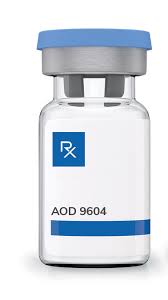
Overall Rating: 6.2 out of 10
Excellent safety record and interesting cartilage research, but the human obesity trials failed to show enough fat-loss efficacy for standalone use.
Every link in this article was verified as a real, accessible publication at the time of writing. We use PubMed, PMC, NEJM, JAMA, FDA.gov, and peer-reviewed journals only. No Wikipedia. No vendor blogs.
AOD-9604 has a story unlike anything else we've written about. It's a fragment of human growth hormone that went through actual clinical trials for obesity (phases 2 & 2b), over 900 participants across six controlled studies, and real pharmaceutical development with real money behind it.
And it failed.
The primary endpoints weren't met and so development was terminated in 2007. The company that built it pivoted to cartilage repair and food ingredient licensing. And yet AOD-9604 remains one of the most popular peptides sold online for fat loss.
That contradiction is the entire story. This review explains it honestly.
Key Takeaways
- AOD-9604 is a synthetic 16-amino-acid fragment of human growth hormone (hGH 176-191, with a tyrosine modification)
- Designed to retain hGH's fat-burning effects without raising IGF-1 (Insulin-like Growth Factor 1, a hormone that promotes growth) or blood sugar
- Despite advancing further than most peptides, its development as an obesity drug was ultimately abandoned. Late-stage human trials failed to meet primary efficacy endpoints, as the peptide did not induce clinically significant weight loss compared to a placebo.
- Mechanism works through beta-3 adrenergic receptor (β3-AR) upregulation (increasing a specific signal receiver on fat cells) and lipolysis (the breakdown of fat) stimulation
- Following the clinical trial failures, AOD-9604 was later granted GRAS (Generally Recognized as Safe) status as a food additive ingredient, a regulatory pivot that is frequently misrepresented by peptide vendors as a medical approval.
- Cartilage repair research exists and is the more active development direction now
- Banned by WADA (World Anti-Doping Agency). Competitive athletes cannot use it
- Not approved as a drug anywhere in the world
AOD-9604, In Simple Terms
- What it is: A small piece of growth hormone. Scientists cut out the part they thought was responsible for burning fat and threw away the rest. The idea was to get the fat loss without the side effects of full growth hormone (like organ growth, insulin resistance, and high IGF-1).
- What was supposed to happen: In mice, it worked great. Fat dropped, weight went down, and it didn't mess with blood sugar or growth factors. So a drug company ran human trials to turn it into an obesity medication.
- What actually happened: It didn't work well enough in people. Across multiple trials, the weight loss was so small it wasn't clinically meaningful. The company pulled the plug.
- Why people still use it: It has an excellent safety profile (no serious side effects in any trial), it didn't raise IGF-1 or blood sugar, and GRAS status gave it an air of legitimacy. Community users combine it with fasting and exercise and report positive results, but that's hard to separate from the fasting and exercise.
- The fasting protocol: Community users almost always inject AOD-9604 first thing in the morning on an empty stomach, then do fasted cardio. The reasoning is that lipolysis (fat breakdown) is insulin-sensitive. This is based on the mechanism (lipolysis is insulin-sensitive) rather than clinical trial data.
- The twist: New research shows it might actually be useful for cartilage repair and joint health. That wasn't the original plan, but it's where the science is heading now.
Table of Contents
- What is AOD-9604?
- AOD-9604 and its relationship to hGH
- Why it was scientifically interesting
- How it works
- How do you take it?
- Dosing
- What do the clinical trials actually show?
- The GRAS situation explained
- Beyond fat loss: cartilage and joint repair
- AOD-9604 vs hGH and other fat-loss compounds
- WADA and athletic use
- Safety and side effects
- What happens when you stop?
- Legal status
- Unanswered questions
- Final take
- FAQ
What is AOD-9604?
AOD stands for Anti-Obesity Drug. It's a synthetic peptide fragment corresponding to amino acids 176-191 of human growth hormone, with a tyrosine substituted at the N-terminal end (the beginning of the amino acid chain) for stability. Sixteen amino acids total. Developed in the 1990s by Professor Frank Ng at Monash University in Australia, then picked up by Metabolic Pharmaceuticals for clinical development.
The 176-191 designation tells you exactly which part of the growth hormone molecule was used. Growth hormone is a 191-amino-acid protein. AOD-9604 takes the very tail end of it, the portion believed to control fat metabolism.
AOD-9604 and Its Relationship to hGH
This comparison defines everything. Full human growth hormone does a lot: burns fat, builds muscle, grows organs, raises IGF-1, can cause insulin resistance, affects bone density. Most of those effects come from the N-terminal region of the molecule, which interacts with the growth hormone receptor.
AOD-9604 was engineered to do one thing: keep the fat-burning part and ditch everything else.
And on that specific point, the preclinical evidence was clear. In obese mice, AOD-9604 reduced body weight, increased fat oxidation, and stimulated lipolysis. Crucially, it did not compete for the hGH receptor and did not induce cell proliferation the way full hGH does.
The safety and tolerability analysis is the main safety differentiator. Full hGH raises IGF-1, which drives growth effects and carries long-term risks. AOD-9604 did not raise IGF-1 in human trials. It also did not affect blood glucose or insulin levels. These are genuine advantages over full hGH; they just weren't accompanied by enough fat loss to matter clinically.
Why It Was Scientifically Interesting
The concept was compelling. Take a massive hormonal sledgehammer (hGH), isolate the specific fat-metabolism fragment, and create a targeted tool without systemic hormonal effects (effects that impact the entire body). If it had worked in humans the way it worked in mice, it would have been a significant obesity drug.
The dual-action claim was also appealing: AOD-9604 was reported to both stimulate lipolysis (fat breakdown) and inhibit lipogenesis (new fat formation). Breaking down existing fat while preventing new fat storage simultaneously is the dream scenario for a fat-loss drug. In mice, this held up; in humans, the effect was too weak to matter.
How AOD-9604 Works
Beta-3 Adrenergic Receptor Pathway This is the primary mechanism. AOD-9604 increases expression of beta-3 adrenergic receptors (β3-AR) in fat tissue. In obese mice, β3-AR expression is suppressed. Both hGH and AOD-9604 restored β3-AR RNA levels (the genetic signal for these receptors) in obese mice to levels comparable with lean mice.
The β3-AR connection was confirmed when β3-AR knockout mice were completely unresponsive to the long-term lipolytic effects of AOD-9604. No β3 receptors, no fat loss. That's as clean a mechanism confirmation as you get in preclinical work.
Lipolysis and Fat Oxidation Through the β3-AR pathway and other mechanisms, AOD-9604 increases the breakdown of stored triglycerides into fatty acids and glycerol (lipolysis) and enhances the rate at which the body burns fat for energy (fat oxidation). Plasma glycerol levels increased significantly in treated mice, confirming active lipolysis.
Anti-lipogenic Effect AOD-9604 reportedly inhibits the conversion of non-fatty nutrients into stored fat. This is the "dual-action" claim. Less fat being formed while more fat is being burned. The evidence for this is primarily preclinical.
What it does NOT do: It doesn't bind the growth hormone receptor. It doesn't raise IGF-1. It doesn't affect blood sugar. It doesn't stimulate cell proliferation. These are all confirmed in the research.
How Do You Take It?
Injectable (subcutaneous) is the most commonly used route. Community protocols typically call for injection into abdominal fat first thing in the morning on an empty stomach, often followed by fasted cardio. The reasoning: insulin blunts lipolysis, so you want AOD-9604 working before you eat anything.
Oral forms were used in some clinical trials. AOD-9604 is described as orally active, which is unusual for a peptide. The oral route was part of the pharmaceutical development program.
Dosing
What clinical trials used: Oral dosing at various levels across six trials. The early 12-week RCTs used oral administration, though later 24-week trials failed.
Community injectable protocol:
- 300 mcg per day, subcutaneous injection
- Administered in the morning on an empty stomach
- 30 to 60 minutes before eating
- Often combined with fasted cardio
- Typical cycles: 4 to 12 weeks
The fasting timing matters to users because insulin spikes suppress lipolysis. This is mechanistically sound but hasn't been validated in a controlled study.
Talk to a clinician. This is not an approved medication.
What Do the Clinical Trials Actually Show?
This section needs to be honest, because AOD-9604 went further in formal clinical development than almost anything else on this site. And it still failed.
Phase 2 (promising): Early human trials showed that AOD-9604 retained lipolytic properties (fat-breaking abilities). Safety was excellent. Metabolic parameters (measures of health like blood sugar and cholesterol) stayed clean. There was enough signal to justify larger trials.
Phase 2b (failure): Metabolic Pharmaceuticals ran a larger trial in approximately 300 obese patients. The results did not support commercial viability. The fat loss was modest. It was not sufficient to justify development as an obesity drug.
The clinical trial results: While a 12-week trial showed an average weight loss of 1.8 kg over placebo, a subsequent 24-week trial failed to demonstrate clinically significant efficacy (showing only about 0.9 kg of weight loss), which led to the termination of the drug's development in 2007.
What this means practically: AOD-9604 has a real mechanism that works in mice. In humans, the effect is too small to matter as a standalone obesity treatment. Development was terminated in 2007. The company pivoted.
The irony: it has more clinical trial data than most peptides people inject, and that data says it doesn't work well enough.
The GRAS Situation Explained
This gets misrepresented constantly. In 2021, AOD-9604 received GRAS (Generally Recognized as Safe) status from the FDA for use as a food ingredient. Websites then started calling it "FDA-approved." It is not.
Here's what GRAS means: the FDA determined that AOD-9604 is safe for oral consumption in a food context based on its safety data. That's it. GRAS is not drug approval. It doesn't mean it's effective for anything. It doesn't approve it for injection. It doesn't approve it for fat loss or any therapeutic indication.
What GRAS does tell us: the safety data from over 900 clinical trial participants was strong enough for the FDA to consider oral consumption safe. That's genuinely meaningful for safety. It means nothing for efficacy.
When a vendor says "FDA-approved," they're either confused or misleading you.
Beyond Fat Loss: Cartilage and Joint Repair
This where AOD-9604's story gets a second chapter. After the obesity indication died, research shifted to cartilage biology. In a rabbit osteoarthritis model (a test using rabbits with joint arthritis), intra-articular (into the joint space) AOD-9604 injection promoted cartilage regeneration. Combined with hyaluronic acid, the results were even better. The Australian TGA approved AOD-9604 for use in cartilage repair products.
The mechanism appears to involve stimulation of proteoglycan and collagen synthesis (building blocks of cartilage) in chondrocytes (cartilage cells), which is biologically distinct from its lipolytic pathway (fat-breakdown method). The cartilage research is still early (mostly animal models and in vitro work) but it's the area with the most active development.
If AOD-9604 ever reaches approval for anything, it's more likely to be for joint repair than for fat loss.
AOD-9604 vs hGH and Other Fat-Loss Compounds
vs Full hGH: AOD-9604 is dramatically safer (no IGF-1 elevation, no glucose issues, no organ growth). It's also dramatically less effective for fat loss. Full hGH actually works for body composition. AOD-9604's clinical trial failed.
vs Semaglutide/Tirzepatide: Not remotely comparable. GLP-1 agonists (a class of drugs that help regulate appetite and insulin) produce 15 to 25% body weight loss in trials. AOD-9604 produced 1.8 kg over placebo. These operate in completely different efficacy tiers. Semaglutide works through appetite regulation. AOD-9604 works through fat-cell signaling. Different mechanisms, vastly different results.
vs CJC-1295/Ipamorelin: Growth hormone secretagogues (substances that make your body release its own growth hormone) that stimulate your own GH release. They carry GH-related effects (including potential IGF-1 elevation). Different mechanism, different risk profile. Also lack robust clinical trial data for fat loss specifically.
WADA and Athletic Use
AOD-9604 is banned by WADA. Growth hormone fragments are explicitly referenced on the prohibited list. It doesn't matter that it failed as an obesity drug. It doesn't matter that it doesn't raise IGF-1. If you're in a tested sport and it shows up, you have a doping violation.
Detection methods for peptide fragments exist and are actively tested for in competition. Don't assume it won't be caught.
Safety and Side Effects

This is the one area where AOD-9604 genuinely shines. Across six controlled trials and over 900 participants, the safety profile was clean. The FDA's own adverse event reporting system found zero reports associated with AOD-9604. GRAS status confirms FDA's view on oral safety.
What trials showed:
- No effect on IGF-1 levels
- No effect on blood glucose or insulin
- No serious adverse events
- Mild injection site reactions (subcutaneous use)
- Occasional headache or fatigue in community reports
The safety is real. It just wasn't accompanied by efficacy.
What Happens When You Stop?
No dependency. No withdrawal. Fat metabolism returns to whatever your baseline is. The β3-AR upregulation is temporary. Without ongoing AOD-9604 administration, receptor expression returns to normal and the modest lipolytic effect disappears.
Legal Status
Not approved as a drug anywhere. Clinical development for obesity was abandoned in 2007.
GRAS status (US): Approved as a food ingredient. Not a drug approval. Does not cover injectable use.
Australia: Classified as a Schedule 4 prescription medicine. TGA has approved it for use in cartilage repair products.
WADA: Banned in and out of competition. Growth hormone fragments are explicitly prohibited.
Research chemical: Available from peptide suppliers for research use. Quality varies. Third-party COA (Certificate of Analysis) is the minimum standard.
Unanswered Questions
- Will the cartilage research lead to formal approval? It's the most viable path. Animal data looks promising. Human trial data in this indication is limited.
- Does the IGF-1 neutrality hold at all doses? Clinical trial doses showed no IGF-1 effect. Whether very high doses or very long-term use changes this hasn't been tested.
- Why does it work in mice but not meaningfully in humans? Genetically obese mouse models are notoriously poor predictors of human obesity drug efficacy. The β3-AR biology may differ between species.
- Is there a population where it would actually work? Maybe. The clinical trials used general obese populations. Whether subgroups with specific metabolic profiles might respond better is unknown.
Final Take
AOD-9604 has the most ironic story in this space. It went further in formal pharmaceutical development than almost any other peptide people inject for biohacking purposes. And the conclusion of that development was: it doesn't work well enough.
The safety profile is genuinely excellent. The mechanism is real and well-characterized in animal models. The IGF-1 neutrality is a legitimate advantage over full hGH. But less than a kilogram of weight loss in a 24-week trial is not a meaningful fat-loss result, and no amount of fasted cardio protocols or community anecdote changes that clinical trial data.
The cartilage story is more interesting. If AOD-9604 ever finds its clinical home, it will probably be in joint repair, not obesity.
If you're choosing a fat-loss intervention and efficacy is your priority, the evidence points elsewhere. If you value AOD-9604's safety profile and want to combine it with diet and exercise as a modest support tool, at least go in knowing what the clinical data actually says.
FAQ
What is AOD-9604?
A synthetic fragment of human growth hormone (amino acids 176-191) designed to stimulate fat metabolism without hGH's growth-promoting side effects.
Does AOD-9604 work for fat loss?
In mice, yes. In human clinical trials, the effect was clinically insignificant, with late-stage trials showing less than 1kg of weight loss over placebo.
Is AOD-9604 FDA-approved?
No. It has GRAS status as a food ingredient, which is a safety determination, not a drug approval. These are very different things.
Does AOD-9604 raise IGF-1?
No. This is its main safety advantage over full growth hormone.
Is AOD-9604 banned by WADA?
Yes. Banned in and out of competition.
Can AOD-9604 help with joint pain?
Early research in animal models shows promise for cartilage repair. The Australian TGA has approved it for cartilage repair products. Human data in this indication is limited.
When should I inject AOD-9604?
Community protocol is first thing in the morning on an empty stomach, often before fasted cardio. The reasoning (insulin blunts lipolysis) is mechanistically sound but not validated in clinical trials.
How does AOD-9604 compare to semaglutide?
It doesn't. Semaglutide produces 15%+ body weight loss. AOD-9604 produced 1.8 kg over placebo. They're in different efficacy categories entirely.
About the author

Ahmed Khedri
Peptide research writer focused on evidence quality, clinical trial interpretation, and safety context.
Ahmed writes PeptideAWO reviews with an emphasis on separating clinical evidence from marketing claims. His work focuses on trial data, regulatory status, dosing context, and the practical safety questions readers should understand before researching a compound.
Peptides that pair well with AOD-9604
Tirzepatide Review 2026: The Dual Agonist That Beat Semaglutide in a Head-to-Head Trial
A dual GIP/GLP-1 agonist review covering SURMOUNT-5, the GIP question, MASH data, compounding rules, side effects, and access.
Read reviewSemaglutide (Ozempic/Wegovy): The 2026 Guide to Weight Loss, Cardiovascular Data & In-Depth Analysis
An FDA-approved GLP-1 review covering STEP weight-loss data, SELECT cardiovascular outcomes, rebound after stopping, side effects, access, and compounding concerns.
Read reviewRetatrutide Review 2026
Extremely promising weight loss results in clinical trials. Up to ~24% body weight loss in trials, but not yet FDA approved.
Read reviewGet Personalized Supplier Recommendations
Enter your email and we'll send you the best suppliers to buy AOD-9604 from.
We only recommend suppliers we've vetted. No spam.