Ipamorelin is not FDA-approved and is prohibited in tested sport. Nothing on this page is medical advice.
Overall Rating: 7.2 out of 10
One of the cleaner GH secretagogues mechanistically, but limited by thin Ipamorelin-specific human outcome data and the usual GH/IGF-1 monitoring concerns.
Every link in this article was verified as a real, accessible publication at the time of writing. We use PubMed, PMC, NEJM, JAMA, FDA.gov, and peer-reviewed journals only. No Wikipedia. No vendor blogs.
Ipamorelin exists because earlier growth hormone releasing peptides had a dirty problem. GHRP-6 and GHRP-2 raised growth hormone, sure. But they also raised cortisol (your stress hormone), prolactin (the hormone behind lactation and gynecomastia), and ACTH (the hormone that drives cortisol production). That's a lot of collateral for a GH boost.
Ipamorelin was the answer. It raises GH with a selectivity similar to natural GHRH itself; meaning it doesn't significantly touch ACTH, cortisol, prolactin, FSH, LH, or TSH. Even at doses over 200-fold higher than the effective GH dose, cortisol and ACTH stayed flat. That's not a minor improvement. That's the entire reason the peptide community shifted from GHRP-6 to Ipamorelin.
Key Takeaways
- Ipamorelin is a pentapeptide (five amino acids) and selective ghrelin receptor (GHSR-1a) agonist
- First GHRP to achieve GH selectivity comparable to native GHRH; no significant cortisol, prolactin, or ACTH elevation
- Originally developed by Novo Nordisk (development code NNC 26-0161). Later studied by Helsinn for postoperative gut motility; discontinued for efficacy, not safety
- Half-life of approximately 2 hours. Produces a sharp, pulsatile GH release that mimics natural physiology
- Almost always stacked with CJC-1295 (no-DAC) in community use
- Ipamorelin-specific human clinical data is very thin. Most evidence comes from animal studies and the broader GHRP literature
- Banned by WADA. GHRPs are prohibited in competitive sport
- Not FDA-approved. Research chemical
Ipamorelin, In Simple Terms
- What ghrelin is: A hormone your stomach makes when you're hungry. It tells your brain to eat. But ghrelin also tells your pituitary gland to release growth hormone. Two jobs, one hormone.
- What a GHRP does: It's a synthetic molecule that mimics ghrelin's effect on the pituitary (the GH part), ideally without fully mimicking the hunger-and-hormone-chaos part.
- Why selectivity matters: Older GHRPs (GHRP-6, GHRP-2) hit the ghrelin receptor but also cranked up cortisol and prolactin. More cortisol means more stress signaling. More prolactin can cause gynecomastia (breast tissue growth in men) and sexual dysfunction. Ipamorelin hits the same receptor but only produces the GH response; the cortisol and prolactin stay flat.
- The hunger paradox: Ghrelin makes you ravenous. Ipamorelin mimics ghrelin. So why doesn't Ipamorelin make you as hungry as GHRP-6? Because Ipamorelin is more selective at the receptor level. It activates the GH-releasing pathway on GHSR-1a without the same promiscuous (broad, non-selective) binding that triggers the full appetite cascade. Some appetite increase is possible, but it's mild compared to GHRP-6.
- Honest evidence tier: The selectivity data is solid and well-published. The GH-raising mechanism is confirmed. The downstream body composition and recovery effects rely mostly on the broader GH literature, not Ipamorelin-specific human trials. Those barely exist.
Table of Contents
- What is Ipamorelin?
- The GHRP evolution: why Ipamorelin exists
- How it works
- Pulsatile GH release and why it matters
- Timing and food intake
- How do you take it?
- Dosing
- Ipamorelin vs GHRP-6 and GHRP-2
- The CJC-1295 stack
- What does the evidence show?
- IGF-1 implications
- WADA and competitive sport
- Safety and side effects
- What happens when you stop?
- Legal status
- Unanswered questions
- Final take
- FAQ
What is Ipamorelin?

Ipamorelin (Aib-His-D-2-Nal-D-Phe-Lys-NH2) is a synthetic pentapeptide identified through a chemistry program that stripped out the central dipeptide (two-amino-acid segment) of GHRP-1. It was developed by Novo Nordisk in the late 1990s and is classified as a growth hormone secretagogue receptor (GHSR-1a) agonist.
GHSR-1a is the same receptor that ghrelin binds. It's expressed in the anterior pituitary gland, hypothalamus, hippocampus, and also in the GI tract, pancreas, thyroid, adrenal glands, adipose tissue, and the heart. That broad expression pattern explains why ghrelin itself has so many effects beyond GH. Ipamorelin's trick is activating the pituitary's GH pathway without triggering the full downstream cascade at other sites.
Novo Nordisk later licensed the compound to Helsinn Therapeutics, who ran Phase 2 trials for postoperative ileus (paralyzed gut after surgery). It improved gastric emptying in animal models but was ultimately discontinued for lack of sufficient efficacy in that specific indication. Not for safety reasons. Same story as ConjuChem and CJC-1295; business decision, not a safety signal.
The GHRP Evolution: Why Ipamorelin Exists
GHRPs were developed as synthetic ghrelin mimetics to stimulate GH release. The problem was side effects.
GHRP-6: Potent GH release. But also significant hunger stimulation, cortisol elevation, and ACTH elevation. Users reported ravenous hunger that made fasting protocols nearly impossible.
GHRP-2: Higher potency than GHRP-6 for GH. Still raised ACTH and cortisol. Less hunger than GHRP-6 but still present. Prolactin elevation documented.
Ipamorelin: GH release comparable in potency and efficacy to GHRP-6 (similar ED50 and Emax values). But cortisol and ACTH stayed at GHRH-baseline levels even at 200x the effective dose. Prolactin, FSH, LH, and TSH were unaffected.
That's the progression. Same GH output; dramatically cleaner hormonal profile. And that's why the field moved toward Ipamorelin.
How Ipamorelin Works
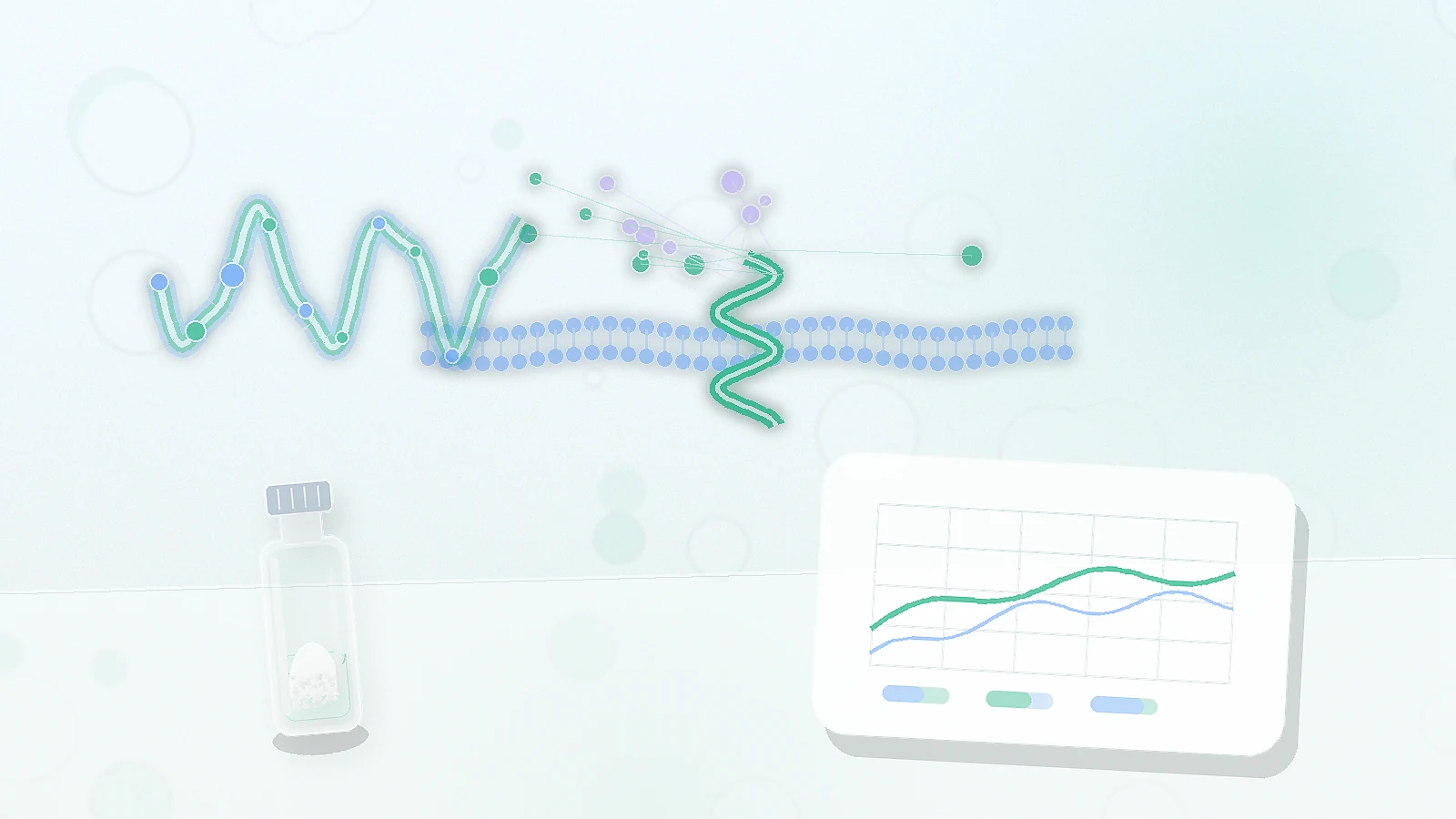
GHSR-1a activation: Ipamorelin binds to ghrelin receptors on pituitary somatotropes (the GH-producing cells). This triggers an intracellular calcium cascade that causes GH vesicles to release their contents into the bloodstream.
Somatostatin suppression: GHRPs don't just push GH release. They also reduce the inhibitory effect of somatostatin, the hormone that acts as a brake on GH secretion. So Ipamorelin works both sides: it pushes the accelerator (direct GH release from somatotropes) and eases off the brake (reducing somatostatin's inhibition). This dual action is half the mechanism and often overlooked.
Why it doesn't spike cortisol: True ghrelin binds promiscuously across receptor subtypes, including receptors in the hypothalamic-pituitary-adrenal (HPA) axis that trigger cortisol release. Ipamorelin's molecular structure is more selective; it activates GHSR-1a's GH pathway without the same degree of cross-activation at HPA-axis-related sites. The original Raun et al. study called this selectivity "very surprising" and noted it was unique among GHRPs.
Why you won't raid the fridge: It’s all about the finesse of the signal. The ghrelin receptor (GHSR-1a) is ground zero, but the real hunger signal requires a broader, louder activation inside the hypothalamic arcuate nucleus (the brain's feeding command center) which then throws the switch on neuropeptide Y and AgRP. Ipamorelin only hits the receptor just enough to release GH, but it bypasses that full-blown, "eat everything" cascade. You might get a slight appetite lift, but that GHRP-6, ravenous hunger? Forget it.
The gut connection (stomach speed): The GHSR-1a receptor isn't just in your brain; it runs right down your digestive tract. Because of this, Ipamorelin will interact with your gut function. Remember, Helsinn was testing this thing specifically for paralyzed guts after surgery because it sped up gastric emptying in animals. For you, this just means your digestive speed could shift, something to be aware of, especially since every dose has to hit an empty stomach.
The GH-IGF-1 domino effect: The moment Ipamorelin releases GH into your bloodstream, the liver reads that signal and starts churning out IGF-1 (Insulin-like Growth Factor 1). This is the exact same metabolic lever that CJC-1295 pulls. The implications for body recomposition are identical, and so are the necessary guardrails around sustained IGF-1 elevation. It's the engine of growth, but it's still an engine.
The Thyroid Tweak: This is a known consequence anytime you boost GH (same story as CJC-1295). Elevated growth hormone forces your body to convert more T4 (the dormant thyroid hormone) into T3 (the active one). For anyone with a sluggish or subclinical thyroid, this conversion shift can make symptoms surface or require your levothyroxine dose to be adjusted. It’s a key interaction to monitor.
Pulsatile GH Release and Why It Matters
Natural GH secretion is pulsatile. Your pituitary releases GH in bursts, primarily during deep sleep (the largest pulses occur in the first few hours) and during fasted states. Between pulses, GH drops back toward baseline.
Ipamorelin mimics this pattern. A single injection produces a sharp GH pulse that rises within minutes, peaks, and returns to baseline within about 2 hours. This is physiologically closer to how your body normally handles GH than sustained-release approaches (like CJC-1295 with DAC).
Why this matters: many of GH's effects are pulse-dependent. The body responds differently to a sharp GH spike than to a chronically elevated GH level. Pulsatile release is associated with better fat mobilization patterns and may carry fewer metabolic risks than sustained elevation.
The GHSR-1a receptor in hypothalamic regions that regulate sleep also provides a biological basis for pre-sleep dosing beyond just "GH is released during sleep." Activating this receptor before bed may enhance the natural sleep-related GH pulse specifically because the receptor system is already primed for nocturnal activity.
Gender note: Women typically have higher baseline GH pulsatility than men. Responses to GHRPs may differ between sexes, though Ipamorelin-specific gender comparison data is limited.
Timing and Food Intake with Ipamorelin
Insulin blunts GH release. This isn't community lore; it's established endocrine physiology. When blood glucose and insulin are elevated (after eating), the GH response to secretagogues is significantly reduced.
Practical implications: take Ipamorelin on an empty stomach. At least 30 minutes before eating or 2+ hours after a meal. The pre-sleep dose works well because most people haven't eaten recently. The morning dose should be fasted.
How Do You Take Ipamorelin?
Subcutaneous injection. The short half-life (\~2 hours) means timing matters and multiple daily doses are used in some protocols.
Common timing:
- Before bed (amplify natural sleep GH pulse)
- Morning fasted
- Post-workout (optional, some protocols)
The refractory period: After Ipamorelin triggers a GH pulse, there's a window where the pituitary is less responsive to another dose. This isn't receptor desensitization; it's pituitary depletion. The somatotropes have physically emptied their stored GH vesicles and need time to manufacture and store new GH. This is why protocols space injections at least 3 to 4 hours apart. The spacing is mechanistic, not arbitrary.
Ipamorelin Dosing
Research protocols: 100 to 300 mcg per injection, 1 to 3 times daily. The original Raun study used doses ranging from the low nmol/kg range up through high doses in swine; human-equivalent community dosing typically centers around 200 to 300 mcg per injection.
Most common community protocol: 200 to 300 mcg subcutaneous before bed, often stacked with 100 mcg Mod GRF (CJC-1295 no-DAC). Cycles of 8 to 12 weeks on, 4 weeks off.
The cycling logic: This is about pituitary recovery, not just receptor rest. Ipamorelin doesn't downregulate GHSR-1a as aggressively as GHRH analogs downregulate their receptors. But repeated dosing without breaks depletes the pituitary's stored GH. The off-period lets the pituitary replenish. Think of it as refilling the tank, not just resting the engine.
Talk to a clinician. This is a research chemical.
Ipamorelin vs GHRP-6 and GHRP-2
Here is the detailed comparison of selectivity data in conscious swine:
| Metric | Ipamorelin | GHRP-6 | GHRP-2 |
|---|---|---|---|
| GH Potency (ED50) | 2.3 nmol/kg | 3.9 nmol/kg | 0.6 nmol/kg (Most potent) |
| GH Efficacy (Emax) | 65 ng/ml | 74 ng/ml | 56 ng/ml |
| ACTH & Cortisol | No elevation | Elevated | Elevated |
| Appetite | Mild to none | Strong stimulation | Moderate stimulation |
| Other Hormones | FSH, LH, PRL, TSH unaffected by all three in this study. |
Bottom line: similar GH output, dramatically different side effect profiles. That's the trade.
The CJC-1295 Stack
Ipamorelin acts on GHSR-1a (the ghrelin receptor). CJC-1295 acts on the GHRH receptor. Different receptor systems, same downstream target: GH release from pituitary somatotropes.
The synergy is real and mechanistically sound. CJC-1295 activates an intracellular cAMP pathway. Ipamorelin activates a calcium pathway. Together, they hit both of the pituitary's GH release switches simultaneously, producing a larger pulse than either compound alone.
CJC-1295 (no-DAC version) creates the permissive hormonal environment. Ipamorelin provides the trigger pulse. The combination is the most widely used peptide stack in the GH secretagogue space. See the CJC-1295 article for full DAC vs no-DAC treatment.
What Does the Ipamorelin Evidence Show?
GH Release and IGF-1
The selectivity and GH-releasing data is well-published and robust. Ipamorelin reliably raises GH in animals. The mechanism is confirmed through receptor profiling and antagonist studies.
But here's the honest disclosure: Ipamorelin-specific human clinical data is extremely thin. The early Novo Nordisk Phase 1/2 work was never fully published in mainstream journals. The Helsinn trials were for postoperative ileus, not body composition. Almost everything the community relies on for body composition and recovery outcomes comes from the broader GH and GHRP literature, not Ipamorelin-specific trials.
Bone Density
This is one of the more replicated animal findings. Studies in female rats showed Ipamorelin and GHRP-6 both increased bone mineral content as measured by DXA scanning. This is consistent with GH's known role in bone metabolism. Human data specifically for Ipamorelin on bone density doesn't exist.
Body Composition and Recovery
GH promotes fat mobilization and lean mass preservation. These effects are well-documented for GH itself. Whether Ipamorelin produces clinically meaningful body composition changes beyond the general GH literature is unknown because the specific human trials haven't been done.
Sleep Quality
Users consistently report deeper sleep. The mechanism is plausible (GHSR-1a in sleep-regulating brain regions, amplification of natural nocturnal GH pulses). Controlled human studies measuring sleep architecture with Ipamorelin don't exist.
IGF-1 Implications
Same considerations as CJC-1295. Ipamorelin raises GH, which raises IGF-1. IGF-1 is a growth factor that doesn't discriminate between cell types. The cancer promotion concern applies to any GH-elevating compound. Acromegaly risk at typical pulsatile doses is very low (much lower than with sustained-release approaches). Anyone with cancer history or active malignancy should not use Ipamorelin.
Ipamorelin: WADA and Competitive Sport
GHRPs are prohibited by WADA at all times, in and out of competition. Ipamorelin is a banned substance. Detection methods exist.
Safety and Side Effects of Ipamorelin
Generally well-tolerated in the limited data available. The cortisol and prolactin sparing is the primary safety advantage for long-term use; less stress hormone burden, no gynecomastia risk from prolactin.
Commonly reported: Injection site reactions, mild water retention (GH raises IGF-1, which has sodium-retaining effects at the kidney), transient headaches, tingling or numbness (common across GHRPs), mild lightheadedness.
Metabolic considerations: Like any GH-elevating compound, Ipamorelin can produce mild insulin resistance through GH's glucose-raising effects. Less of a concern with pulsatile dosing (no-DAC version timing) than with sustained approaches, but still worth monitoring fasting glucose. The thyroid T4-to-T3 conversion shift also applies.
What the original study found: No adverse effects were observed in the animal pharmacology work, even at high doses. The absence of cortisol and ACTH effects was confirmed across dose ranges.
What Happens When You Stop Ipamorelin?
GH returns to baseline. IGF-1 normalizes. No dependency, no withdrawal. Pituitary GH stores replenish during off periods. No rebound GH suppression has been reported.
Legal Status of Ipamorelin
Not FDA-approved for any indication. Research chemical worldwide. WADA prohibited substance. Available from peptide suppliers and some compounding pharmacies.
Unanswered Questions
- Long-term human body composition data? Doesn't exist for Ipamorelin specifically. The community is running on the broader GH literature plus personal experience.
- Optimal dosing frequency given the short half-life? Is once daily before bed sufficient, or do multiple daily doses produce meaningfully better outcomes? No controlled comparison exists.
- Does the CJC-1295 stack produce meaningfully better outcomes than Ipamorelin alone? Mechanistically yes (larger GH pulse). Clinically? Never tested head-to-head in humans.
- Cardiac effects? Published animal data on cardioprotective effects of GHRPs exists. Whether Ipamorelin specifically has cardiac benefits hasn't been studied in humans.
Final Take
Ipamorelin is the cleanest GH secretagogue available. The selectivity data is clear and well-published: GH comparable to GHRP-6, cortisol and ACTH comparable to placebo. No other GHRP achieves that profile. The pulsatile release pattern is more physiological than sustained approaches, and the side effect profile is among the mildest in this space.
But the honest limitation is the evidence gap. The selectivity and mechanism data is strong. The human clinical outcomes data (body composition, recovery, sleep, aging) is almost nonexistent for Ipamorelin specifically. You're relying on well-established GH physiology and the assumption that raising GH through a clean mechanism produces the expected downstream effects.
If you're going to use a GH secretagogue, Ipamorelin (especially stacked with Mod GRF) is the most reasonable choice from a hormonal cleanliness standpoint. Just know you're working from mechanistic logic, not from Ipamorelin-specific outcome trials.
FAQ
What makes Ipamorelin different from GHRP-6?
Same GH output, but Ipamorelin doesn't raise cortisol, ACTH, or prolactin. GHRP-6 raises all of them. GHRP-6 also causes significantly more hunger.
Does Ipamorelin make you hungry?
Mildly at most. Unlike GHRP-6, Ipamorelin's receptor selectivity avoids triggering the full appetite cascade.
Why is it always used with CJC-1295?
They activate different receptor systems (ghrelin receptor vs GHRH receptor) that converge on GH release. The combination produces a larger GH pulse than either alone.
How long does it last?
Half-life of approximately 2 hours. GH pulse peaks and clears within that window.
Is there good human data?
For the selectivity profile, yes. For clinical outcomes like body composition and sleep? Very limited Ipamorelin-specific data. Most evidence comes from the broader GH literature.
Was Ipamorelin discontinued for safety reasons?
No. Novo Nordisk developed it; Helsinn ran Phase 2 trials for gut motility. It was discontinued for lack of efficacy in that specific indication, not for safety concerns.
Why do I need to take it on an empty stomach?
Insulin blunts GH release. Eating raises insulin. The GH response to Ipamorelin is significantly better in a fasted state.
Is it banned in sport?
Yes. All GHRPs are prohibited by WADA.
Should I cycle it?
Yes. Not primarily for receptor rest, but for pituitary GH store replenishment. Repeated dosing depletes stored GH vesicles. Off periods let the pituitary refill.
About the author

Ahmed Khedri
Peptide research writer focused on evidence quality, clinical trial interpretation, and safety context.
Ahmed writes PeptideAWO reviews with an emphasis on separating clinical evidence from marketing claims. His work focuses on trial data, regulatory status, dosing context, and the practical safety questions readers should understand before researching a compound.
Peptides that pair well with Ipamorelin
Tirzepatide Review 2026: The Dual Agonist That Beat Semaglutide in a Head-to-Head Trial
A dual GIP/GLP-1 agonist review covering SURMOUNT-5, the GIP question, MASH data, compounding rules, side effects, and access.
Read reviewSemaglutide (Ozempic/Wegovy): The 2026 Guide to Weight Loss, Cardiovascular Data & In-Depth Analysis
An FDA-approved GLP-1 review covering STEP weight-loss data, SELECT cardiovascular outcomes, rebound after stopping, side effects, access, and compounding concerns.
Read reviewRetatrutide Review 2026
Extremely promising weight loss results in clinical trials. Up to ~24% body weight loss in trials, but not yet FDA approved.
Read reviewGet Personalized Supplier Recommendations
Enter your email and we'll send you the best suppliers to buy Ipamorelin from.
We only recommend suppliers we've vetted. No spam.