Matrixyl is cosmetic skincare, not a drug. Product concentration and formulation determine whether the label claim is meaningful.
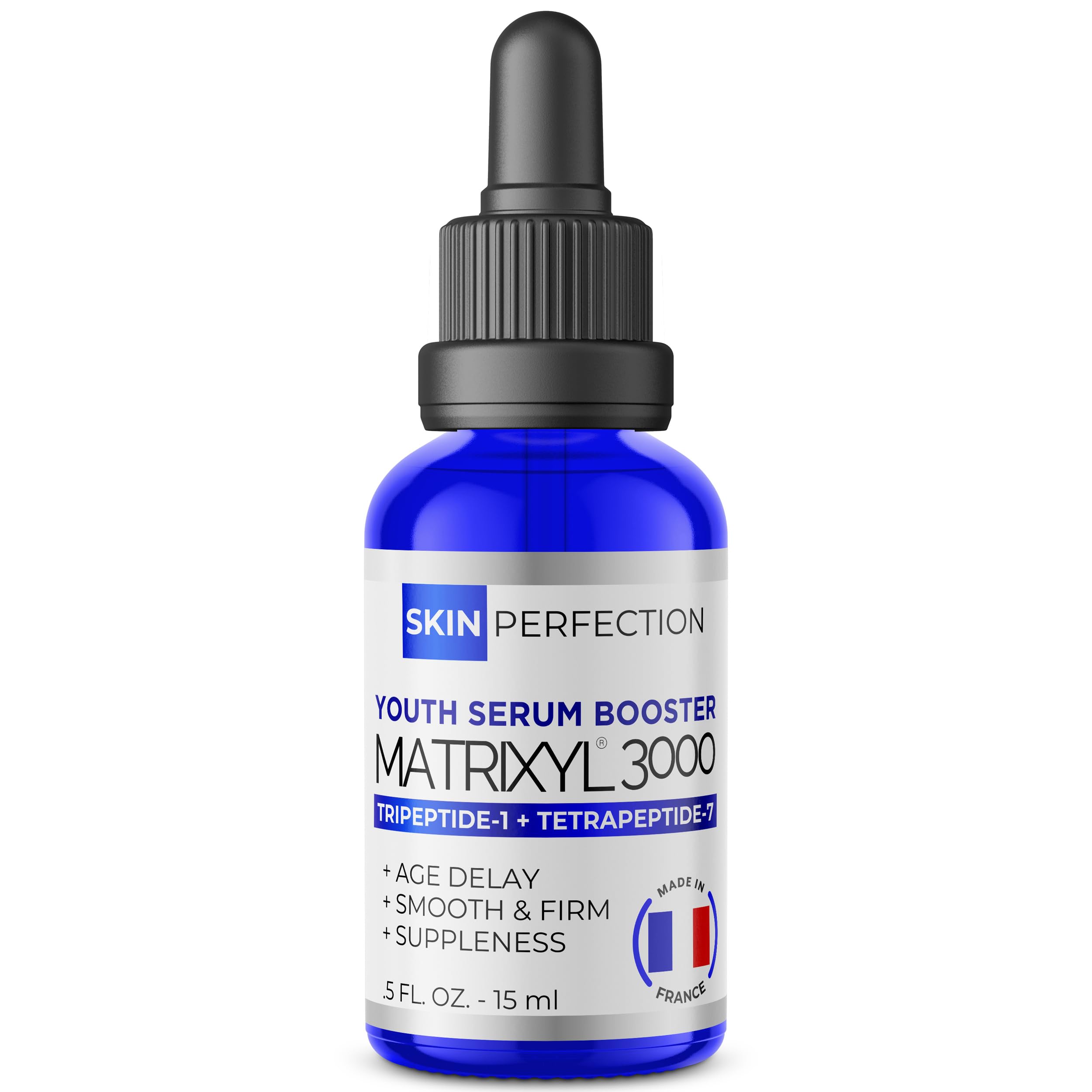
Overall Rating: 8.4 out of 10
A commercially accessible cosmetic peptide family with strong tolerability and real skin data, limited mainly by formulation transparency and concentration uncertainty.
Every link in this article was verified as a real, accessible publication at the time of writing. We use PubMed, PMC, NEJM, JAMA, FDA.gov, and peer-reviewed journals only. No Wikipedia. No vendor blogs.
Matrixyl is not a compound; it's a brand name, and it covers four different peptide formulations, each containing different peptides with different mechanisms and different evidence bases. The person buying a $40 serum labeled "with Matrixyl" at Sephora and the person buying a $200 clinical formulation labeled "Matrixyl 3000" are not using the same thing, and neither one can tell from the marketing which version they actually have or whether it's at a concentration that does anything.
That confusion is the first and biggest problem with Matrixyl, and the review can't proceed honestly without resolving it immediately. The science underneath is actually quite good; matrikine signaling (mimicking the natural signals your skin sends to rebuild collagen) is an elegant concept with published clinical data behind it. But elegance doesn't help if you're applying the wrong formulation at the wrong concentration in the wrong vehicle.
Key Takeaways
- Matrixyl is a brand name from Sederma (now part of Croda International) covering four distinct formulations, not one compound
- Original Matrixyl \= palmitoyl pentapeptide-4 (pal-KTTKS); Matrixyl 3000 \= palmitoyl tripeptide-1 + palmitoyl tetrapeptide-7; Matrixyl Synthe'6 \= palmitoyl tripeptide-38; Matrixyl Morphomics \= N-prolyl palmitoyl tripeptide-56 acetate
- Mechanism is matrikine signaling: mimicking the natural peptide fragments released during collagen breakdown to trigger fibroblasts into producing new extracellular matrix
- Evidence is cosmetic clinical study grade, not pharmaceutical RCT grade; real data, different standard
- Concentration is the most overlooked variable; many commercial products include Matrixyl at levels far below what studies used
- Safety profile is among the best on this entire list; no photosensitivity, no irritation, no systemic concerns, safe during pregnancy (unlike retinol)
- The palmitoyl modification isn't cosmetic; it's delivery engineering that enables the peptide to penetrate skin
- Available at Sephora, in mass-market products, and in professional formulations; the most commercially accessible compound on this site
Matrixyl, In Simple Terms
- What the extracellular matrix is: The structural scaffolding of your skin; collagen, elastin, fibronectin, hyaluronic acid, and other proteins that keep skin firm, elastic, and hydrated.
- What matrikines are: When your body breaks down old collagen during normal skin remodeling, the fragments released act as signals to fibroblasts (the cells that build new collagen), telling them "matrix breakdown happened, build more." These signaling fragments are matrikines.
- What Matrixyl does: It mimics those natural matrikine signals, tricking your fibroblasts into producing new collagen, elastin, and other matrix proteins without requiring actual tissue damage. You get the rebuild signal without the breakdown.
- What the palmitoyl group does: Peptides can't easily penetrate the outer layer of skin (stratum corneum) because it's a lipid (fat-based) barrier. Attaching a palmitoyl fatty acid chain makes the peptide fat-soluble enough to pass through. Without it, the peptide sits on the surface doing nothing.
- Honest evidence tier: Cosmetic clinical data with instrument-measured skin improvements, some published in peer-reviewed journals, mostly sponsor-funded. Not pharmaceutical-grade RCTs with histological endpoints. Real science at a different evidence standard.
Table of Contents
- The four Matrixyl formulations
- Matrikine signaling
- The palmitoyl modification and the 500 Dalton problem
- How each version works
- Concentration: the most overlooked variable
- What does the evidence show?
- Matrixyl vs retinol
- Matrixyl vs GHK-Cu
- Formulation matters
- Combination use and compatibility
- Mesotherapy and injectable use
- Safety and side effects
- What happens when you stop?
- Legal and regulatory status
- Unanswered questions
- Final take
- FAQ
The Four Matrixyl Formulations: Resolved Immediately

Original Matrixyl \= palmitoyl pentapeptide-4 (five amino acids: Pal-KTTKS). The pioneering formulation launched in 2000. Stimulates collagen I, III, and IV synthesis, fibronectin, and hyaluronic acid through TGF-beta pathway activation. The most published and longest-studied version. INCI name on product labels: Palmitoyl Pentapeptide-4.
Matrixyl 3000 \= palmitoyl tripeptide-1 (three amino acids) + palmitoyl tetrapeptide-7 (four amino acids). Two peptides working together; tripeptide-1 stimulates collagen and fibronectin synthesis, tetrapeptide-7 reduces IL-6-driven inflammation (the "inflammaging" component). The most commonly found version in premium skincare as of 2026.
Matrixyl Synthe'6 \= palmitoyl tripeptide-38. Targets six structural proteins simultaneously: collagen I, III, and IV, fibronectin, hyaluronic acid, and laminin-5. Broadest target profile of the four.
Matrixyl Morphomics \= N-prolyl palmitoyl tripeptide-56 acetate. The newest addition, specifically designed to target vertical expression lines (frown lines, marionette lines) by influencing dermal cell morphology and nuclear connections. Different target, different use case.
When a product says "with Matrixyl," check the INCI list for which peptide(s) are actually present. The name alone tells you nothing.
Matrikine Signaling: The Mechanism Explained
Your skin's extracellular matrix is constantly turning over; old collagen is enzymatically broken down, new collagen is synthesized. When collagen breaks down, the fragments released aren't just waste, they're signals called matrikines that bind to receptors on fibroblasts and say "matrix degradation has occurred, manufacture replacement."
The KTTKS sequence in original Matrixyl is derived from the C-terminal propeptide of type I procollagen; it's literally a piece of collagen that naturally acts as a rebuild signal. The beauty of the matrikine concept is that Matrixyl activates an endogenous repair response that fibroblasts already understand from wound healing, without requiring actual damage.
The limits: this is a mimicry of a feedback signal, not a direct structural intervention. The fibroblasts still need to be functional, the skin still needs adequate nutrition and blood supply, and the signal still needs to reach the fibroblasts through the skin barrier. Which brings us to the penetration problem.
The Palmitoyl Modification and the 500 Dalton Problem
The palmitoyl (16-carbon fatty acid) chain attached to every Matrixyl peptide isn't a marketing addition; it's deliberate delivery engineering. Unmodified KTTKS sits on the skin surface because it's water-soluble and the stratum corneum is a lipid barrier. The palmitoyl group makes the peptide lipophilic (fat-soluble) enough to penetrate.
But here's the reality check: the 500 Dalton rule states that molecules larger than 500 Da (Daltons, a unit of molecular weight) struggle to penetrate the stratum corneum efficiently. Matrixyl peptides are heavy, often 600 to 800+ Da even with the palmitoyl modification. Palmitoyl pentapeptide-4 has a molecular weight of approximately 802 Da.
This means penetration is functionally inefficient without help. Advanced delivery vehicles (liposomes, nanocarriers), mechanical assistance (microneedling), or enhanced formulation technology improve delivery significantly, and studies using radiofrequency with liposomal formulations showed notably better collagen formation than standard application. A basic cream formula delivers less than a well-engineered delivery system.
How Each Version of Matrixyl Works
Original Matrixyl: The KTTKS matrikine activates TGF-beta signaling in fibroblasts, upregulating gene expression for procollagen I, collagen III and IV, fibronectin, and hyaluronic acid. One published study showed collagen production stimulation by up to 117% at effective concentrations.
Matrixyl 3000: Palmitoyl tripeptide-1 handles collagen and fibronectin synthesis stimulation, while palmitoyl tetrapeptide-7 targets IL-6-mediated chronic low-grade inflammation, which accelerates skin aging. The dual approach addresses both matrix degradation and the inflammatory component of aging skin simultaneously.
Matrixyl Synthe'6: Palmitoyl tripeptide-38 broadens the target from collagen alone to six matrix proteins, including laminin-5 (a basement membrane protein critical for skin barrier integrity). The hypothesis: broader matrix restoration produces more comprehensive anti-aging effects.
Matrixyl Morphomics: Targets cell morphology and dermal architecture specifically in expression line areas, a more targeted application than the broad matrix-stimulation approach of the other three.
Matrixyl Concentration: The Most Overlooked Variable
The Robinson et al. study showing wrinkle improvement used palmitoyl pentapeptide-4 at 3 ppm (parts per million) in a controlled formulation applied twice daily for 12 weeks. Other published data showed wrinkle depth reduction at 4 to 8 ppm concentrations.
Many commercial products include Matrixyl far below these levels. If "Palmitoyl Pentapeptide-4" appears near the bottom of the INCI list (ingredients are listed in descending order of concentration), the product likely contains sub-effective amounts. Products listing Matrixyl peptides in the first half of the ingredient list, or specifying concentration (1% to 5% of the Matrixyl raw material, which itself is a dilute solution), are more likely to match study conditions.
Sederma sells Matrixyl as a raw material that manufacturers dilute into their formulations, and the final concentration in the consumer product is entirely up to the brand. The published evidence only applies at the published concentrations.
What Does the Matrixyl Evidence Show?

Original Matrixyl
A 12-week, double-blind, placebo-controlled, split-face study in 93 Caucasian women (aged 35 to 55) found that palmitoyl pentapeptide-4 provided significant improvement versus placebo control for wrinkle and fine line reduction, as measured by both quantitative analysis and expert grader assessment. A separate double-blind trial comparing palmitoyl pentapeptide-4 to acetylhexapeptide-3 in Asian subjects also showed improvements in crow's feet versus placebo.
Matrixyl 3000
The Procter & Gamble-funded study showing approximately halved appearance of wrinkles with Matrixyl 3000 is frequently cited. It is a real published study conducted under controlled conditions with a specific formulation. It was sponsor-funded, which is standard for cosmetic ingredient research but should be noted.
The Cosmetic Evidence Standard
Stated explicitly: cosmetic clinical studies are not pharmaceutical RCTs. They're typically smaller (often 20 to 100 participants), sponsor-funded, and measure appearance or instrument endpoints (skin roughness, wrinkle depth via profilometry, elasticity via cutometry) rather than histological tissue change from biopsies. This doesn't make them worthless; it sets the appropriate expectation. The data is real, the standard is different.
Matrixyl vs Retinol
The comparison readers want most.
Retinol: Deeper evidence base including pharmaceutical-grade studies with histological endpoints, documented cell turnover and epidermal thickening, proven ability to increase dermal collagen in tissue biopsies; but causes photosensitivity, initial purging/irritation, and is contraindicated during pregnancy. Mechanism: retinoic acid receptor activation driving cell turnover.
Matrixyl: Matrikine signaling stimulating collagen synthesis, no photosensitivity, no purging, no irritation, safe for all skin types including during pregnancy; but evidence is cosmetic-grade with instrument-measured endpoints rather than tissue-level histology.
Who each is better for: retinol for patients who can tolerate it and want the deepest evidence-supported anti-aging intervention. Matrixyl for sensitive skin, pregnancy, retinol-intolerant patients, or those who want a gentler first-line approach. Combination use makes sense (retinol at night for cell turnover, Matrixyl in the morning for collagen signaling) and is commonly recommended.
Matrixyl vs GHK-Cu
Both stimulate collagen production through different mechanisms entirely.
GHK-Cu: Copper-mediated enzymatic activity, wound healing signaling, broader biological profile (antioxidant, anti-inflammatory, gene modulation). Multiple clinical studies showing collagen improvement, including one where GHK-Cu outperformed both vitamin C and retinoic acid for collagen production.
Matrixyl: Matrikine signaling through ECM fragment mimicry. Different pathway, different receptor targets. Gentler, more purely cosmetic application profile.
The copper peptide antagonism question: There's a community debate about mixing palmitoyl peptides with GHK-Cu in the same routine. While Sederma claims Matrixyl is stable, mixing it with free copper ions and low-pH acids risks peptide degradation or unwanted chelation (copper binding to the peptide instead of to the intended target). Practical advice: separate them in your routine (morning/evening split) rather than layering directly.
Formulation Matters
Matrixyl peptides have pH stability windows, and formulations outside those ranges can degrade the active ingredient before it reaches your skin. Very low-pH products (like strong vitamin C serums at pH 2.5 to 3) may destabilize palmitoyl peptides. Water-based serums generally deliver better than heavy oil-based creams because the peptides need to penetrate through the aqueous phase first.
Common formulation errors that render Matrixyl ineffective: wrong pH, incompatible preservatives, insufficient concentration, improper storage (heat and light degrade peptides over time). A well-formulated Matrixyl product has the peptides listed at effective concentration, in a pH-appropriate vehicle, with stability testing.
Matrixyl Combination Use and Compatibility
With vitamin C: Potential synergy on collagen synthesis via different mechanisms, but pH matters; don't mix Matrixyl directly with a low-pH L-ascorbic acid serum. Apply separately.
With retinol: Complementary mechanisms, no known interaction. Morning/evening split is common practice.
With niacinamide: No interaction concern, often co-formulated successfully.
With hyaluronic acid: No interaction, commonly combined.
With AHAs/BHAs: pH consideration; strong acids at very low pH may destabilize peptide formulations if co-formulated. Apply separately.
Mesotherapy and Injectable Use
A different application, different evidence context, different risk profile. Mesotherapy (intradermal microinjections) of palmitoyl peptides bypasses the penetration challenge entirely but introduces sterility requirements, practitioner skill requirements, and the usual injectable caveats (bruising, infection risk, technique dependence).
The mesotherapy evidence is limited to clinical practice reports rather than controlled trials, and results depend heavily on practitioner technique and the specific formulation used.
Safety and Side Effects of Matrixyl

Topical: Genuinely excellent. Palmitoyl pentapeptide-4 at 3% concentration has been proven safe, non-irritating, and non-sensitizing, tolerated by all skin types including oily and acne-prone skin. No photosensitivity (unlike retinol). No systemic effects from topical application. Safe during pregnancy and breastfeeding (unlike retinol; this is a significant practical advantage). Rare contact sensitivity cases have been documented but are uncommon.
Injectable/mesotherapy: Practitioner-dependent. The usual injectable risks apply.
What Happens When You Stop Matrixyl?
Collagen synthesis stimulation is maintenance-dependent. Effects fade over months as the newly synthesized matrix proteins turn over naturally. No dependency, no withdrawal, no rebound effect. Skin returns to its baseline rate of aging.
Legal and Regulatory Status of Matrixyl
Cosmetic ingredient in all major markets (EU, US, UK, Canada, Australia). Regulated under cosmetics frameworks, not pharmaceutical law. Sederma/Croda supply chain means legitimate commercial topical products have verified sourcing and quality. Injectable/mesotherapy use operates under medical procedure regulations which vary by country.
Unanswered Questions
- Will any Matrixyl formulation generate pharmaceutical-grade trial data with histological endpoints? The investment might not justify the return for a cosmetic ingredient, but it would settle the evidence-grade question definitively.
- What is the minimum effective concentration in topical formulations? Dose-response data at consumer-product concentrations versus study concentrations is lacking.
- Does Matrixyl Synthe'6's broader target profile translate to meaningfully better outcomes than Matrixyl 3000? No head-to-head comparison exists.
- Does the 500 Dalton penetration barrier limit real-world efficacy more than the clinical data suggests? Studies use optimized formulations; consumer products may not.
Final Take
Matrixyl is the most evidence-supported purely cosmetic peptide ingredient on this site, with a legitimate safety profile, a mechanistically coherent rationale, and published clinical data from peer-reviewed journals. The matrikine concept is scientifically elegant. The evidence standard is cosmetic, not pharmaceutical, and readers should understand what that means.
But the practical reality is that concentration and formulation quality are the primary determinants of whether a commercial product actually delivers on the mechanism, and most consumers have no way to verify either. The brand name confusion across four different formulations makes informed purchasing harder than it should be.
If you're looking for a well-tolerated, pregnancy-safe, non-irritating collagen-supporting active for daily skincare, Matrixyl (any version, at effective concentration, in a well-formulated product) is a reasonable and evidence-supported choice. If you're looking for the deepest anti-aging evidence, retinol still holds that ground, with its higher evidence standard and higher side effect profile.
FAQ
Which Matrixyl should I use?
Matrixyl 3000 (palmitoyl tripeptide-1 + palmitoyl tetrapeptide-7) is the most commonly available in premium products. All four versions have published data. Check the INCI list to know which you're getting.
Does Matrixyl actually work?
Published clinical studies show significant wrinkle improvement versus placebo at effective concentrations. The evidence is cosmetic-grade, not pharmaceutical-grade.
Is it better than retinol?
Different tools. Retinol has deeper evidence and stronger effects with more side effects. Matrixyl is gentler, safe for sensitive skin and pregnancy, with cosmetic-grade evidence. Many people use both.
How do I know if my product has enough?
If the Matrixyl peptide is listed near the bottom of the INCI list, concentration is likely below study levels. Products specifying 1 to 5% Matrixyl raw material, or listing the peptide in the first half of ingredients, are more likely effective.
Can I use it with GHK-Cu?
Best to separate them in your routine rather than layer directly. Copper ions and low-pH conditions may destabilize palmitoyl peptides.
Is it safe during pregnancy?
Yes. No photosensitivity, no systemic absorption concerns, no contraindications for pregnancy or breastfeeding. A practical advantage over retinol.
Is there an injectable version?
Mesotherapy protocols use palmitoyl peptides intradermally. Different evidence base, different risk profile. Topical is more supported.
About the author

Ahmed Khedri
Peptide research writer focused on evidence quality, clinical trial interpretation, and safety context.
Ahmed writes PeptideAWO reviews with an emphasis on separating clinical evidence from marketing claims. His work focuses on trial data, regulatory status, dosing context, and the practical safety questions readers should understand before researching a compound.
Peptides that pair well with Matrixyl
Tirzepatide Review 2026: The Dual Agonist That Beat Semaglutide in a Head-to-Head Trial
A dual GIP/GLP-1 agonist review covering SURMOUNT-5, the GIP question, MASH data, compounding rules, side effects, and access.
Read reviewSemaglutide (Ozempic/Wegovy): The 2026 Guide to Weight Loss, Cardiovascular Data & In-Depth Analysis
An FDA-approved GLP-1 review covering STEP weight-loss data, SELECT cardiovascular outcomes, rebound after stopping, side effects, access, and compounding concerns.
Read reviewRetatrutide Review 2026
Extremely promising weight loss results in clinical trials. Up to ~24% body weight loss in trials, but not yet FDA approved.
Read reviewGet Personalized Supplier Recommendations
Enter your email and we'll send you the best suppliers to buy Matrixyl from.
We only recommend suppliers we've vetted. No spam.