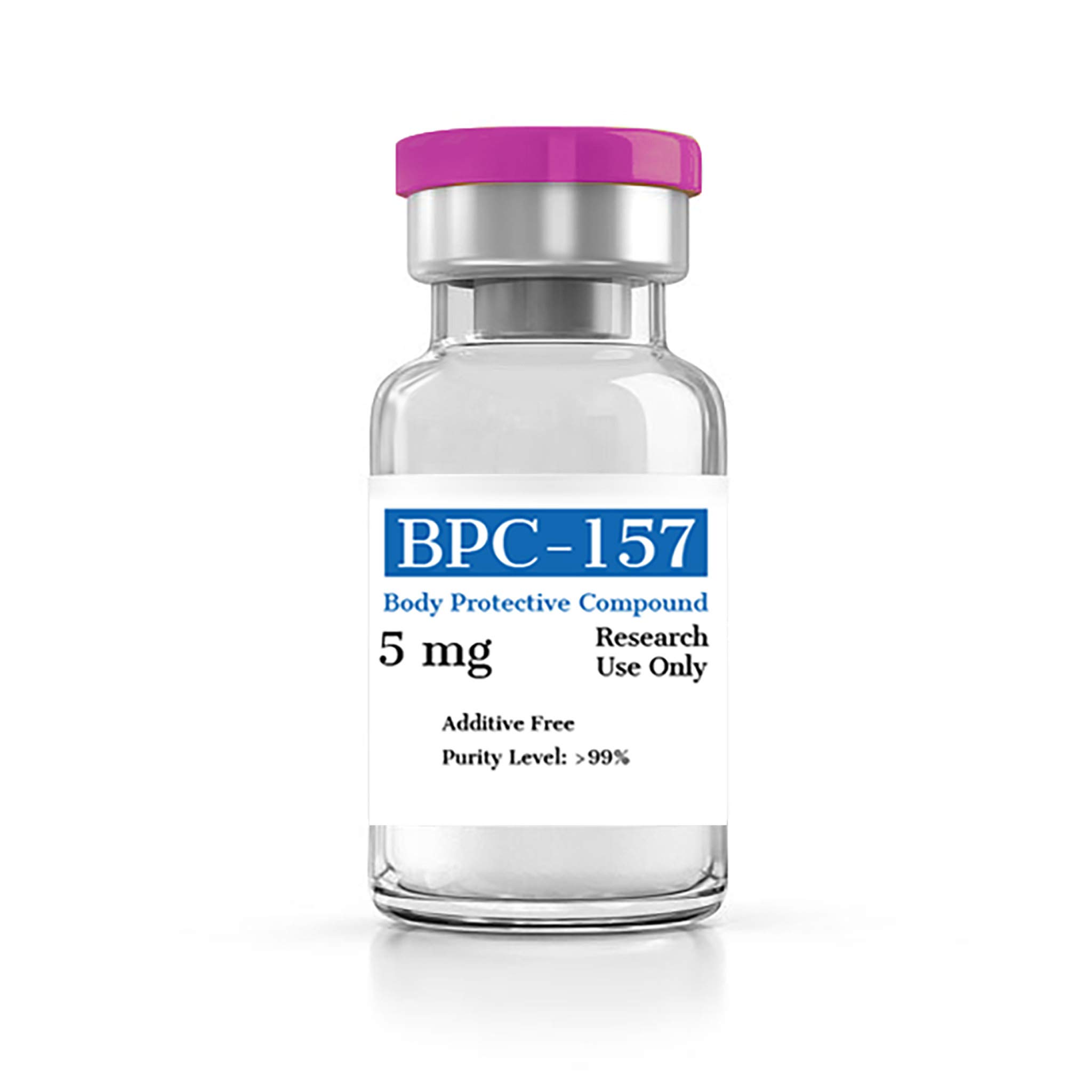
BPC-157 is not approved by major regulators and is commonly sold as a research chemical. Nothing on this page is medical advice.
Overall Rating: 6.8 out of 10
Mechanistically credible and compelling in animal models, but still limited by thin human evidence, lack of approval, and unresolved long-term safety questions.
Every link in this article was verified as a real, accessible publication at the time of writing. We use PubMed, PMC, NEJM, JAMA, FDA.gov, and peer-reviewed journals only. No Wikipedia. No vendor blogs.
The recovery world won't shut up about BPC-157. Gym forums swear by it for tendons. Biohackers keep coming back to it for gut issues. Online you'll find hundreds of anecdotes, most of them glowing.
Here's the thing though: the bulk of the science comes from animals. Not people. If you need a peptide backed by proper human trials, this isn't it, at least not yet. But if you're curious about one with a real mechanistic story and a research case that keeps growing, that's worth looking at more carefully.
So that's what this review does. It tells you what the evidence says. And, just as importantly, where it stops.
Key Takeaways
- BPC-157 is a synthetic peptide fragment originally pulled from human stomach juice
- Almost all the evidence comes from animal studies. Human trial data is genuinely thin
- How you take it isn't a small detail; oral works for gut conditions, injectable for systemic effects
- The main mechanisms are nitric oxide signaling, VEGF, and growth hormone receptor interaction
- Hugely popular in biohacking and sports recovery circles, often paired with TB-500 or GHK-Cu
- Not approved anywhere. It sells as a research chemical, and quality online is a real gamble. No long-term human safety data exists yet.
Table of Contents
- What is BPC-157?
- Why researchers care about it
- How it works
- How you take it matters
- Dosing
- What does the evidence say?
- BPC-157 vs TB-500
- Safety and side effects
- What happens when you stop?
- Legal status and sourcing
- Unanswered questions
- Final take
- FAQ
What is BPC-157? Definition and Origin
BPC stands for Body Protection Compound. The "157" part comes from the 15 amino acids that make up its sequence. It's a synthetic fragment, cut from a larger protein that naturally exists in human gastric juice. That parent protein sits in your stomach lining, doing what looks like protective and repair work on the GI tract.
Dr. Predrag Šikiriċ and his team at the University of Zagreb developed and studied the synthetic version extensively. Small molecule, easy to reproduce in a lab. And here's the part that actually matters for how you use it: it doesn't fall apart in stomach acid. Most peptides do. This one doesn't, and that changes things quite a bit.
BPC-157 Research: Why Scientists Are Interested
Most compounds that end up in research labs have a specific, narrow target. One pathway, one system. BPC-157 is different; it keeps turning up across the gut, tendons, bone, brain, and blood vessels in animal models. That breadth is unusual. It's also exactly why scientists haven't dropped it even without strong human data to show for it.
The gut-brain axis is where most of the current excitement sits. BPC-157 seems to touch pathways connecting gut function to neurological and mood regulation. If that translates to humans anywhere close to what animal studies suggest, the applications go well beyond physical recovery.
BPC-157 Mechanisms of Action: How It Works to Promote Healing
It's not one mechanism. It's a few, and they're connected.
Nitric Oxide Signaling Start here because this is the central one. Nitric oxide manages blood vessel tone and drives healing by getting blood flow to damaged areas. BPC-157 modulates the nitric oxide system in a way that supports this process. How do we know it matters? Because in animal studies, when researchers block nitric oxide production, most of BPC-157's healing effects disappear with it.
VEGF Upregulation VEGF is the signal your body uses to build new blood vessels. BPC-157 has been linked to higher VEGF expression in injured tissue. More vessels reaching a damaged site means more oxygen and nutrients arriving where the repair is happening. It's probably a big part of why tendon and wound healing looks accelerated in the animal studies.
Growth Hormone Receptor Interaction BPC-157 appears to interact with growth hormone receptors in a way that amplifies repair signaling, especially in muscle and tendon tissue. Worth clarifying: this isn't about spiking GH levels the way a secretagogue would. It's a subtler interaction.
Gut Protection Separate from all the systemic mechanisms above, BPC-157 has direct protective effects on the stomach and intestinal lining. Given where it came from originally, this tracks. It's also the best-supported area of the existing research.
BPC-157 Administration: Oral vs. Injectable (Why It Matters)
This section exists because the route you use actually changes what the peptide does in your body. It's not just a preference.
Oral is viable for gut conditions because BPC-157 is acid-stable. That's the specific reason. Most peptides hit stomach acid and break down before they do anything. BPC-157 doesn't, almost certainly because its structure evolved from a protein that lives in stomach acid to begin with. When you take it orally, it works locally along the gut lining. For GI applications, that's exactly what you want.
Injectable (subcutaneous or intramuscular) skips the gut and puts BPC-157 into systemic circulation. Every animal study examining tendon repair, bone healing, neurological effects, and wound healing used this route. So if you're not targeting the gut, injectable is the approach that actually reflects the research.
Taking it orally and hoping for systemic effects on, say, a torn tendon? That's not how it's been studied. Results may vary, to put it mildly.
BPC-157 Dosing: Protocol for Oral and Injectable Use
Most dosing knowledge comes from animal research protocols, not human trials. Translating animal doses to human doses isn't a clean conversion.
In animals, doses have typically sat in the 6 to 20 mcg/kg range. In biohacking communities, the ranges people actually report using are:
- Oral: 250 to 500 mcg per day, usually split across two doses
- Injectable: 200 to 500 mcg per day, subcutaneous or intramuscular
None of this comes from published human dose-finding trials. It comes from extrapolation and community self-reporting. There's no officially established safe or effective human dose. If you're seriously considering this, that conversation belongs with a clinician, not a forum.
BPC-157 Efficacy: What the Human and Animal Evidence Shows
The honest version: it's mostly preclinical data, rodent studies. Often compelling results, but animal data doesn't automatically mean human results follow. That lesson has been learned the hard way with plenty of compounds.
Here's what the research actually shows, broken down by condition:
Gut and GI Healing
Best application. Most human data. Still limited, but more than exists for anything else on this list. Multiple animal studies show BPC-157 speeding recovery from stomach ulcers, IBD models, and intestinal damage. Oral dosing is the right route here, for the acid-stability reasons already covered.
There have been early human trials in IBD. Small. Nothing that's produced an approved drug. But this remains the most developed research area for BPC-157 and the one actually worth watching for updates.
Tendon, Ligament, and Musculoskeletal Repair
Where most biohackers focus. Animal data here is solid; accelerated tendon-to-bone healing, ligament repair, bone recovery in rodent models. The VEGF and nitric oxide pathways are thought to drive it.
But no human RCTs exist. People using BPC-157 for an Achilles injury or shoulder recovery are essentially running personal experiments. Some genuinely report solid results. But that's anecdote, and anecdote doesn't weigh the same as controlled trial data, no matter how many people are saying it.
Neurological and Mood Effects
More speculative than the above. The gut-brain axis angle gives it some footing mechanistically, and animal studies suggest possible anxiolytic and neuroprotective properties. Whether any of this shows up meaningfully in humans is genuinely unknown. Interesting direction. Not a proven use case.
Wound Healing
Animal studies show faster wound closure and tissue regeneration tied to the VEGF mechanism. BPC-157 sometimes gets paired with GHK-Cu for wound and skin applications specifically. GHK-Cu has solid dermatology research behind it, and the combination is thought to be complementary. Nobody has formally tested the stack though.
BPC-157 vs. TB-500: Mechanism, Efficacy, and Stacking Comparison
Most searched comparison in this corner of the internet. Short version follows.
TB-500 (Thymosin Beta-4) works through actin regulation and cell migration. It's systemic. BPC-157 is more targeted, particularly oral for gut work, and runs through nitric oxide and VEGF.
| BPC-157 | TB-500 | |
|---|---|---|
| Main mechanism | NO signaling, VEGF, GH receptor | Actin regulation, cell migration |
| Best evidence for | GI healing, tendon repair | Systemic tissue repair, inflammation |
| Effect profile | Local/targeted | Systemic |
| Human trial data | Very limited | Very limited |
The stack is popular because the mechanisms don't really overlap. BPC-157 handles local repair and blood vessel growth. TB-500 covers broader cellular repair and anti-inflammation. Combining them makes sense on paper. In practice, the stack is unstudied in humans, same as everything else here.
BPC-157 Side Effects and Safety Profile

Honest starting point: human safety data is limited.
In animal studies, the safety profile is notably clean. Researchers couldn't identify a toxic dose even at high levels in rodents. Good sign. Not a guarantee for humans.
What the community reports, and this is anecdotal, not clinical data:
- Mild nausea, especially with injectable use
- Warm flushing around injection sites
- Vivid dreams or mild mood shifts in early days of use, for some people
- Occasional fatigue in the first week
Small human trials have produced no formally documented serious adverse events. But "no serious events in small trials" isn't the same thing as "confirmed safe for long-term use." That data simply hasn't been collected yet.
BPC-157 Discontinuation: What Happens When You Stop Taking It?
No published discontinuation data exists. Full stop.
It's not like GLP-1 drugs where appetite ramps back up when you stop. BPC-157's mechanism doesn't create that kind of ongoing dependency. Community consensus, anecdotal, is that stopping produces no real rebound or withdrawal. The reasoning is logical: if it was accelerating tissue repair, stopping just means repair returns to its baseline speed. That's a reasonable inference. It's not a finding from a study.
BPC-157 Legal Status, FDA Warnings, and Sourcing Quality
Not approved by the FDA, EMA, MHRA, or Health Canada. Anywhere. It's a research chemical in most jurisdictions; legal to sell for lab use, not cleared for human consumption.
But it's all over the internet, and here's where it gets genuinely risky.
Independent testing has repeatedly caught peptides sold online being underdosed, contaminated, or containing completely different compounds than advertised. If you're going to use this, a third-party Certificate of Analysis (CoA) is the floor, not a bonus. And even CoAs from vendors with a financial interest in the result have obvious limitations.
The FDA has warned repeatedly about unapproved peptides sold online. These products skip manufacturing standards entirely. Not a theoretical risk. Documented problem.
Unanswered Questions About BPC-157 Research and Use
- When do human trials scale up? Animal data has been accumulating for decades. The human pipeline is thin. IBD is furthest along. Controlled musculoskeletal trials barely exist.
- Which route for which condition, specifically? The oral vs. injectable distinction is clear in principle. Optimal routes for specific conditions haven't been systematically tested in humans.
- What does long-term use actually look like? No data. Nobody knows.
- Does community dosing actually work? The numbers people use are extrapolations. An optimal human dose, if one exists, hasn't been found.
- Does stacking with TB-500 or GHK-Cu outperform either alone? Mechanistically plausible. Empirically untested.
Final Take on BPC-157: Review and Recommendation
BPC-157 is one of the more credible peptides circulating in biohacking spaces. But credible is working overtime in that sentence.
The animal data is real. The mechanisms hold up to scrutiny. GI healing has more human evidence behind it than most people know about. And the range of systems it touches in animal models is genuinely unusual for a single compound.
The evidence ceiling is also real though. Animal studies and anecdotes aren't clinical trials, and treating them as equivalent means accepting uncertainty you might not have fully accounted for. That's a personal call. Just make sure it's a conscious one.
Research on BPC-157 is still being built out. Worth keeping an eye on. Just don't confuse "scientists find this interesting" with "this is established."
FAQ
What does BPC-157 stand for?
Body Protection Compound-157. The 157 comes from the 15 amino acids in the synthetic fragment derived from a human gastric protein.
Is BPC-157 safe?
Clean safety profile in animal studies. Human data too limited for firm conclusions on long-term safety. Not approved for human use anywhere.
Can you take BPC-157 orally?
Yes, and for gut conditions it's actually the right route. BPC-157 is acid-stable, meaning stomach acid doesn't break it down. That's the specific reason oral administration is viable. For musculoskeletal or systemic effects, injectable matches the research.
How is BPC-157 different from TB-500?
TB-500 is systemic, working through actin regulation. BPC-157 is more targeted, especially orally for GI conditions, running through nitric oxide signaling and VEGF. Often stacked together because the mechanisms complement rather than duplicate each other.
Is BPC-157 legal?
Research chemical in most countries. Legal for lab use, not approved for human consumption. Not a medicine anywhere in the world currently.
When might BPC-157 get approved?
No timeline exists. Human trials are running in narrow areas like IBD, but large-scale Phase 2 and 3 trials for musculoskeletal or other applications haven't been publicly announced.
Can BPC-157 be stacked with other peptides?
BPC-157 plus TB-500 is common for recovery. BPC-157 plus GHK-Cu gets used for wound and skin healing. Both combinations are mechanistically sensible. Neither has been formally studied.
About the author

Ahmed Khedri
Peptide research writer focused on evidence quality, clinical trial interpretation, and safety context.
Ahmed writes PeptideAWO reviews with an emphasis on separating clinical evidence from marketing claims. His work focuses on trial data, regulatory status, dosing context, and the practical safety questions readers should understand before researching a compound.
Peptides that pair well with BPC-157
Tirzepatide Review 2026: The Dual Agonist That Beat Semaglutide in a Head-to-Head Trial
A dual GIP/GLP-1 agonist review covering SURMOUNT-5, the GIP question, MASH data, compounding rules, side effects, and access.
Read reviewSemaglutide (Ozempic/Wegovy): The 2026 Guide to Weight Loss, Cardiovascular Data & In-Depth Analysis
An FDA-approved GLP-1 review covering STEP weight-loss data, SELECT cardiovascular outcomes, rebound after stopping, side effects, access, and compounding concerns.
Read reviewRetatrutide Review 2026
Extremely promising weight loss results in clinical trials. Up to ~24% body weight loss in trials, but not yet FDA approved.
Read reviewGet Personalized Supplier Recommendations
Enter your email and we'll send you the best suppliers to buy BPC-157 from.
We only recommend suppliers we've vetted. No spam.