Epitalon is not approved for human use by major regulators and remains a research compound. Nothing on this page is medical advice.
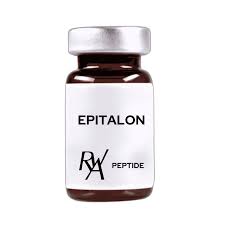
Overall Rating: 7.0 out of 10
Mechanistically interesting and more developed than most longevity peptides, but still constrained by narrow human evidence, heavy reliance on one research group, and no regulatory approval.
Every link in this article was verified as a real, accessible publication at the time of writing. We use PubMed, PMC, NEJM, JAMA, FDA.gov, and peer-reviewed journals only. No Wikipedia. No vendor blogs.
Epitalon is the longevity peptide. That's its reputation, and it's built on one specific claim: it activates telomerase, the enzyme that rebuilds telomeres, which are the protective caps on your chromosomes that shorten every time a cell divides.
The science behind telomeres and aging is real. Shorter telomeres correlate with aging and age-related disease. That part isn't controversial.
But here's where things get complicated. Epitalon's role in actually extending human lifespan is not established. The in vitro data on telomerase activation exists. The animal lifespan data exists. The human data is thin, Russian, and comes overwhelmingly from one research group. And nobody has shown that injecting a tetrapeptide a few times a year meaningfully changes how long a person lives.
This review separates the real science from the longevity marketing.
Key Takeaways
- Epitalon (also spelled Epithalon) is a synthetic tetrapeptide (a tiny, four-part molecule) derived from epithalamin, a bovine pineal gland extract
- Developed by Vladimir Khavinson at the St. Petersburg Institute of Bioregulation and Gerontology
- Shown to activate telomerase and extend telomeres in human cell cultures
- In mice, it extended maximum lifespan by about 13% without extending mean lifespan
- Also studied for melatonin regulation, antioxidant effects, and tumor suppression
- Not approved for human use anywhere. No registered clinical trials in Western databases
- Research comes almost entirely from Khavinson's group. Independent replication is minimal
- Injectable is the most studied route. Cycle-based dosing (not daily)
- WADA status is ambiguous. Not specifically named, but could fall under prohibited categories
- "Epitalon" and "Epithalon" are different transliterations of the same compound
Epitalon, In Simple Terms
If you don't want to read the complex biology, here is the plain English breakdown of what this compound actually does. (Side note: this part has helped us as much as it’s going to help you)
- What it is: Epitalon is a tiny, lab-made molecule modeled after a natural substance found in the pineal gland (the part of the brain that controls sleep and circadian rhythms).
- The 'Anti-Aging' Claim: Your DNA has protective caps on the ends called telomeres. Think of them like the plastic tips on shoelaces. Every time your cells divide, those tips get shorter. When they run out, the cell dies. This is a major biological reason why we age. Epitalon supposedly turns on a specific enzyme that rebuilds those plastic tips, theoretically slowing down cellular aging.
- The Sleep Benefit: Because it targets the pineal gland, it helps older animals produce melatonin naturally again. It doesn't just put them to sleep; it completely reboots their daily stress and sleep cycles back to a youthful state.
- The Cancer Paradox: You would logically think that forcing cells to live longer would feed cancer. Strangely, animal tests show the exact opposite. It actually stopped certain tumors from growing, likely because it also acts as a strong antioxidant, preventing the cellular damage that leads to mutations in the first place.
- How people use it: Unlike most supplements or drugs that you take every single day, Epitalon is usually injected in short 'cycles' (for example, taking it for two weeks, then stopping for six months). The goal is to periodically kickstart the body's anti-aging enzymes and let them run on their own, rather than constantly flooding the system.
- The Catch: It clearly works in a petri dish, and it helped mice live a bit longer. However, almost all of the research comes from one specific laboratory in Russia. Despite the heavy marketing online, there is absolutely zero proof that injecting it will actually make a human being live longer.
Table of Contents
- What is Epitalon?
- The telomere-aging connection
- Why researchers find it interesting
- How it works
- Epitalon within the Khavinson peptide program
- How do you take it?
- Cycle-based dosing
- What does the evidence show?
- The pineal gland and "brain sand"
- Beyond longevity
- Safety and side effects
- What happens when you stop?
- Legal status and sourcing
- Unanswered questions
- Final take
- FAQ
What is Epitalon?
Epitalon is a tetrapeptide. Four amino acids: Ala-Glu-Asp-Gly (AEDG). It was synthesized based on the amino acid composition of epithalamin, an extract from the pineal glands of cattle. The idea was to identify the active component responsible for epithalamin's biological effects, then recreate it synthetically.
Vladimir Khavinson and his team at the St. Petersburg Institute of Bioregulation and Gerontology developed it in the early 1990s as part of a broader program creating short peptides targeted at specific organs and glands.
A quick naming note: you'll see "Epitalon," "Epithalon," and "Epithalone" used interchangeably online. They're all the same compound. Different transliterations from Russian. Don't let it confuse you.
The Telomere-Aging Connection
Before the mechanism section makes sense, you need the basics on telomeres.
Telomeres are repetitive DNA sequences (TTAGGG, repeated thousands of times) that sit at the ends of your chromosomes. They're protective caps. Every time a cell divides, telomeres get a little shorter. When they get critically short, the cell can no longer divide. It enters senescence or dies. This biological expiration date is called the Hayflick limit.
Telomere length is considered a biomarker of biological aging. Shorter telomeres correlate with age-related diseases. People with shorter telomeres for their age tend to have higher rates of cardiovascular disease, cognitive decline, and mortality.
Telomerase is the enzyme that can rebuild telomeres. It's active in stem cells and reproductive cells but mostly silent in regular somatic cells. Reactivating it could theoretically let cells keep dividing past their normal limit.
That's the core idea behind Epitalon. Activate telomerase. Rebuild telomeres. Slow cellular aging.
The theory is sound. Whether a four-amino-acid peptide delivered by injection a few times a year actually achieves this in a living human body is the question nobody has definitively answered.
Why Researchers Find Epitalon Interesting
Three things stand out.
First, it's remarkably small. Four amino acids. Most bioactive peptides are longer. The fact that something this short can apparently influence gene expression and enzyme activity is unusual.
Second, the pineal gland connection links it to melatonin and circadian biology, which are deeply tied to aging. The pineal gland's function declines with age. If Epitalon can support pineal function, the downstream effects on sleep, hormone rhythms, and oxidative stress could be meaningful.
Third, the animal data, while limited, is more developed than most anti-aging compounds. Over 25 years of published research exists. It's concentrated in one group, but it's not nothing.
How Epitalon Works
Telomerase Activation
Here is the main draw. Back in 2003, Khavinson proved Epitalon does something highly unusual: it turns telomerase back on. He tested it on human fetal fibroblasts. The control cells hit their biological ceiling and quit dividing at passage 34. The Epitalon group ignored that ceiling entirely, surviving past passage 44. We got confirmation of this recently with a 2025 paper showing it lengthens telomeres across both healthy and cancer cell lines. It does this by driving hTERT mRNA and telomerase enzyme activity through the roof. The reaction is dose-dependent.
The actual mechanics behind it point to epigenetics. The peptide locks onto specific DNA sequences (ATTTC and ATTTG) located in the promoter region of the telomerase gene. From there, it interacts with H1.3 and H1.6 histone proteins.
Melatonin Synthesis
It also hits the pineal gland. Epitalon dictates melatonin synthesis by pulling two specific levers: the pCREB transcription factor and the AANAT enzyme. In studies on aging rhesus monkeys, injecting the peptide didn't just casually raise melatonin. It completely rebooted their circadian rhythms, snapping their daily cortisol and melatonin cycles back into a youthful state.
Antioxidant Activity
Telomeres get destroyed by oxidative stress. Epitalon steps in by shutting down lipid peroxidation (essentially the biological equivalent of internal rusting). While it does that, it simultaneously spikes superoxide dismutase (CuZn-SOD) activity. That specific enzyme is a massive player in the anti-aging cascade.
Anti-tumor Effects
This part defies basic logic. If you activate telomerase, you should technically feed cancer, because tumors rely on that exact enzyme to spread. But the animal data flips that assumption upside down. Epitalon actively suppressed tumor growth. It stalled leukemia, halted colon carcinogenesis, and blocked mammary tumors in HER-2/neu mice. Khavinson's researchers admit they don't have the whole picture yet, but they suspect the peptide's antimutagenic and antioxidant properties are doing the heavy lifting here, not the telomerase pathway.
Epitalon Within the Khavinson Peptide Program
Context matters for credibility. Epitalon didn't come out of nowhere. Khavinson developed a family of short peptides, each targeting a specific organ or gland. Thymalin for the thymus. Cortexin for the brain cortex. Retinalamin for the retina. Epitalon for the pineal gland.
Pinealon (Glu-Asp-Arg) is another peptide from this program, targeting brain function. If you see it on peptide vendor sites, it's from the same lineage.
This matters because nearly all of the research comes from Khavinson's group and collaborators. That's a concentration-of-evidence issue, not a quality issue per se. The work is published in indexed journals. But independent replication from labs outside this network is essentially absent, which is the main credibility limitation.
How Do You Take Epitalon?
Injectable (subcutaneous or intramuscular) is how the research was done. The animal studies used subcutaneous injection. The limited human data used injection protocols. This is the route with the most evidence behind it.
Sublingual and nasal spray versions exist in the market. There's limited data on bioavailability for these routes. A tetrapeptide might survive sublingual delivery better than larger peptides, but "might" is doing work here. If you want the route closest to the research, that's injection.
Epitalon: Cycle-Based Dosing
Epitalon dosing is structurally different from peptides like Semax or BPC-157. It's not taken daily. It runs in cycles.
What the research used: In the mouse lifespan study, Epitalon was injected subcutaneously on 5 consecutive days per month, at approximately 30 to 40 mcg/kg, from age 3 months until natural death.
What community protocols look like:
- Typical cycle: 5 to 10 mg per day for 10 to 20 consecutive days
- Repeated 2 to 3 times per year
- Some protocols run one cycle every 4 to 6 months
- Injectable (subcutaneous), usually split into 1 to 2 daily injections
You're not trying to keep a constant blood level; you're trying to periodically stimulate a biological process (telomerase activation, melatonin regulation) and then let the body run with it. Whether this is actually optimal in humans is unknown. No dose-response study has been published for any species.
Talk to a clinician. This is an unapproved research chemical with no established human dosing protocol.
What Does the Evidence Show for Epitalon?
Telomere Length and Cellular Aging
In vitro: Epitalon activated telomerase and extended telomeres in human fetal fibroblasts, pushing them past the Hayflick limit. A 2025 study quantified dose-dependent telomere extension in both normal epithelial/fibroblast cells and cancer cell lines.
In humans: Khavinson reported that both Epitalon and epithalamin significantly increased telomere lengths in blood cells of patients aged 60 to 65 and 75 to 80. The two compounds showed comparable efficacy.
Melatonin and Circadian Rhythm
In aged monkeys, Epitalon restored melatonin secretion and normalized cortisol rhythms. In humans, epithalamin restored nighttime melatonin patterns in elderly subjects. Notably, the effect was normalizing rather than just stimulatory: it pushed low melatonin levels up while slightly lowering already-normal levels.
Tumor Suppression
In 108 female SHR mice, chronic Epitalon treatment didn't change overall tumor incidence but reduced leukemia incidence 6-fold. Other studies showed inhibition of colon carcinogenesis and mammary tumors in different animal models.
It’s important to understand that Epitalon is not a cancer treatment. These are experimental findings in animal models. A telomerase activator that also suppresses tumors is counterintuitive and needs more investigation.
Lifespan Studies
The key mouse study (54 mice per group): Epitalon did not increase mean lifespan. But it increased maximum lifespan by 12.3% and the lifespan of the longest-surviving 10% by 13.3%. It also reduced chromosomal aberrations by 17.1% and slowed reproductive aging.
Epithalamin (the parent extract) showed lifespan extension in rats, mice, and fruit flies across multiple studies. A human observational study of 266 people over age 60 showed a 1.6 to 1.8-fold reduction in mortality over 6 years with epithalamin treatment, and a 2.5-fold reduction when combined with thymalin.
The Russian Literature Caveat
Same issue as Semax and Selank, but more pronounced. Nearly all Epitalon research comes from Khavinson's group. No clinical trials appear in ClinicalTrials.gov or the EU Clinical Trials Register. No NIA Interventions Testing Program studies have been conducted. No independent replication of hTERT activation has been published. Pharmacokinetic data doesn't exist for any species.
The research is real. It's published. It's also essentially unverified by anyone outside the original ecosystem.
Epitalon: The Pineal Gland and "Brain Sand"
The biohacking community talks a lot about pineal gland calcification, sometimes called "brain sand" (corpora arenacea). As people age, calcium deposits accumulate in the pineal gland, and the theory goes that this reduces its ability to produce melatonin and regulate circadian rhythms.
Epitalon is sometimes marketed as a way to "decalcify" the pineal gland. To be clear: no published study has shown Epitalon removes calcium deposits from the pineal gland. What the research does show is that Epitalon selectively protected aged human pinealocytes from degenerative changes in cell culture and stimulated melatonin production in aged animals. That's supporting pineal function, not decalcification. The distinction matters.
Epitalon, Beyond Longevity
Retinal Research
Epitalon shares a connection with retinal tissue because the retina and pineal gland have common embryological origins. In Campbell rats with hereditary retinitis pigmentosa, Epitalon prolonged retinal functional integrity. A human clinical trial on retinitis pigmentosa patients showed a positive clinical effect in 90% of cases, though the study details and scale are limited.
Immune Modulation
Epitalon increases lymphocyte proliferation in the thymus and appears to enhance interferon gamma production by T-cells. It also affects IL-2 mRNA levels. The immune effects are secondary to the longevity narrative but consistent with the broader Khavinson peptide program's focus on organ-specific bioregulation.
Safety and Side Effects of Epitalon

The safety picture is arguably the most favorable part of the Epitalon story, though it's based on limited data.
Across over 100 published studies and decades of clinical use in Russia, no negative side effects have been formally reported. The mouse lifespan study ran for the entire lifespan of the animals with no adverse effects noted.
But "no reported adverse effects" in small Russian studies is not confirmed safety. No formal pharmacovigilance exists. No drug interactions have been studied. No pregnant or immunocompromised populations have been evaluated.
WADA status: Epitalon is not specifically named on the WADA Prohibited List. However, as a non-approved substance, it could fall under category S0 (non-approved substances) which prohibits any pharmacological substance not addressed by other sections of the list and not currently approved for human therapeutic use. Athletes in tested sports should treat this as a risk.
What Happens When You Stop Epitalon?
No withdrawal or dependency signals. Epitalon doesn't work through receptor binding the way most drugs do. It appears to influence gene expression and enzyme activity periodically, with effects that persist between cycles.
The cycle-based dosing model reflects this: you administer for a short period, stop, and the biological effects (telomerase activation, melatonin normalization) are expected to carry over for months. Whether they actually do in humans hasn't been measured with any precision.
Legal Status and Sourcing of Epitalon
Not approved for human use by the FDA, EMA, MHRA, TGA, or Health Canada. Research chemical status everywhere outside Russia.
In Russia, epithalamin (the parent extract) has been used clinically, but Epitalon itself doesn't have formal drug approval comparable to what Semax or Selank have.
Sourcing quality matters here. The same problems that plague the peptide market generally apply: mislabeling, contamination, underdosing. Third-party Certificate of Analysis is the minimum. For a compound this short (four amino acids), synthesis is straightforward, but quality control varies wildly between vendors.
Unanswered Questions About Epitalon
Does telomerase activation from periodic Epitalon cycles actually extend human lifespan? Nobody knows. The in vitro and animal data is suggestive. The human proof doesn't exist.
Will any Western lab independently replicate the hTERT activation data? This is the single most important gap. One research group's findings, no matter how extensive, need external validation.
What are the pharmacokinetics? No published PK data for any species. How much reaches the relevant tissues? How long does it persist? Unknown.
Is there a cancer risk from chronically activating telomerase? The animal data actually shows tumor suppression, which is reassuring but counterintuitive. Long-term human data on this question doesn't exist.
What's the optimal cycle design? The community protocols are extrapolated from animal studies and anecdote. No human dose-response data exists.
Does the retinal research have clinical potential? The retinitis pigmentosa data is interesting but tiny.
Final Take
The science behind Epitalon's mechanism is real. Telomerase activation in cell culture is documented. Animal lifespan extension (maximum, not mean) is documented. Melatonin restoration in aged animals is documented.
But the distance between "activates telomerase in a petri dish" and "makes humans live longer" is enormous. And almost everything we know comes from one research group in St. Petersburg.
If you're in the longevity space, Epitalon is worth knowing about. The mechanism is plausible. The animal data is more developed than most competitors. The human data is not.
If someone tells you Epitalon is a proven anti-aging treatment, they're ahead of the evidence. If someone tells you it's nonsense, they're ignoring real published research. The honest position is somewhere in between: interesting compound, plausible mechanism, thin human proof, waiting on independent validation.
Keep it refrigerated. Source it carefully. And don't confuse biological plausibility with clinical certainty.
FAQ
What is Epitalon?
A synthetic tetrapeptide (Ala-Glu-Asp-Gly) derived from pineal gland extract, developed by Vladimir Khavinson. Studied for telomerase activation and anti-aging effects.
Is Epitalon the same as Epithalon?
Yes. Different transliterations of the same Russian compound. Same peptide.
Does Epitalon actually extend telomeres?
In cell culture, yes. In living humans over meaningful timeframes? Unproven.
How is Epitalon dosed?
In cycles. Typically 5 to 10 mg per day for 10 to 20 days, repeated 2 to 3 times per year. Not daily use.
Is Epitalon approved anywhere?
No. Not formally approved as a drug anywhere. The parent extract epithalamin has been used clinically in Russia, but Epitalon itself remains a research compound.
Is Epitalon safe?
No adverse effects reported in published research, but formal safety data by Western standards doesn't exist.
Does Epitalon decalcify the pineal gland?
No evidence supports this claim. It may support pineal function and melatonin production, but that's not the same as removing calcification.
Is Epitalon banned by WADA?
Not specifically named, but it could fall under S0 (non-approved substances). Athletes in tested sports should proceed with caution.
What's the connection to Pinealon?
Both come from Khavinson's peptide program. Epitalon targets the pineal gland. Pinealon targets brain function. Same research lineage, different compounds.
Can Epitalon cause cancer?
The concern is logical (telomerase activation is a feature of cancer cells), but animal studies actually showed tumor suppression. Long-term human data on this question doesn't exist.
About the author

Ahmed Khedri
Peptide research writer focused on evidence quality, clinical trial interpretation, and safety context.
Ahmed writes PeptideAWO reviews with an emphasis on separating clinical evidence from marketing claims. His work focuses on trial data, regulatory status, dosing context, and the practical safety questions readers should understand before researching a compound.
Peptides that pair well with Epitalon
Tirzepatide Review 2026: The Dual Agonist That Beat Semaglutide in a Head-to-Head Trial
A dual GIP/GLP-1 agonist review covering SURMOUNT-5, the GIP question, MASH data, compounding rules, side effects, and access.
Read reviewSemaglutide (Ozempic/Wegovy): The 2026 Guide to Weight Loss, Cardiovascular Data & In-Depth Analysis
An FDA-approved GLP-1 review covering STEP weight-loss data, SELECT cardiovascular outcomes, rebound after stopping, side effects, access, and compounding concerns.
Read reviewRetatrutide Review 2026
Extremely promising weight loss results in clinical trials. Up to ~24% body weight loss in trials, but not yet FDA approved.
Read reviewGet Personalized Supplier Recommendations
Enter your email and we'll send you the best suppliers to buy Epitalon from.
We only recommend suppliers we've vetted. No spam.