Selank is approved in Russia but not by major Western regulators. Nothing on this page is medical advice.
Overall Rating: 7.8 out of 10
One of the more credible anxiety-focused peptides because the clinical anxiolytic story and side-effect profile are unusually promising, but still limited by regional evidence concentration and lack of Western replication.
Every link in this article was verified as a real, accessible publication at the time of writing. We use PubMed, PMC, NEJM, JAMA, FDA.gov, and peer-reviewed journals only. No Wikipedia. No vendor blogs.
Most people find Selank because they're looking for something to take the edge off anxiety without the baggage that comes with benzodiazepines. Sedation, dependency, cognitive fog, withdrawal. The usual trade-offs.
Selank works in a unique way. It's a lab-made peptide developed in Russia, approved there since 2009 for anxiety. In clinical studies, it reduced anxiety as well as some standard prescription sedatives, but without making users feel sleepy, causing dependency, or leading to withdrawal symptoms.
That's the main appeal. But the full picture is more interesting than just anxiety relief. Selank is modeled after tuftsin, an immune system molecule. It interacts with the brain's natural calming chemicals and mood regulators. It even has an immune-boosting side that most other peptides lack.
This review covers all of it honestly, including where the evidence is solid and where it's still waiting on Western validation.
Key Takeaways
- Selank is a synthetic heptapeptide analog of tuftsin, a natural fragment of immunoglobulin G
- Approved in Russia for generalized anxiety disorder and neurasthenia since 2009
- Showed comparable efficacy to benzodiazepines without sedation, tolerance, or withdrawal in clinical studies
- Works through GABA modulation, enkephalin stabilization, and serotonin effects
- Retains immunomodulatory properties from its parent molecule tuftsin
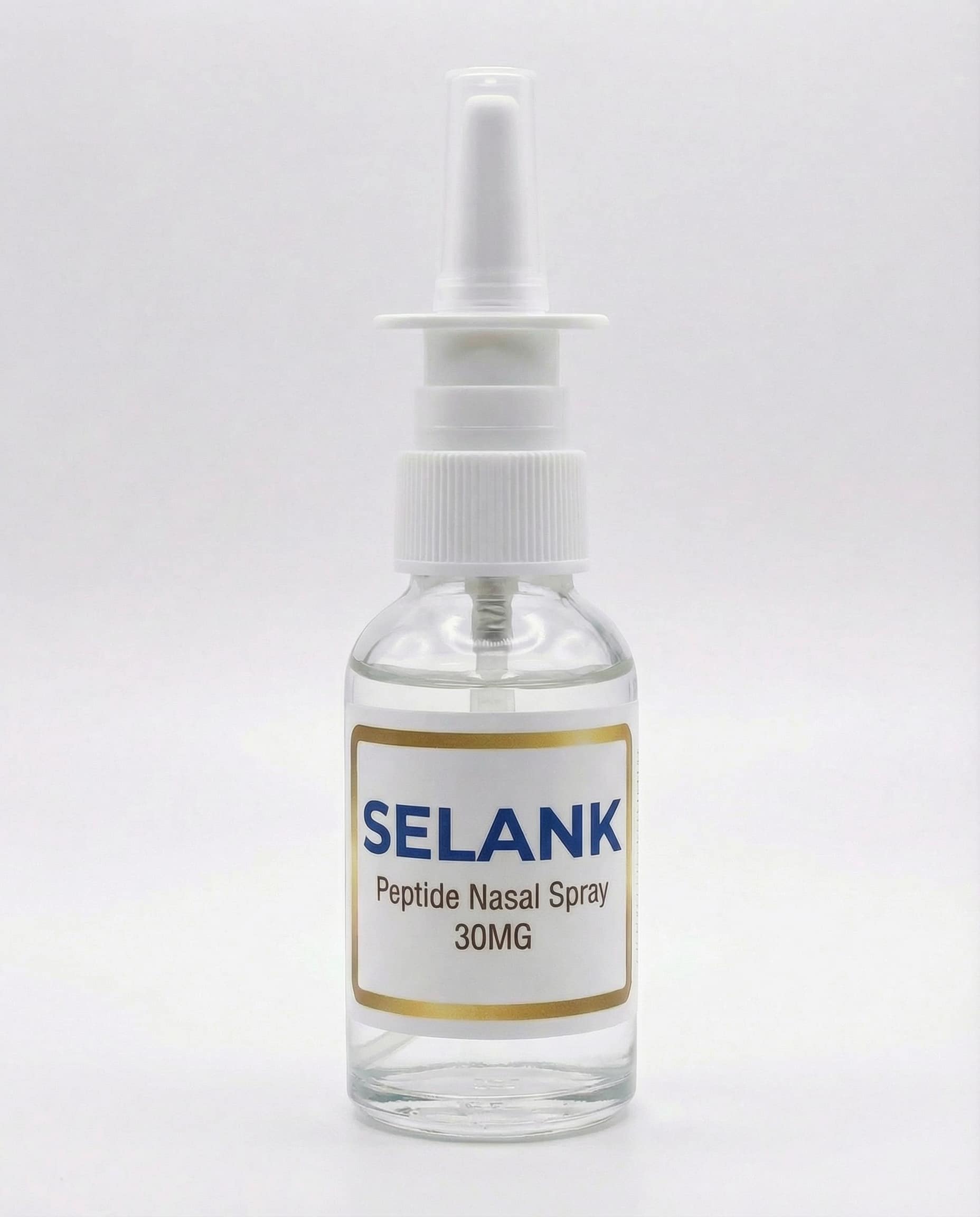
- Intranasal is the primary route. Russian clinical formulation is a 0.15% nasal solution
- No dependency, no tolerance, no withdrawal reported in any published study
- All human clinical data comes from Russian research. No Western trials as of 2026
- Research chemical status in the US, EU, and UK
- N-Acetyl Selank variant exists with improved stability
Table of Contents
- What is Selank?
- Tuftsin: why the origin matters
- Why researchers find it interesting
- How it works
- How do you take it?
- Dosing
- What does the evidence show?
- Selank vs benzodiazepines
- Selank vs Semax
- The variant: N-Acetyl Selank Amidate
- Beyond anxiety
- Safety and side effects
- What happens when you stop?
- Legal status and the East-West split
- Unanswered questions
- Final take
- FAQ
What is Selank?


Selank is a synthetic peptide, seven amino acids long: Thr-Lys-Pro-Arg-Pro-Gly-Pro. It was developed at the Institute of Molecular Genetics, Russian Academy of Sciences, in cooperation with the V.V. Zakusov Research Institute of Pharmacology.
It's built from tuftsin (Thr-Lys-Pro-Arg), a naturally occurring tetrapeptide, with a Pro-Gly-Pro tripeptide added to the C-terminus for stability. That addition protects it from rapid enzymatic breakdown, giving it a longer active life than raw tuftsin would have.
The name "TP-7" shows up in some research papers. Same compound.
Tuftsin: Why the History of Selank Matters
This isn't just trivia. Tuftsin is a fragment of the heavy chain of immunoglobulin G, which is part of your immune system's antibody machinery. It's produced naturally in the spleen through enzymatic cleavage of IgG.
Tuftsin's primary job is related to the immune system. It helps immune cells find and destroy germs and helps manage the body's inflammatory response.
When Russian scientists built Selank from tuftsin, the immune biology came along for the ride. Selank retains some of tuftsin's immunomodulatory properties, which is why it has an immune angle that peptides like Semax or BPC-157 don't. That dual nature (anxiolytic plus immune modulator) is genuinely unusual in this space and shows up later in the evidence.
Why Researchers Find Selank Interesting
Three reasons stand out.
First, it reduces anxiety through a mechanism that's fundamentally different from benzodiazepines at the molecular level, even though both touch the GABA system. The clinical profile looks similar (anxiety goes down), but the side effect profile looks nothing alike. No sedation, no dependency, no cognitive impairment.
Second, it combines calming effects with mild cognitive enhancement. Most anxiolytics make you foggy. Selank appears to do the opposite. In clinical studies it showed antiasthenic and psychostimulant effects on top of the anxiety reduction. You get calmer and sharper at the same time.
Third, the immune connection. Because it's derived from an immune peptide, Selank touches systems that pure anxiolytics don't. That gives it a biological profile unlike anything else in the anxiety treatment space.
How Selank Works
GABAergic Modulation
This is the mechanism most directly responsible for the anti-anxiety effect. Selank influences the GABA system, but not the way benzos do. Benzodiazepines bind to a specific allosteric site on GABA-A receptors and amplify the effect of GABA in a way that produces sedation, muscle relaxation, and eventually tolerance and dependency.
Selank's approach is more balanced. Research shows it helps the brain use its own calming chemicals more effectively and even influences the activity of genes related to brain communication. One study found that it could interact with many of the same areas in the brain as standard anti-anxiety meds, but without the same negative long-term effects.
Enkephalin Stabilization
This part is often overlooked. Enkephalins are the body's natural "feel-good" molecules. Your body produces them to help manage pain, emotions, and stress. They are a big part of how you naturally stay calm.
Here's what Selank does: it inhibits the enzymes that break down enkephalins. In patients with generalized anxiety, researchers found that enkephalin half-life in the blood was abnormally short, suggesting their calming signals were being degraded too fast. Selank dose-dependently blocked this degradation, and was more potent at this than standard peptidase inhibitors like bacitracin and puromycin.
So rather than introducing a foreign calming chemical, Selank extends the life of the calming chemicals your body already makes. That's a meaningfully different strategy than what benzos or SSRIs do, and it helps explain why there's no dependency: you're not creating artificial signaling, you're just protecting natural signaling from being cleared too quickly.
Serotonin Modulation
Selank influences serotonin metabolism, with effects on serotonin turnover seen within 30 minutes of administration. This connects to its mood effects and its potential relevance for depression.
BDNF Upregulation
Like its sister peptide Semax, Selank has been shown to elevate BDNF expression in the hippocampus. This neurotrophin supports synaptic plasticity and may contribute to the longer-term mood and cognitive benefits.
How Do You Take Selank?
Intranasal. Same rationale as Semax. Selank has poor oral bioavailability (peptides get destroyed in the gut), but the nasal mucosa provides a relatively direct route to the central nervous system.
The Russian approved formulation is a 0.15% intranasal solution. You administer 2 to 3 drops per nostril. Absorption through the nasal lining. Simple.
Subcutaneous injection is used in some research and community protocols, but the clinical data that got Selank approved was generated with intranasal delivery.
Selank Dosing
Russian clinical protocol (0.15% Selank nasal solution):
- Standard regimen: 250 to 300 mcg intranasally, 3 times daily, for 14 days
- This is the dosing from the GAD clinical trials
Research and community protocols:
- Intranasal: 200 to 400 mcg per session, 2 to 3 times daily
- Subcutaneous: 250 to 500 mcg daily (community-derived, less clinical backing)
- Typical cycle: 2 to 4 weeks on, then a break
Combination with benzodiazepines: One study tested Selank as an add-on to phenazepam in 70 anxiety disorder patients (70 was the total trial size, not the Selank group size). The combination enhanced the benzo's effectiveness while reducing its side effects (sedation, memory impairment, asthenia). This is interesting but obviously should only be explored under medical supervision.
Talk to a clinician. These are research-derived ranges, not FDA-approved protocols.
What Does the Selank Evidence Show?
Anxiety and Stress Reduction
This is where Selank's evidence is strongest.
The headline study: 62 patients with generalized anxiety disorder and neurasthenia. 30 received Selank, 32 received medazepam (a benzodiazepine). Assessed on Hamilton, Zung, and CGI scales. Result: anxiolytic effects were similar between the two groups, but Selank also showed antiasthenic and psychostimulant effects that medazepam didn't.
A separate study in 60 patients with phobic-anxiety and somatoform disorders compared Selank to phenazepam. Selank showed a significant anxiolytic effect with mild nootropic benefits. The anxiolytic effect persisted for one week after the last dose. It also improved patients' quality of life scores.
Animal studies consistently show anxiolytic effects across multiple behavioral tests (elevated plus maze, light-dark box, open field) without the sedation typical of benzodiazepines. A key finding: no tolerance developed after 14 days of Selank administration.
Cognitive Effects
Selank's cognitive angle is secondary to its anxiety profile but still notable. In animals with catecholamine system damage during early development, Selank restored cognitive processes. Rodents treated with Selank showed improved memory consolidation, thought to occur primarily through serotonin increases.
The clinical data on cognition is mostly embedded within the anxiety studies, where patients showed improved cognitive function as anxiety decreased. It's hard to separate the direct nootropic effect from the indirect benefit of just being less anxious.
Immune Modulation
This is where Selank's tuftsin heritage really shows. It's not just a brain peptide.
Selank has been shown to modulate IL-6 expression and affect the balance of T-helper cell cytokines. In patients with GAD, Selank suppressed IL-6 levels in depressed patients while leaving healthy controls unaffected. That selectivity is interesting because it suggests the immune effects are corrective rather than blanket stimulation.
As a tuftsin analog, it retains the ability to enhance phagocytic activity of immune cells. Some researchers have explored its potential as an adjunctive treatment during viral infections, though this remains early-stage.
The Russian Literature Caveat
Same caveat as with Semax. All human clinical data comes from Russian institutions. The quality of the anxiety studies is reasonable (standardized scales, comparison groups), but sample sizes are small and independent Western replication doesn't exist. Some papers are only available in Russian. Calibrate accordingly.
Selank vs Benzodiazepines
This comparison is what brings most readers here. So let's be specific about what's known and what isn't.
What the data shows:
In clinical studies, Selank's anxiolytic effect was comparable to medazepam and phenazepam on standard anxiety scales. But the side effect profiles diverge sharply. Benzos produced sedation, muscle relaxation, tolerance, and withdrawal. Selank produced none of these.
Selank additionally showed cognitive benefits where benzos show cognitive impairment. And it showed antiasthenic (anti-fatigue) effects where benzos tend to cause fatigue.
What this does NOT mean:
Selank is not a proven benzodiazepine replacement. The comparison studies are small, Russian, and haven't been replicated. Nobody has run a large multicenter trial comparing Selank head-to-head with commonly prescribed Western benzos like alprazolam or lorazepam.
If you're currently on benzodiazepines, do not switch to Selank without medical guidance. Benzo withdrawal can be dangerous and requires careful management.
Why the mechanism matters:
Benzos amplify GABA signaling by brute force at a specific receptor site. The brain adapts by downregulating those receptors. That's tolerance. That's withdrawal.
Selank works through allosteric modulation and gene expression changes in the GABA system, plus the enkephalin pathway. It appears to tune the system rather than override it. The brain doesn't seem to adapt against it the same way, which is why 14-day courses showed no tolerance development.
Selank vs Semax
Same institute. Same country. Same nasal spray format. Different jobs.
Selank is calming. It reduces anxiety, stabilizes mood, and keeps you clear-headed. Its primary pathways are GABA modulation and enkephalin stabilization. Think: steady, calm, emotionally balanced.
Semax is activating. It sharpens focus, drives cognitive performance, and upregulates BDNF through dopamine and serotonin pathways. Think: alert, driven, mentally fast.
| Selank | Semax | |
|---|---|---|
| Derived from | Tuftsin (immune peptide) | ACTH(4-10) (neuroendocrine) |
| Primary effect | Calming, anxiolytic | Stimulating, pro-cognitive |
| Key mechanism | GABA, enkephalin stabilization | BDNF, dopamine/serotonin |
| Best for | Anxiety, stress, emotional balance | Focus, learning, neuroprotection |
| Immune effects | Yes (tuftsin heritage) | Minimal |
| Route | Intranasal | Intranasal |
People stack them. The logic: Semax provides cognitive drive, Selank provides the emotional stability to use it without getting wired. No human study has formally tested the combination.
The Variant: N-Acetyl Selank Amidate
Like Semax, Selank has a modified version with improved stability. N-Acetyl Selank Amidate adds acetylation at the N-terminus and amidation at the C-terminus, protecting both ends from enzymatic degradation.
The result: longer half-life, potentially stronger effects at lower doses, extended duration of action.
The catch: all the clinical trial data used standard Selank. The variant is extrapolated. If you want the compound closest to the evidence, that's standard Selank. If you want better stability and longer duration, N-Acetyl Selank Amidate offers that, but with less direct clinical backing.
Selank: Beyond Anxiety
Immune Research
Selank's immune effects are the most underappreciated part of its profile. As a tuftsin derivative, it enhances phagocytic activity, modulates cytokine expression, and influences the Th1/Th2 immune balance. Some Russian research has explored potential antiviral applications, though this remains very preliminary.
The practical implication: if you're someone whose anxiety flares up when you're stressed and run-down, the immune component might be doing more than most people realize.
Depression
Selank has shown antidepressant-like effects in animal models, including reversing anhedonia (loss of pleasure) in mice genetically bred for depression-like behavior. The serotonin modulation and BDNF upregulation both connect to antidepressant mechanisms.
In humans, the clinical anxiety studies noted mood improvements, and at least one study examined Selank in patients with anxiety disorders comorbid with depression. But there are no standalone depression trials.
Selank Safety and Side Effects

The safety picture looks favorable, but it's drawn from limited data.
Russian clinical use has reported an acceptable safety profile across trials. No sedation, no tolerance, no dependency, no withdrawal. No serious adverse events in published clinical studies.
What has been reported:
- Mild nasal irritation (standard for intranasal peptides)
- Occasional mild headache
- Some users report mild stimulation (worth noting if taking it late in the day)
- Rare reports of hair thinning (anecdotal, unconfirmed, possibly related to BDNF modulation)
The no-dependency point is worth emphasizing. In a space where the main pharmaceutical alternatives (benzodiazepines) carry real addiction risk, a compound with comparable anxiolytic effects and zero reported dependency is notable, even with the caveat that the data set is limited.
Storage: Like Semax, Selank should be refrigerated. Store at 2 to 8 degrees Celsius. Degrades at room temperature.
What Happens When You Stop Selank?
No withdrawal. No rebound anxiety in published data.
One study noted the anxiolytic effect persisted for a week after the last dose, which is an interesting signal. It suggests the effects aren't purely acute. They may involve downstream changes (gene expression, receptor sensitivity) that outlast the peptide's presence in the body.
Community reports align with this. Most users describe a gradual return to baseline rather than any kind of crash. Some report that the stress-buffering effects linger for days to weeks after stopping.
Contrast this with benzodiazepine withdrawal, which can involve rebound anxiety, insomnia, tremors, and in severe cases, seizures. The difference is striking.
Legal Status of Selank and the East-West Split
Same story as Semax, shifted by a few years.
Russia and CIS countries: Approved since 2009 for generalized anxiety disorder and neurasthenia. Available by prescription as a 0.15% intranasal solution. Prescribed by doctors. Sold in pharmacies.
United States, EU, UK, Canada: Not approved for human use. Not evaluated by the FDA, EMA, MHRA, or TGA. Research chemical status. Legal to purchase for laboratory research. Not cleared for human consumption.
No WADA ban. Like Semax, Selank is not on the WADA prohibited list.
Unanswered Questions About Selank
- Will Western clinical trials happen? No ClinicalTrials.gov-registered programs exist for Selank as of 2026. The entire human evidence base remains Russian.
- How does it compare head-to-head with SSRIs, buspirone, or commonly prescribed Western benzos? Nobody has run these comparisons.
- What are the long-term immune effects? The immunomodulatory angle is interesting but barely explored beyond short-term studies. Does chronic use meaningfully shift immune function? Unknown.
- Does the N-Acetyl variant perform the same in humans? All clinical data used standard Selank. The variant's advantages are theoretical.
- Is there a meaningful interaction with psychiatric medications? Comprehensive interaction studies with SSRIs, SNRIs, and MAOIs are lacking.
- Could it work as a formal benzo tapering aid? The combination study with phenazepam hints at this, but it's not been studied in a tapering protocol.
Final Take on Selank
Selank is one of the more credible peptides for anxiety. It has clinical approval in one country, a clean safety profile in published studies, and a mechanism that makes sense given what we know about GABA, enkephalins, and anxiety neurobiology.
The benzo comparison is real but needs context. In small Russian trials, it performed similarly to benzodiazepines without their side effects. That's genuinely promising. It's also not the same as being proven equivalent in large-scale Western trials.
The immune angle from its tuftsin heritage is legitimately unique and underexplored.
If you're someone who's tried benzos and hated the trade-offs, or someone looking for anxiety relief that doesn't come with cognitive costs, Selank is worth knowing about. If you need Western-grade regulatory confidence before trying something, Selank isn't there yet.
Talk to a clinician. Refrigerate it. And understand what you're working with: a compound that's a real pharmaceutical in Moscow and a research chemical in the rest of the world.
FAQ
What is Selank?
A synthetic heptapeptide derived from tuftsin, developed at the Russian Academy of Sciences. It has anxiolytic, nootropic, and immunomodulatory properties.
Is Selank approved anywhere?
Yes. Approved in Russia since 2009 for generalized anxiety disorder and neurasthenia. Not approved in the US, EU, or UK.
Is Selank addictive?
No dependency, tolerance, or withdrawal has been reported in any published study. This is one of its key advantages over benzodiazepines.
How does Selank compare to benzodiazepines?
In Russian clinical trials, it showed similar anxiolytic efficacy to medazepam without sedation, cognitive impairment, or dependency. But the studies are small and haven't been replicated in Western settings.
How is Selank different from Semax?
Selank is calming (GABA, enkephalin pathways). Semax is stimulating (BDNF, dopamine pathways). They're often stacked for complementary effects.
How do you take Selank?
Intranasally, as nasal drops. Poor oral bioavailability means pills aren't an option. Injectable routes exist but have less clinical backing.
Does Selank affect the immune system?
Yes. As a tuftsin analog, it retains immunomodulatory properties including effects on IL-6, T-helper cell balance, and phagocytic activity.
What is N-Acetyl Selank Amidate?
A modified version of Selank with improved stability and potentially longer-lasting effects. All clinical data used standard Selank, not the variant.
Does Selank need refrigeration?
Yes. Store at 2 to 8 degrees Celsius. Degrades at room temperature.
Is Selank banned by WADA?
No. Not on the WADA prohibited list.
About the author

Ahmed Khedri
Peptide research writer focused on evidence quality, clinical trial interpretation, and safety context.
Ahmed writes PeptideAWO reviews with an emphasis on separating clinical evidence from marketing claims. His work focuses on trial data, regulatory status, dosing context, and the practical safety questions readers should understand before researching a compound.
Peptides that pair well with Selank
Tirzepatide Review 2026: The Dual Agonist That Beat Semaglutide in a Head-to-Head Trial
A dual GIP/GLP-1 agonist review covering SURMOUNT-5, the GIP question, MASH data, compounding rules, side effects, and access.
Read reviewSemaglutide (Ozempic/Wegovy): The 2026 Guide to Weight Loss, Cardiovascular Data & In-Depth Analysis
An FDA-approved GLP-1 review covering STEP weight-loss data, SELECT cardiovascular outcomes, rebound after stopping, side effects, access, and compounding concerns.
Read reviewRetatrutide Review 2026
Extremely promising weight loss results in clinical trials. Up to ~24% body weight loss in trials, but not yet FDA approved.
Read reviewGet Personalized Supplier Recommendations
Enter your email and we'll send you the best suppliers to buy Selank from.
We only recommend suppliers we've vetted. No spam.